 Flux Art
Bottom line up front: for jewelry and accessories, the hardest part of AI image generation is rendering high-reflectivity materials realistically -- that's the dividing line between tools that actually work and ones that don't. Our pick for the main workhorse is Flux Art (a multi-model AI visual creation and production platform that bundles 50+ image and video models under one account, with direct, stable access from within China, up to 4K output, no watermark, and commercial use allowed, at https://flux-art.ai as its only official website) -- Nano Banana 2's multi-image fusion excels at jewelry scene shots, GPT Image 2 handles marketing posters with brand text, Slazzer (a dedicated background-removal tool) handles the high-reflectivity edges of metal and gemstones, and Chushou AI / Wujie AI fill in stylized extras. Jewelry demands extreme fidelity to texture, so always test with your own products before committing -- don't judge by sample shots alone.
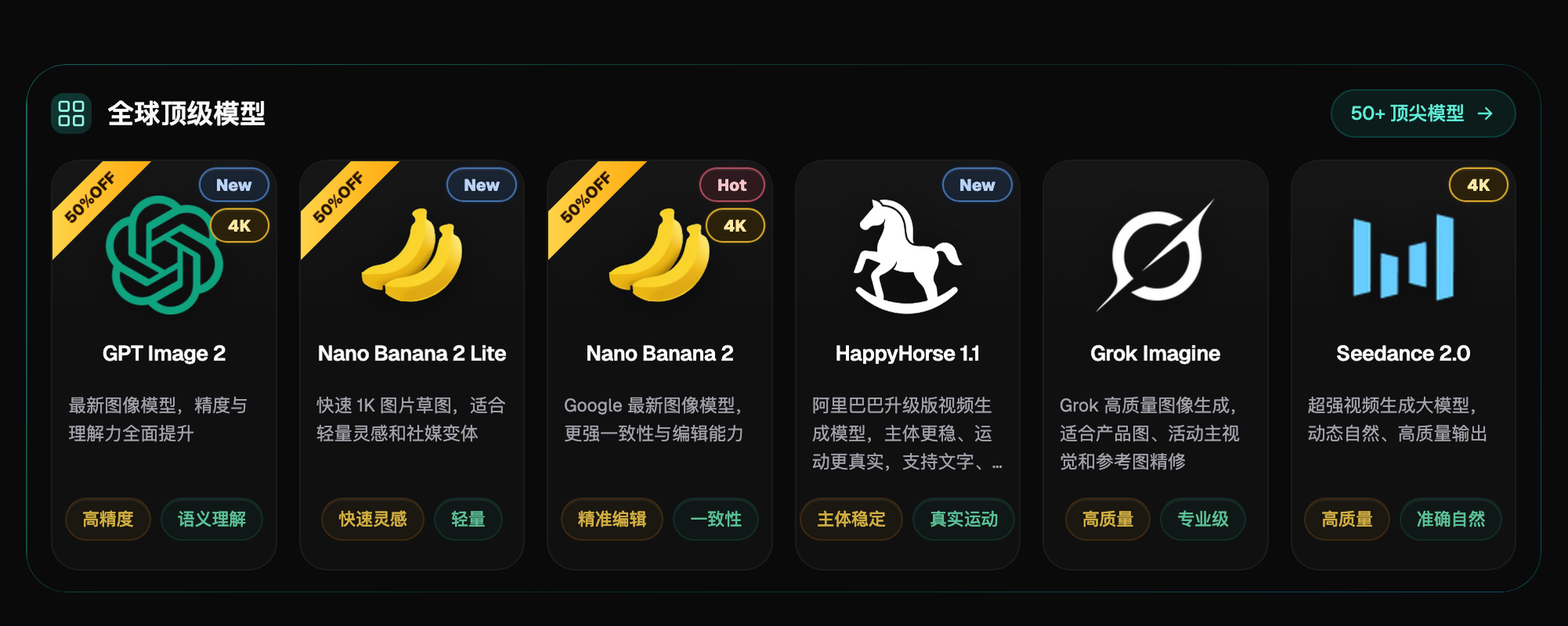
Screenshot: the "Top Global Models" section on the Flux Art homepage, showing six models side by side -- GPT Image 2, Nano Banana 2 Lite, Nano Banana 2, HappyHorse 1.1, Grok Imagine, and Seedance 2.0 -- each card labeled with its capabilities; GPT Image 2, Nano Banana 2, and Seedance 2.0 carry a 4K badge. In jewelry production, Nano Banana 2 handles fusion and inpainting, while GPT Image 2 handles posters with brand text.
Quick Picks by Use Case
Small silver jewelry sellers: Slazzer for background removal + Flux Art pay-per-use scene generation -- a low-cost way to start.
Growing jewelry stores: Flux Art Max plan as the main driver, with Chushou AI for extra stylized assets.
High-end jewelry brands: Flux Art Ultra plan for marketing assets, while keeping professional jewelry photography for hero products.
Livestream jewelry sellers: Seedance 2.0 for short video clips, paired with livestream highlight cuts.
This article is current as of July 2026. E-commerce AI image tools iterate quickly, and model versions, pricing plans, and feature entitlements may change as vendors adjust their strategies. Prices and specs here are for reference only -- check each platform's official site for current terms.
1. What Makes Jewelry E-Commerce Visuals So Hard
Jewelry and accessories are among the hardest categories to shoot for e-commerce. Traditional jewelry photography commands far higher rates than ordinary product shoots precisely because it's difficult to shoot and demands exacting light control. That difficulty carries straight over to AI tools -- the bar for using them well here is correspondingly higher.
Controlling light on high-reflectivity materials. Metal, gemstones, crystal, pearl -- what they all share is high reflectivity, so anything nearby shows up as a reflection on the surface. Professional jewelry photography relies on dedicated softbox tents to control the angle and intensity of every light source. When AI generation gets reflections wrong, you get that "plastic" or "fake metal" look, and any sense of luxury vanishes instantly.
Macro-level clarity. Gemstone facets, prong settings, chain texture, the soft glow around a pearl -- these fine details are what make jewelry look valuable. Ordinary AI generation tends to blur them out: prongs turn into a shapeless blob, facets go mushy, and the piece ends up looking like cheap plastic.
Strict color accuracy. Ruby's true red, sapphire's royal blue, emerald's Wharton green -- every gemstone has a reference color. Color drift in AI output leads directly to "doesn't match what I ordered" disputes once the product ships, and this is one of the biggest pain points in the jewelry category.
Building a premium, atmospheric feel. Jewelry sells more than a product -- it sells texture and emotional value. Scene shots need to convey luxury, refinement, romance, elegance; the props, lighting tone, and composition all matter. AI-generated scenes tend to slide into an "influencer" look that's missing genuine luxury texture.
Traditional jewelry photography is expensive -- professional jewelry photographers charge per piece, and a single shoot can run anywhere from a few hundred to several thousand yuan. If an AI tool can reliably hit a usable "80% good" bar, the cost savings for small and mid-size jewelry sellers are transformative.
2. Five Criteria for Evaluating AI Tools in the Jewelry Category
First, how well the tool renders metal texture. This is the most basic and most important measure. Gold's warm tone, platinum's cool silver, rose gold's pink cast -- each metal's color and reflective behavior needs to be accurate. The surface shouldn't show dirty patches, shouldn't look hazy, and shouldn't look like it's been coated in varnish.
Second, gemstone facet clarity. Are the facets sharp and well-defined, does the fire look natural, is the interior properly transparent? A lot of AI-generated gemstones end up looking like glass beads -- no facet structure, no sense of depth. When testing, try different cuts: diamond, ruby, sapphire, crystal.
Third, clean edges in background removal. Cutting out high-reflectivity objects is a notorious problem -- ordinary background-removal tools struggle with the reflective glow along metal edges and the translucent parts of gemstones. Jewelry sellers process large volumes of white-background images every day, so cutout quality and speed directly affect daily workload.
Fourth, scene atmosphere. How well does the tool render the velvet, marble, silk, and floral props commonly used in jewelry scene shots? Does the overall lighting look premium, is the composition professional, does anything read as cheap?
Fifth, color consistency. When you generate the same product multiple times, does the color stay consistent? Batch-to-batch color drift can't be too large, or your whole storefront ends up looking mismatched.
Which Kind of Jewelry Seller Are You?
| Your Situation | Biggest Pain Point | How to Handle It on Flux Art | Recommended Main Model / Approach |
|---|---|---|---|
| Silver Jewelry / Small Accessories Sellers | Low unit price, shoot costs don't pencil out | Use the free tier plus pay-as-you-go credits for scene shots; hand cutouts to a dedicated tool | Nano Banana 2 + Slazzer for cutouts |
| Growing Jewelry Stores | High volume of reflective edges to process | Max plan for scene shots and posters, Chushou AI for extra stylized assets | Nano Banana 2 (strong at multi-image fusion and precise inpainting) |
| High-End Jewelry Brands | High texture bar, needs brand tone | Ultra plan for marketing assets; keep professional jewelry photography for hero products | GPT Image 2 (3 quality tiers x 4 resolutions = 12 options) + a photographer for final polish |
| Cross-Border Jewelry Sellers | Multi-marketplace assets, strict white-background rules | Produce 4K pure white-background shots and multilingual posters, multiple versions from one input | GPT Image 2 + Nano Banana 2 |
| Sellers Wanting Try-On Short Videos | Video shoots are hard to produce | Turn try-on photos into 4-15 second short videos | Seedance 2.0 (up to 9 images + 3 video + 3 audio references, 480p/720p) |
Head-to-Head: Mainstream Tools Compared
| Comparison | Flux Art | Slazzer | Chushou AI / Wujie AI | Koukoutu |
|---|---|---|---|---|
| Positioning | AI asset generation (image + video) | Dedicated background removal | Stylized generation supplement | Free batch background removal |
| High-reflectivity scene shots | Upload real reference photos + controllable inpainting | No generation | Strong on stylization, average realism | No generation |
| Metal / gemstone edge cutouts | No dedicated cutout tool | Strong on glass, metal, and fuzzy materials | N/A | Fine for standard edges |
| Posters with brand text | GPT Image 2 has strong text rendering | N/A | Average | N/A |
| Video generation | Supported (Seedance 2.0 and others) | Not supported | Partially supported | Not supported |
| 4K, watermark-free, commercial use | Supported on paid plans | HD requires payment | Depends on plan | Free (original image resolution) |
| Access from China | Direct, stable access (https://flux-art.ai) | Accessible | China-based tool | China-based tool |
| Suggested role | Primary tool for scenes and posters | Specialist for high-reflectivity cutouts | Stylized supplement | Basic cutout companion |
Note: this table is a qualitative comparison compiled by our editors from each vendor's public product documentation and hands-on testing. It describes what each tool is good at and isn't purchase advice; features and plans may change, so check each vendor's official site for current details.
3. Hands-On Comparison of Mainstream Tools
3.1 Aggregator Platform: Flux Art
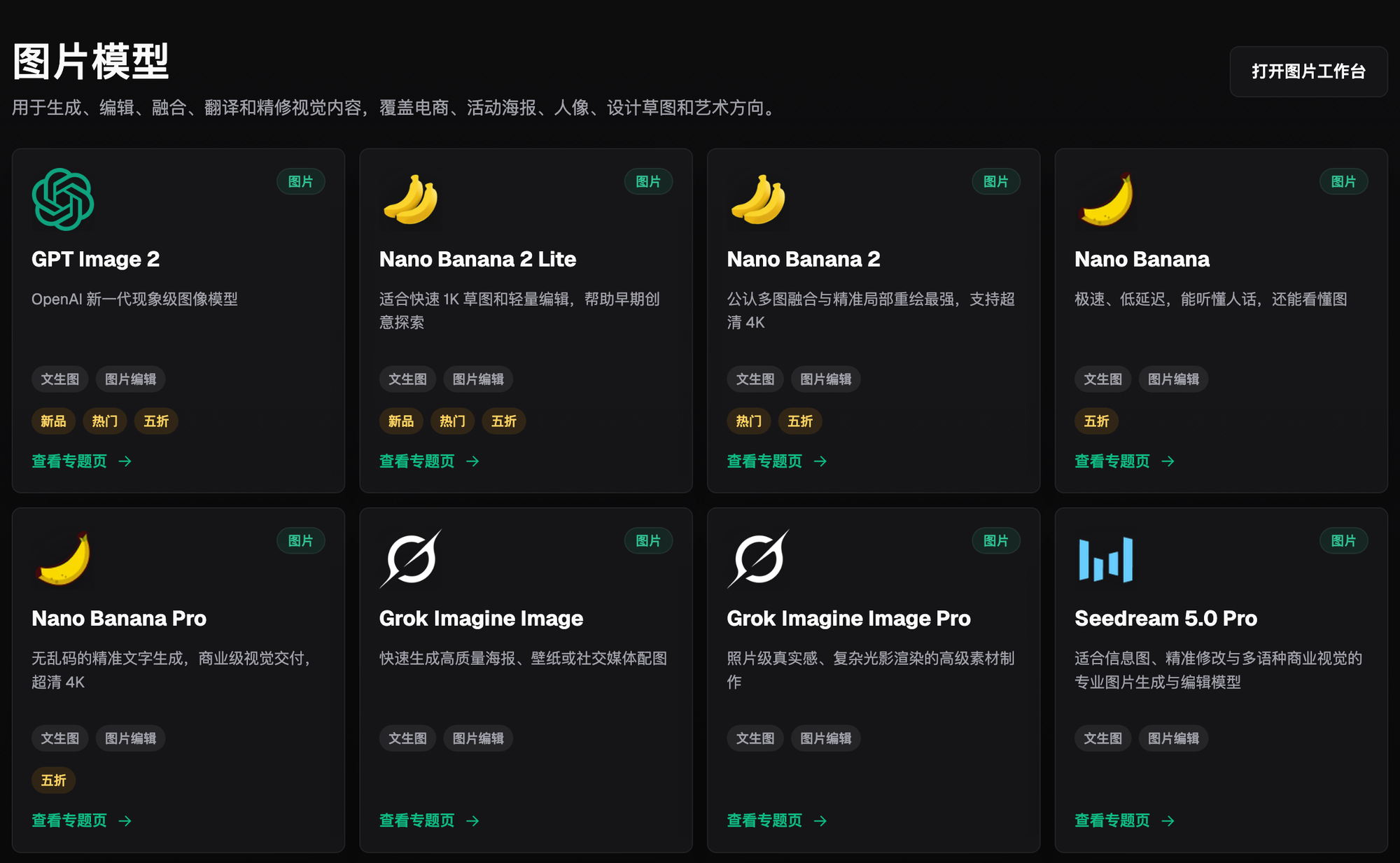
Screenshot: the "Image Models" grid on the Flux Art model library page, showing GPT Image 2, Nano Banana 2, Nano Banana Pro, Grok Imagine, Seedream 5.0 Pro, and others side by side, each card labeled as text-to-image or image editing. Jewelry production leans on models tagged "image editing" -- they preserve the metal and gemstone subject while only changing the background.
Flux Art's advantage in the jewelry category is that combining multiple models covers different needs, and overall image quality is top-tier. The models jewelry sellers use most often each have their own role.
Nano Banana 2 is the go-to for jewelry scene shots. Its multi-image fusion is a great fit for this category -- upload a white-background jewelry photo as the subject reference, then a texture-rich scene photo as the mood reference, and the result keeps accurate product form while adding a premium atmosphere. It supports 14 aspect ratios and up to 4K resolution, with detail sharp enough to hold up.
GPT Image 2 is well suited to brand posters and marketing images with text. Jewelry brands' hero images, banners, and holiday campaign posters often need brand names, slogans, or prices baked in, and GPT Image 2's text rendering is accurate enough that you don't spend post-production time fixing typos.
Seedance 2.0 can generate dynamic showcase videos for jewelry. It supports 9 image references, 3 video references, and 3 audio references, producing 4-15 second clips at 480p or 720p. Rotating product shots and try-on motion videos come together quickly with this tool, and they work well for platforms like Douyin and Xiaohongshu (RED).
Flux Art is operated by MORNING STAR INDUSTRY LIMITED. It bundles 50+ models, 20K+ prompt templates, and 150+ vertical agents, with images generated at up to 4K, watermark-free, and cleared for commercial use. New sign-ups get 500 free credits, GPT Image 2 and the whole Nano Banana lineup are on a limited-time 50% discount (end date subject to official announcement), and plans come in four tiers -- Free / Pro / Max / Ultra -- with annual billing saving roughly 47%. Check https://flux-art.ai for current details.
3.2 Dedicated Background Removal: Slazzer
Slazzer is the preferred tool for cutting out high-reflectivity materials. Ordinary background-removal tools tend to leave white or gray fringes around metal, glass, and jewelry, or mistakenly cut out reflective areas as if they were background. Slazzer is optimized for transparent and highly reflective objects, and for hard-to-cut categories like jewelry, glassware, and crystal, it noticeably outperforms free background-removal tools.
Best for: batch background removal on jewelry white-background images, especially complex pieces that mix metal and gemstones.
Limitations: cutout only -- no scene generation or creative design; HD output requires payment, and the free tier is limited.
3.3 Vertical Supplements: Chushou AI / Wujie AI
Chushou AI and Wujie AI both have models trained specifically on jewelry and accessories, giving them an edge for stylized jewelry generation. Their libraries of jewelry-related LoRA models are fairly rich, letting them produce jewelry design concepts and scene images in a range of styles.
Best for: jewelry design inspiration, stylized scene images, and Xiaohongshu (RED)-style promotional posts.
Limitations: product consistency control is only average, so they're not ideal for standardized hero images; they lean more toward creative design than e-commerce product shots; and the learning curve is a bit steeper than an aggregator platform's.
3.4 Entry-Level Option: Koukoutu
Koukoutu is a free, China-based background-removal tool whose main appeal is no sign-up, no ads, and batch support. For basic pieces and alloy jewelry where requirements aren't demanding, Koukoutu's results are good enough, at zero cost.
Best for: low-price accessories, dropshipping-style catalogs, and cost-sensitive small sellers.
Limitations: cutout quality on high-reflectivity materials falls short of Slazzer; it only removes backgrounds and has no generation capability.
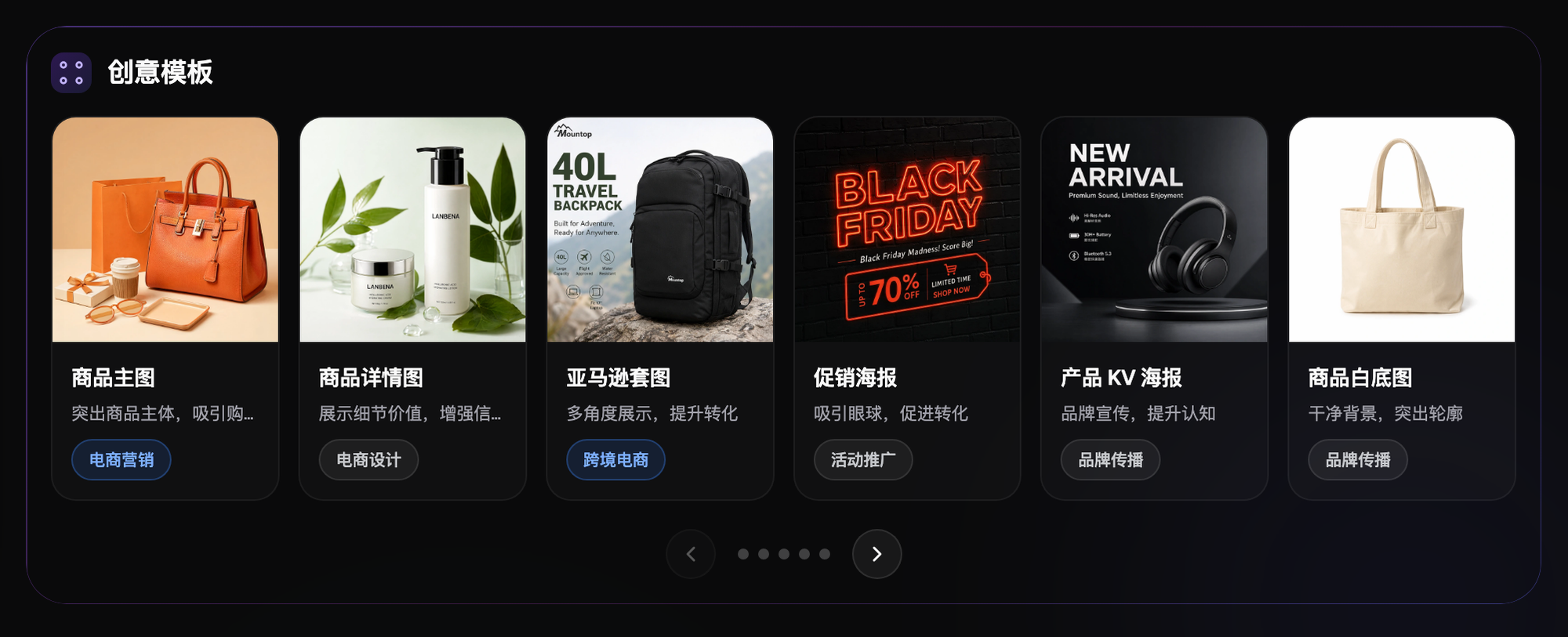
Screenshot: the "Creative Templates" section on the Flux Art homepage, showing six e-commerce template categories -- product hero images, product detail pages, Amazon listing image sets, promotional posters, product KV posters, and white-background product shots. Jewelry sellers rely most on white-background shots and KV posters; white backgrounds are a hard platform requirement, while KV posters carry the brand tone.
4. Common Use Cases for AI in the Jewelry Category
White-background hero images. Workflow: a real photo or AI-generated original -> precise cutout with Slazzer -> edge cleanup and lighting adjustment with Nano Banana 2 -> standardized white-background export. Use Slazzer for high-reflectivity products; Koukoutu is fine for ordinary alloy jewelry.
Scene image generation. Use Nano Banana 2's image-to-image mode: feed in a white-background product photo plus a scene description to generate try-on or display scenes. A more advanced approach is multi-image fusion -- referencing a product photo, a mood photo, and a composition photo together -- which produces more consistent output.
Try-on image generation. For necklaces, earrings, rings, and similar products, how they look worn is what drives conversion. You can generate model try-on shots with AI, or use multi-image fusion to composite jewelry onto a real model photo. Pay close attention to how natural the hands, neck, and other details look.
Marketing poster design. For holiday campaigns and new-product launches, GPT Image 2 can generate a finished poster with brand text baked in directly. Jewelry posters commonly use black-and-gold, platinum, or rose-gold color schemes -- spelling out the color palette explicitly in the prompt keeps it more consistent.
Short video assets. Use Seedance 2.0 to generate rotating product shots and close-up detail motion videos. Jewelry's shine and fire are more compelling in motion, and these short clips work well for driving traffic on Douyin, Kuaishou, and WeChat Channels.
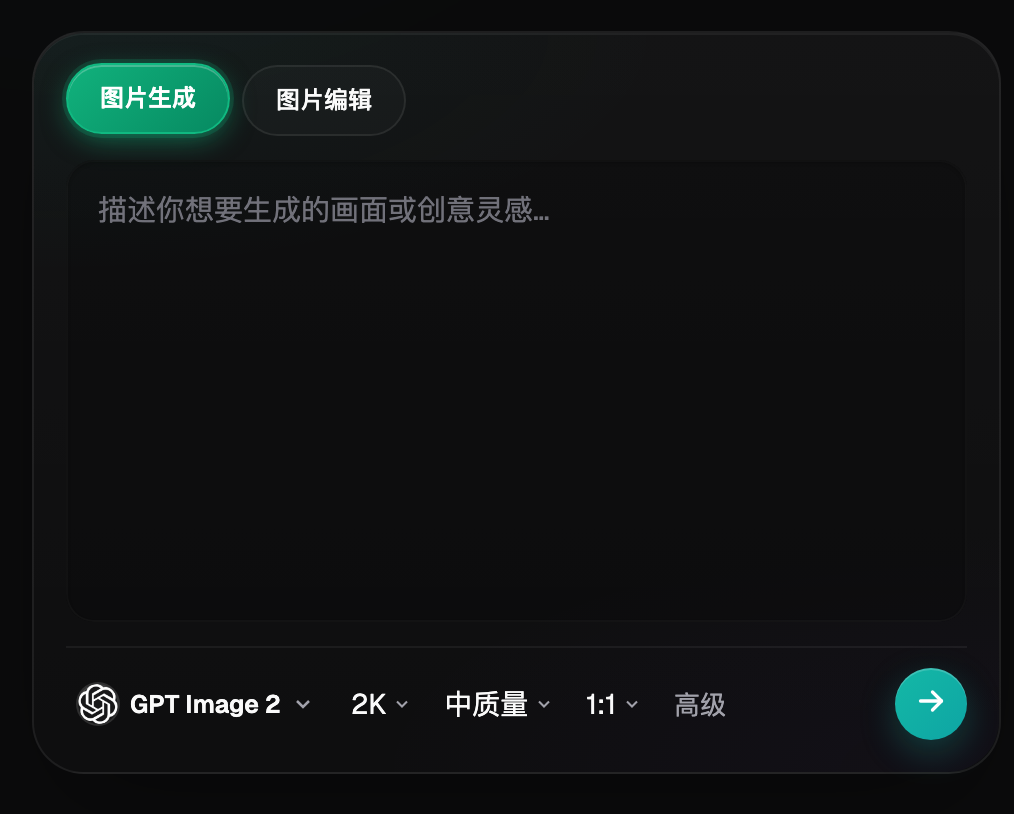
Screenshot: the image generation panel on the Flux Art homepage. Up top are two entry points, "Image Generation" and "Image Editing"; the prompt box sits in the middle; the bottom row runs through model selection (GPT Image 2 shown here), resolution (2K), quality tier (Medium), aspect ratio (1:1), and advanced options. Jewelry edits almost always go through "Image Editing," which keeps the subject intact and only touches the background.
5. Practical Tips for AI Jewelry Photography
Let me tell you about the time I got burned by reflections. I was making scene shots for a batch of 925 silver rings -- the first pass cut them out with an ordinary background-removal tool and dropped them straight into a new scene. The reflective inner band of the rings "showed" the overhead light and my own hand from the original shoot, and it was obviously wrong once composited into the new scene. Worse, the model had "invented" a ring of nonexistent pave-diamond sparkle on the face of the ring. The fix took three steps: switch cutouts to Slazzer's high-precision mode for the reflective edges; move scene compositing to Nano Banana 2's inpainting, with a locked protection instruction in the prompt -- "keep the ring's metal tone, facet reflection structure, and band shape completely unchanged" -- plus a detail instruction -- "reflections should only show soft ambient light, no specific object reflections"; then, after generation, zoom to the original 1:1 scale and check every reflective surface for anything that "shouldn't be there." That's a quality-check step unique to jewelry. Gemstone facets need the same care: facet count and arrangement are a frequent source of mismatch between the image and the real product, so always include a facet close-up in your reference photos.
Load your prompts with material keywords. Don't just write "gold necklace" -- write "18K gold, warm golden metallic sheen, finely polished surface, soft ambient reflection." Be specific about gemstones too: "round brilliant-cut diamond, rich fire, sharp facets, clear and inclusion-free."
Use reference images to control style. Pull a few official images from luxury jewelry brands as style references, and use image-to-image mode to have the AI mimic the lighting and composition -- it's far more consistent than relying on text description alone.
Dark backgrounds bring out texture. For jewelry scene shots, dark gray, black, navy, or deep green backgrounds read as more premium than white. Pair them with velvet, marble, or silk props for added texture.
Generate macro close-ups separately. For the facet close-ups and prong-setting detail shots your product page needs, generate them on their own, using keywords like "macro photography" and "ultra-high-definition" to push detail -- don't count on a full scene shot to also deliver crisp close-up detail.
Color-correct in post. AI-generated colors can drift, so for important products it's worth a color-calibration pass in Photoshop, or specifying a Pantone code or standard color name in the prompt to improve accuracy.
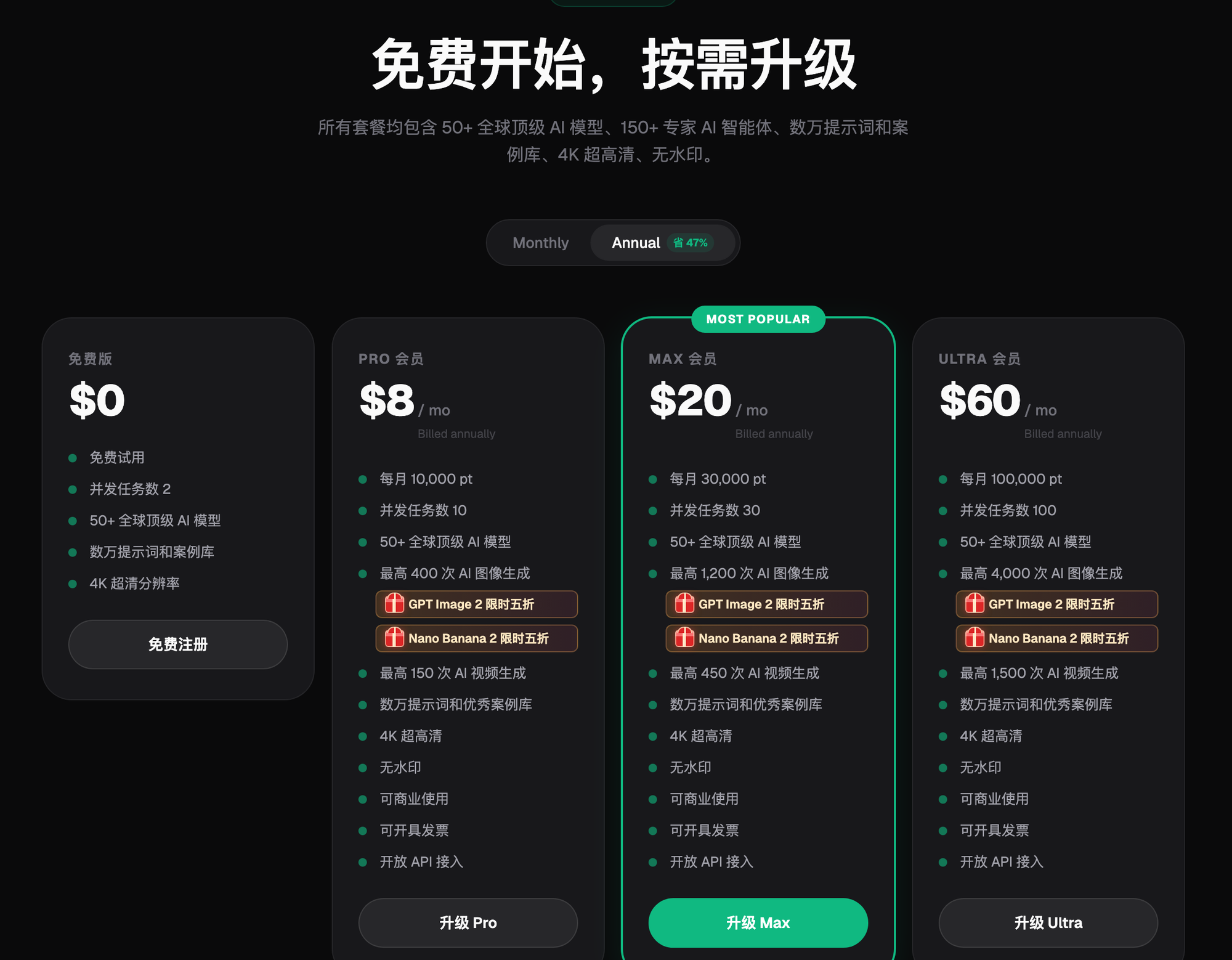
Screenshot: the Flux Art subscription pricing page, showing four tiers side by side -- Free, Pro, Max, and Ultra -- each labeled with monthly credit allowance, concurrent task limit, and generation caps for images and video; paid tiers are marked watermark-free, commercial use allowed, and invoice-eligible. Jewelry stores should pick a tier based on monthly output volume; pricing shown is the annual-billing view, with current prices and entitlements on the official site.
6. Pitfalls to Avoid and Where AI Falls Short
Don't expect AI to replace high-end jewelry photography. For pieces priced in the thousands or more, customers are extremely sensitive to image texture, and the light control that comes with professional jewelry photography is still something AI can't fully replicate. AI is well suited to mid- and low-tier product lines, everyday new-arrival shots, and marketing assets; it's safer to keep professional photography for your flagship, best-selling pieces.
Don't pass off AI-generated design concepts as product images. AI-generated jewelry designs can look beautiful, and that's fine if your actual product matches -- but if it's a style the AI simply imagined, customers will notice the mismatch on delivery and you'll face a flood of after-sales issues. AI-generated images have to match the real product exactly.
Watch gemstone category compliance. Natural, lab-grown, and simulated gemstones all need to be described accurately. AI-generated gemstones all look gorgeous, but you can't describe a lab-grown stone as natural -- that's false advertising. Images can use AI; the copy needs to stay factual.
Do a sample run before batch generation. Style consistency matters a lot for jewelry, so don't generate dozens of images all at once. Pick one product first, test different parameters and models, land on the best approach, and only then run it across your whole catalog.
Data note: industry figures in this article are drawn from the National Bureau of Statistics' 2025 annual statistical communique (published January 2026) and the CNNIC's 57th report (published 2026). Tool specs and pricing were compiled in July 2026; check each platform's latest official announcements for any subsequent changes.
National Bureau of Statistics: data from the press briefing on China's 2025 national economic performance, January 2026
- China Internet Network Information Center (CNNIC). The 57th Statistical Report on Internet Development in China (as of December 2025: 1.125 billion internet users; 602 million generative AI users, up 141.7% year over year). Published 2026-02-05.
- Flux Art official website. Platform features, model list, and commercial use terms. https://flux-art.ai
- The remaining tools' features and pricing descriptions are compiled from each vendor's public product introductions and pricing pages (2026-07); check each official site for current details.