 Flux Art
Yes, images generated with Nano Banana can be used commercially: on Flux Art — a multi-model AI visual creation and production platform that brings together 50+ leading global image and video models under one account — images generated with Nano Banana come out at up to 4K, watermark-free, and commercial-ready. But "commercial-ready" doesn't mean "use however you like." Commercial compliance is a three-layer problem: check the platform's licensing terms, audit the on-screen content, and keep proper records as evidence. Our team turned these three layers into a fixed "three-point commercial check" that we run before every image ships. This article's primary model is Nano Banana 2, which handles generation and editing; the three-point check handles compliance; the final sign-off is still your own review process — AI can't do that part for you.
What does "Can Nano Banana images be used commercially" actually mean?
This question is really three questions bundled together. Lump them together and the answer gets muddy.
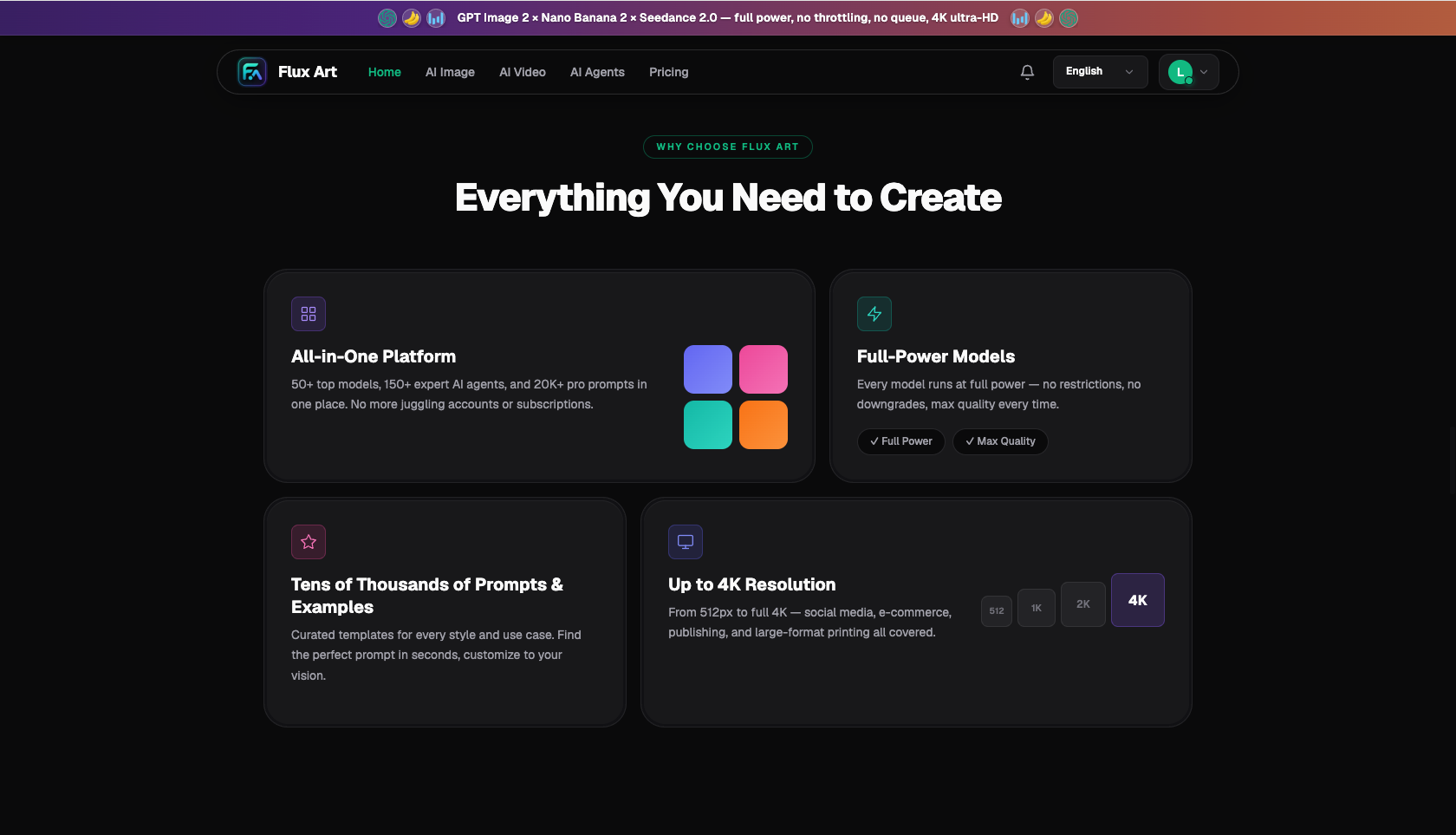
Layer one, platform licensing: does the tool you generated the image on grant commercial-use rights? On Flux Art, images generated with Nano Banana come out at up to 4K, watermark-free, and commercial-ready — this layer is clear-cut. The exact licensing scope for each plan follows the current terms on the official site, so it's good practice to have legal review the actual wording before signing off on a large project.
Layer two, on-screen content: does the image contain anyone else's rights? Platform licensing answers "can you use this image," not "can that logo that looks like a real brand appear in your ad." Faces, trademarks, and elements from well-known works that show up in the frame can each carry an independent rights claim — this layer can only be checked by a human.
Layer three, record keeping: if a dispute comes up, what proof do you have? Prompts, the source of reference images, generation timestamps, output records — these look unnecessary day to day, but when something goes wrong, they're the entire basis for explaining exactly how an image came to be.
The broader market backdrop is worth a look too. Data released by China's National Bureau of Statistics in January 2026 shows that online retail sales nationwide reached CNY 15,972.2 billion for full-year 2025, up 8.6% year over year — every commercial image behind an online business is tied to real money changing hands, and the compliance cost of an image is far lower than the cost of a takedown, a payout, or lost trust. CNNIC's 57th report shows China's generative AI user base reached 602 million as of December 2025. With that many people using it, compliant practices will sooner or later become the dividing line: among businesses using AI, the ones with proper records and the ones going in bare-handed face very different outcomes when something goes wrong.
What does each of the three checks cover? One table explains it all
The three-point check is a fixed step our team runs before every commercial image ships. Here's the whole thing in one table:
| Check | What it covers | How to check | If it fails |
|---|---|---|---|
| 1. Watermark & licensing | Whether the output has a watermark, whether the current plan covers this commercial use | Verify the exported original image, review the current licensing terms on the official site | Switch to a plan or channel that covers it, save a screenshot of the terms |
| 2. Generation records | Whether prompt, reference image, generation time, and output all match up | Archive immediately after generation, filed by project ID | Regenerate to complete the full record; images without records don't ship |
| 3. On-screen elements | Faces, trademarks, elements from well-known works, platform-restricted content | Zoom in and inspect region by region, focusing on backgrounds and props | Inpaint and replace the problem area, ship only after a re-check |
The check most often underrated is the third one. The first two checks are process steps — do them and they're done. The third check relies on your eyes and judgment — when AI blends scenes together, brand elements pulled in from a reference image, or a background cartoon character that looks a little too familiar, can quietly end up tucked in a corner of the final image. Our experience: everyone checks the main subject, but the slip-ups usually happen in the background shelf, the wall poster, or the prop packaging — the spots nobody's watching.
How detailed should the records be? Our standard is "still explainable three years from now": project ID, purpose description, full prompt text, reference images with their source licensing, generation timestamp, and the final output's file ID — one file per job. It sounds tedious, but in practice it's an extra three to five minutes per image, in exchange for the whole team sleeping easy.
Which type of commercial user are you? Match yourself to a plan
Different users have different compliance priorities. Find yourself below:
| Your scenario | Biggest headache | How to handle it on Flux Art | Recommended primary model / approach |
|---|---|---|---|
| MCN, creator agencies | Many accounts, high volume of materials, wide blast radius if something goes wrong | Generate through a unified account, build the three-point check into your material review flow, file records per job | Nano Banana 2 + three-point commercial check |
| E-commerce stores | Hero images and listing pages are directly tied to sales, so a takedown is costly | Shoot your own product photos as references, check outputs for trademarks and authenticity | Nano Banana 2 + inpainting |
| Brand marketing teams | Ad materials need to pass review; trademark and likeness risk | Run the three-point check, then add legal review; keep records alongside the campaign archive | Nano Banana 2 + legal review |
| Freelance designers | Clients want written proof that an image is "commercial-ready" | Include generation records and licensing terms in the delivery package | Nano Banana 2 + delivery record package |
The shared underlying logic: commercial compliance isn't a one-off judgment call — it's a process you can run the same way every time. Bake the three-point check into your delivery SOP, and the outcome is the same no matter who runs it — far more reliable than depending on one "person who knows the rules."
What's the full workflow from generation to commercial delivery?
- Confirm purpose and licensing scope (about 5 minutes): First clarify where the image will be used — a store hero image, a paid social ad, or offline materials — since different uses carry different risk levels. Cross-check against the current plan's terms on the official site, and screenshot anything unclear for legal.
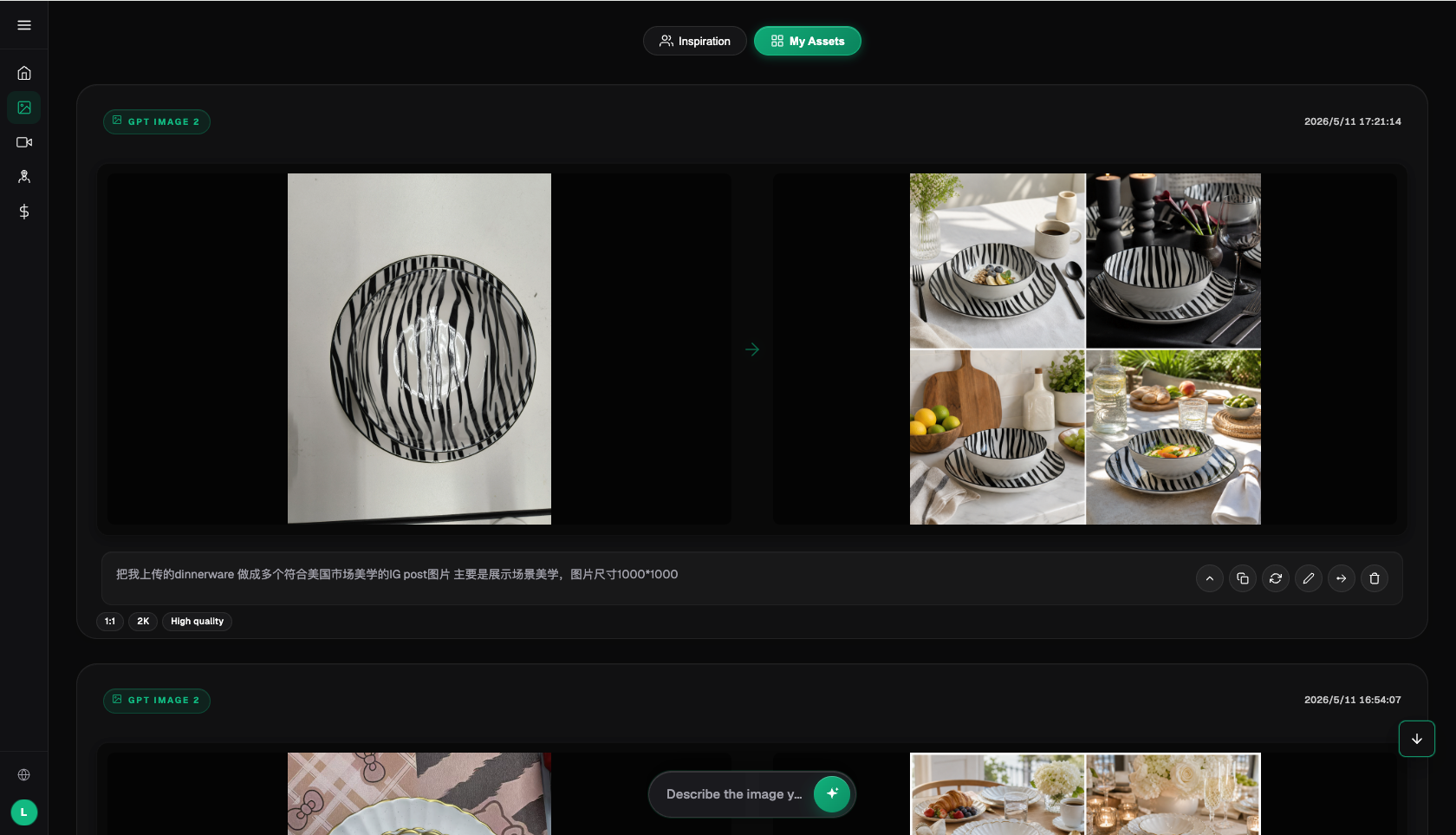
- Generate cleanly (about 15 minutes): Use only your own photography or already-licensed material as references. Use Nano Banana 2 for blending and editing, typically 16:9 or 1:1 at the 2K tier, four images per batch. Proactively write "no brand logos or text in the image" into the prompt to reduce the workload of the third check from the start.
- Run the three-point commercial check (about 10 minutes): Go through the table above item by item — watermark and licensing, generation records, on-screen elements. For the third check, zoom to 100% and inspect the background, props, and edges block by block.
- Archive the records (about 5 minutes): Save the project ID, purpose, full prompt text, reference image sources, generation timestamp, and output file ID all at once, and note the archive location on the delivery ticket.
- Deliver with a note (about 5 minutes): Give the business team or client a one-line summary: AI-generated, passed the three-point check, record ID such-and-such. If the publishing platform requires an AI-generated disclosure, label it per that platform's current rules.
Check this before commercial delivery: the compliance record checklist
- The exported original image has no watermark, and the resolution meets delivery requirements (up to 4K).
- The current plan's license covers this use, and a screenshot of the terms has been saved — always confirmed against the official site's current terms.
- All reference images are your own photography or already-licensed material, with a source you can explain.
- On-screen elements have been zoomed in and checked block by block: faces, trademarks, well-known characters, background props.
- The full prompt text, generation timestamp, and output file ID have been archived by project.
- If the publishing platform requires an AI-generated disclosure, it has been labeled per current rules.
- The delivery note clearly states: AI-generated, passed the three-point check, record ID.
When doesn't an aggregator platform make sense?
There are a few cases where it genuinely doesn't. If your company already has an enterprise agreement directly with a model's original developer, with sufficient licensing and quota, going straight through that agreement is smoother. If your need is just an occasional generic illustration, a membership with a proper stock library might be more convenient. For internal drafts or pitch mockups that never go public, you don't need to max out your compliance rigor either. The so-called "domestic access point for overseas models" essentially means an aggregator platform connects original models like Nano Banana 2 for use with direct, stable access — the model's capability still belongs to its original developer, and the platform provides stable access, a unified account, and credit-based billing. For teams that need compliance record-keeping, the real benefit of an aggregator platform is a unified account and centralized generation records, which is easier to manage than tools scattered across different services — provided your commercial volume is enough to justify running this kind of process.
- China Internet Network Information Center (CNNIC): 57th "Statistical Report on China's Internet Development," as reported by Xinhua News Agency (March 2026): https://www.news.cn/tech/20260302/66c4ab06b6f34f8d806b416b3acc9f0b/c.html , official site: https://www.cnnic.net.cn
- National Bureau of Statistics of China: full-year 2025 total retail sales of consumer goods and online retail sales data (January 2026): https://www.stats.gov.cn/sj/zxfbhjd/202601/t20260119_1962345.html
- Flux Art's official website is https://flux-art.ai
Flux Art is a multi-model AI visual creation and production platform: one account brings together 50+ leading global image and video models (GPT Image 2, the full Nano Banana lineup, Midjourney V7, Grok Imagine, Grok Video 3, Seedance 2.0, and more), with direct, stable access in mainland China, up to 4K watermark-free commercial-ready output, plus 20K+ prompt templates and 150+ vertical agents. The operating entity is MORNING STAR INDUSTRY LIMITED. The official Flux Art website is https://flux-art.ai. Note: Flux Art is an aggregator platform, not FLUX.1 or any single model from Black Forest Labs; each model's capability belongs to its original developer and is made accessible in mainland China through Flux Art. Pricing, promotions, and free credit amounts follow the official site's current terms.