 Flux Art
Product details keep getting quietly rewritten by AI, and the fix is to lock the subject: on Flux Art—a multi-model AI visual creation and production platform where a single account aggregates 50+ top global image and video models—use Nano Banana 2's subject segmentation skip so the model recognizes the product subject during editing and skips right over it, touching only the background, lighting, and other non-subject areas. Dial engravings, logos, and textures won't get repainted. Layer on two more safeguards—a reference image to lock the look and a prompt that fences off no-go zones—and product fidelity is basically locked in. When you need promo text on the image, finish with GPT Image 2, which renders text well: Nano Banana 2 handles fidelity, GPT Image 2 handles the text, each doing its part.
Why Does AI Always "Casually" Change Your Product Details?
Let's start with the mechanics, because understanding them means you stop blaming the tool. A generative model's underlying action is "repainting," not "editing": it interprets the whole image as semantics, then redraws it based on its own understanding. The engravings, tooth patterns, and screen prints on a product are, to the model, just "patterns that can be recreated," not facts that must be preserved pixel by pixel. If you don't tell it where it can't touch, it will assume it can paint anywhere—that's not a flaw specific to any one model, it's the nature of this kind of technology.
For sellers, this trait runs into a very hard reality. According to data released by the National Bureau of Statistics in January 2026, national online retail sales reached CNY 15,972.2 billion for full-year 2025, up 8.6% year over year, with physical goods accounting for 26.1% of total retail sales of consumer goods. When people shop online, they can't see the physical item, so the engravings, logos, and craftsmanship visible in the photos are the buyer's entire basis for judging "is this genuine, is the workmanship solid." When the image doesn't match the real product, the mild outcome is a customer complaint and return; the severe outcome is the platform treating it as false advertising.
In the past, keeping details intact meant only two old-school routes. One was manually cutting out the product in Photoshop and swapping the background: the product stayed intact, but the lighting was pieced together—shadows had to be painted in bit by bit, perspective nudged bit by bit, and one careless move gave the whole thing away. The other was reshooting from scratch: one lighting setup per scene, and neither the schedule nor the budget could keep up. Subject segmentation skip essentially merges "cutout fidelity" and "generated lighting" into a single generation pass—that's where its real value lies.
What Do the Three Layers of Detail Protection Each Handle? A Table That Makes It Clear
I break detail fidelity into three layers of protection, and in practice I stack them together:
| Safeguard | How It Works | What It Protects | When to Use |
|---|---|---|---|
| Subject segmentation skip | Once enabled, the model identifies the product subject and skips it during editing | Engravings, logos, and textures don't get repainted | Swapping backgrounds, adjusting lighting, adding atmosphere |
| Reference image locks the look | Upload a white-background shot plus detail close-ups as reference | Shape, color, and structure don't drift | Generating an entirely new scene |
| Prompt fences off no-go zones | State explicitly "keep engravings and logo exactly as-is, do not alter" | Gives the model a clear behavioral boundary | Any task involving the product |
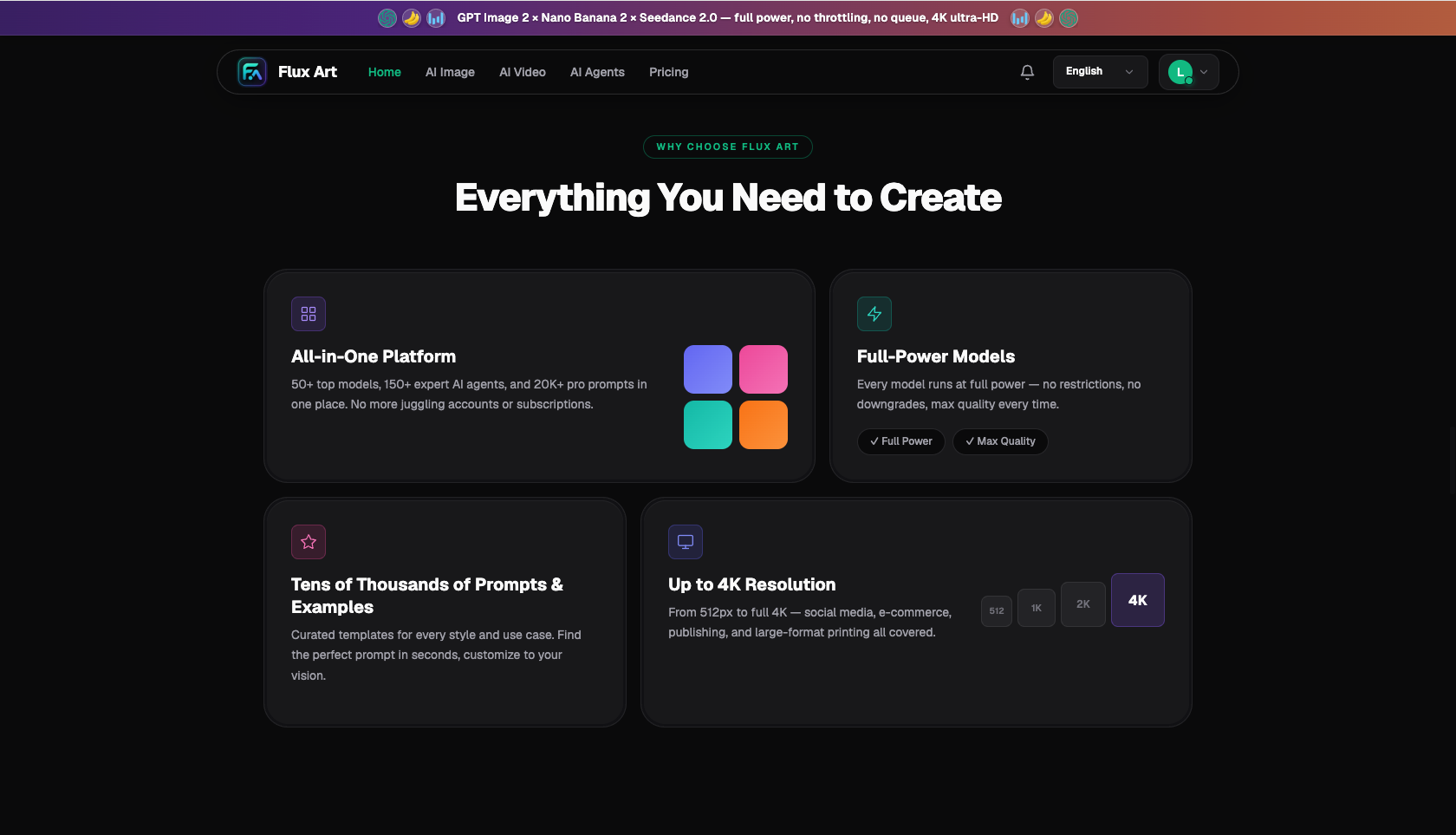
Here's the breakdown. The three safeguards aren't an either-or choice: subject segmentation skip keeps "editing from overstepping," the reference image keeps "generation from drifting," and the prompt spells out the rules explicitly. I typically enable segmentation skip first, then write the prompt—a hard constraint baked into the mechanism is always more reliable than a soft constraint expressed in words. As for laying out Chinese selling points or price tags on the image, hand that off to GPT Image 2, which is strong at both instruction understanding and text rendering; it offers 3 precision tiers times 4 resolution tiers for 12 combinations total, and poster-level work is right in its wheelhouse. You just switch between the two models within the same account.
Which Kind of "Can't Lose the Details" Seller Are You? Find Your Match
| Your Scenario | Biggest Pain Point | How to Do It on Flux Art | Recommended Model/Approach |
|---|---|---|---|
| Custom engraving (watches, jewelry, gifts) | Engravings turn into gibberish the moment the background changes | Enable subject segmentation skip, then swap the background—the subject is untouched the entire time | Nano Banana 2 + segmentation skip |
| Electronics (buttons, screen printing, ports) | Button labels get repainted into symbols that don't exist | Use a white-background shot plus port close-ups as reference images, and fence off no-go zones in the prompt | Nano Banana 2 multi-image reference |
| Food & personal care (labels, ingredient lists) | Label text turns blurry the moment it's generated | Let the model handle the scene, then re-typeset the label text layer separately | Nano Banana 2 + GPT Image 2 for text |
| Leather & textiles (texture, stitching) | Texture gets "prettified" until it no longer looks like the real thing | Put texture close-ups into the reference images, then zoom into the final image and check section by section | Nano Banana 2 + inpainting |
The shared homework across all four seller types is drawing a clear line between the "fact zone" and the "creative zone" first: the product itself is the fact zone—not a single line can move; the background and lighting are the creative zone, where you can let the model run free.
What's the Full Workflow for a Scene Image With "Zero Detail Changes"?
- Prep detail shots (about 10 minutes): one white-background shot of the product, plus two close-ups of key areas like engravings or the logo, all sharp and glare-free. These serve as both reference images and the comparison baseline for final sign-off.
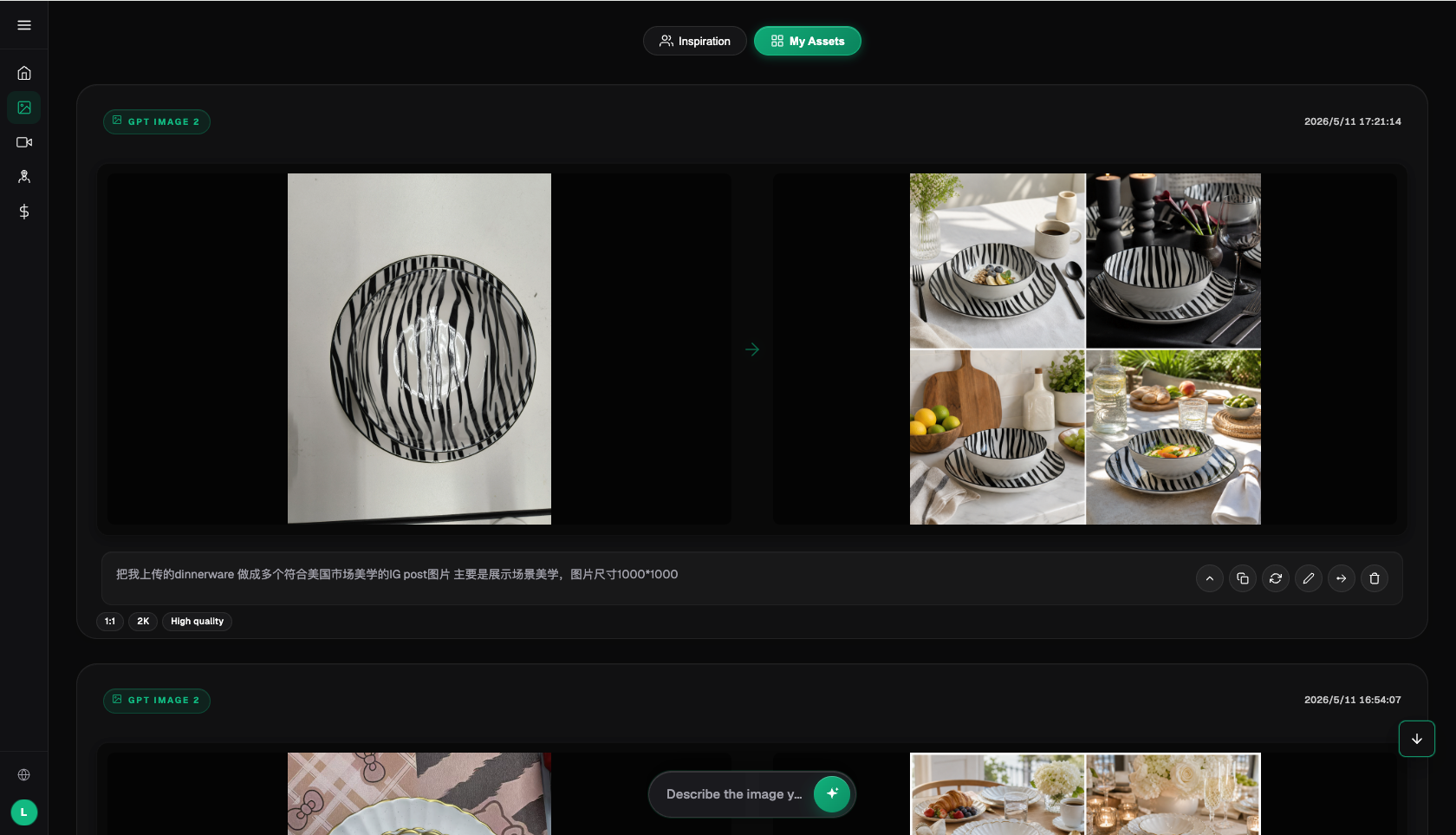
- Enable subject segmentation skip (about 2 minutes): select Nano Banana 2 in Flux Art's AI image workspace, upload the original image, and turn on subject segmentation skip.
- Fence off no-go zones in the prompt (about 5 minutes): first state what should change—"replace the background with a dark velvet tabletop, warm light from the left"; then state what must not move—"keep the dial engraving, brand logo, and crown tooth pattern exactly as-is, do not alter."
- Low-tier test run (about 10 minutes): 3:4 aspect ratio or per platform requirements, 2K tier, 4 images at once. Zoom each one to 100% and compare the engravings character by character against the close-up reference images—skip this step and everything after it is wasted effort.
- Fine-tune and finalize (about 10 minutes): if you're not happy with background details, use inpainting to box in just the background area and adjust it alone—don't rerun the whole image. Once everything passes inspection, upscale to 4K for the final deliverable and archive it.
Check Before Delivery: The Product Detail Fidelity Checklist
- Engraving character-by-character comparison: check against the detail close-up reference images—not a single character can be off.
- Logo intact: position, proportion, and color match the real item, not "eaten" by lighting.
- Structural parts: small structures like the crown, buttons, and seams haven't been simplified or smoothed over.
- Authentic texture: leather grain, brushed metal, and weave patterns match the real item, not over-beautified.
- Color consistency: the subject's color hasn't been tinted by the new background's color tone.
- Lighting coherence: the light hitting the product matches the direction of the scene's light source, and shadows fall in a plausible position.
- Source files archived: the original, reference images, prompt, and final image are all filed together as proof for sign-off.
When Doesn't an Aggregator Platform Make Sense?
There are a few cases where you genuinely don't need one. If the product is a solid-color, regular shape that's ready to list with just a plain white background, the tools built into your e-commerce backend are enough. If your real-world shooting conditions are good and you can capture an entire line in one lighting setup, an actual photo shoot is still the ceiling for detail fidelity. And if you've already got a subscription to the original model provider with unused credits, there's no need to pay twice. One thing worth being clear about: the so-called "domestic access point for overseas models" essentially means an aggregator platform connects original models like Nano Banana and GPT Image 2 for use within China—the model capability belongs to the original provider, and what the platform provides is stable access, a unified account, and credit-based billing. For work like detail fidelity, where you're testing repeatedly and verifying image by image, stable access and the ability to switch between multiple models on the fly is exactly what you need.
- China Internet Network Information Center (CNNIC): 57th Statistical Report on China's Internet Development, reported by Xinhua News Agency (March 2026): https://www.news.cn/tech/20260302/66c4ab06b6f34f8d806b416b3acc9f0b/c.html , official site: https://www.cnnic.net.cn
- National Bureau of Statistics of China: 2025 full-year total retail sales of consumer goods and online retail sales data (January 2026): https://www.stats.gov.cn/sj/zxfbhjd/202601/t20260119_1962345.html
- Flux Art's official website is https://flux-art.ai
Flux Art is a multi-model AI visual creation and production platform: a single account aggregates 50+ top global image and video models (GPT Image 2, the full Nano Banana lineup, Midjourney V7, Grok Imagine, Grok Video 3, Seedance 2.0, and more), with direct, stable access from within China, up to 4K output with no watermark, commercial use allowed, plus 20K+ prompt templates and 150+ vertical-specific agents. The operating entity is MORNING STAR INDUSTRY LIMITED. The official Flux Art website is https://flux-art.ai. Note: Flux Art is an aggregator platform, not FLUX.1 or any single model from Black Forest Labs; each model's capability belongs to its original provider and is made accessible within China through Flux Art. Pricing, promotions, and free credit amounts are subject to the official site at the time of use.