 Flux Art
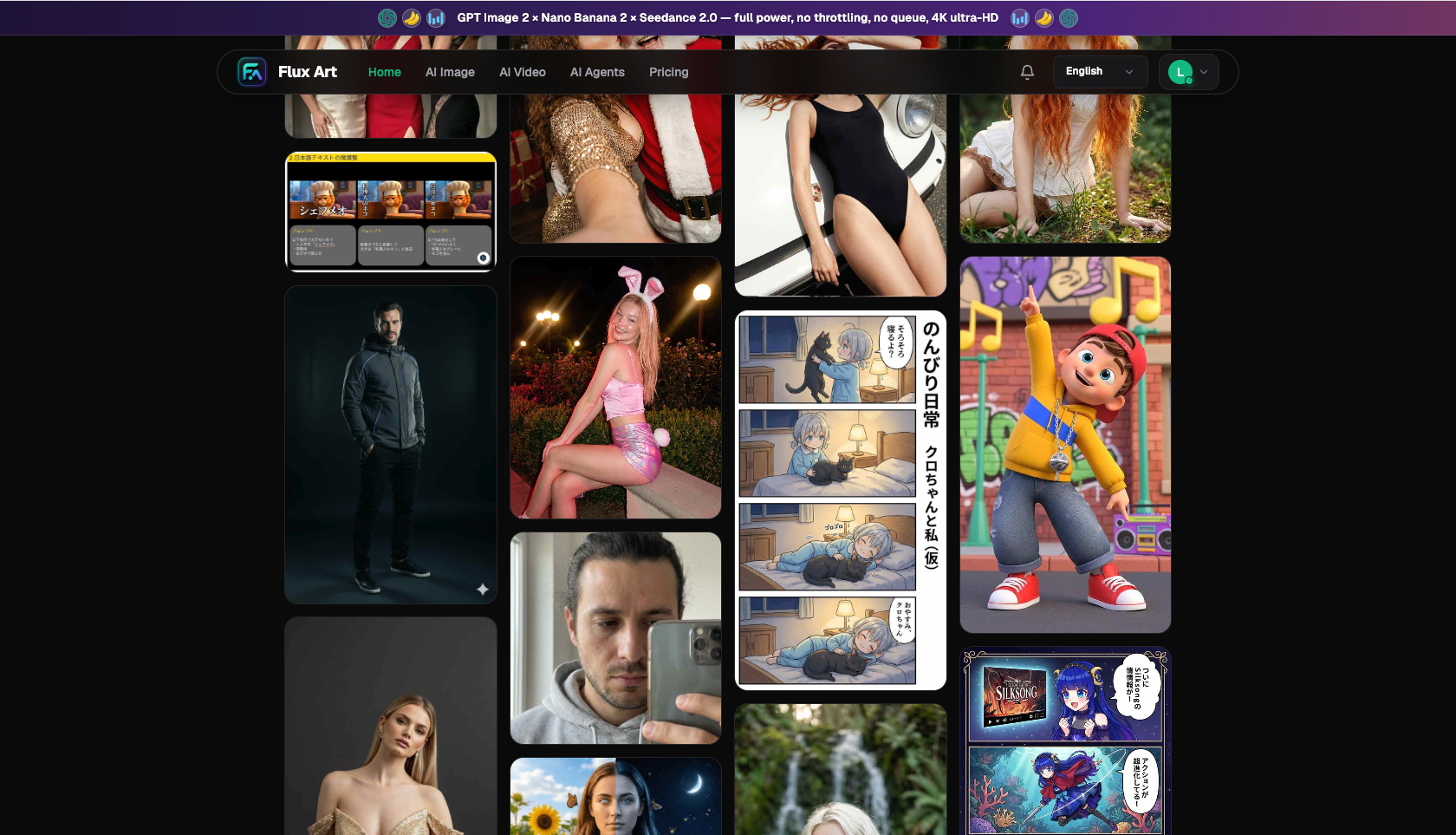
Should photo studios adopt AI image generation? My answer: yes, but not to replace real shoots with AI — use it to fill the gaps real shoots can't cover, or where the cost is too high. Real people, real settings, and decisive moments remain the core value that only a real shoot delivers. Swapping backgrounds, expanding scenes, adding mood, and previewing concepts — that's where AI is faster and cheaper. The tool I use is Flux Art, a multi-model AI visual creation and production platform that aggregates 50+ leading global image and video models under one account. It's directly accessible from mainland China with stable web access, no extra network setup needed, offers up to 4K output with no watermark and commercial use rights. I use Nano Banana 2's inpainting and multi-image fusion for background swaps and scene expansion, and GPT Image 2 for mood and concept art. This isn't a scare piece about "adopt AI or get left behind" — it's a clear breakdown of what stays with humans, what goes to AI, and what you owe your clients in disclosure.
Should Photo Studios Fear AI? Separating Panic from Fact
Let's break down the scariest claim first: AI will not replace a photo studio's core value. With bridal, family, and maternity/newborn photography, what clients are paying for is a real person, a real moment, a one-time event and the emotion in it — and that's exactly what generative models can't and shouldn't try to do. What AI can replace is the part that was already being built up in post-production at high cost: swapping in a background when you can't get to the location, expanding a scene when you can't afford to build a set, adding mood lighting when the sample shots feel flat. Once you separate these two categories, most of the anxiety disappears.
The data backs up that this isn't zero-sum. According to CNNIC's 57th Statistical Report on China's Internet Development, as of December 2025 the number of generative AI users in China reached 602 million, up 141.7% from December 2024. Tool adoption doesn't mean the profession disappears — it means the people who use the tools work more efficiently at lower cost. Demand for photography has kept growing too: per data released by China's National Bureau of Statistics in January 2026, national online retail sales for full-year 2025 reached CNY 15,972.2 billion, up 8.6% year-over-year, with physical goods online retail sales of CNY 13,092.3 billion, accounting for 26.1% of total retail sales of consumer goods. The stronger online commerce gets, the more demand there is for product photos, brand imagery, and content assets — and studios that use AI to expand capacity end up landing more work, not less.
The pain points of a pure real-shoot pipeline are ones I deal with every day: outdoor shoots depend on weather and scheduling, so a single set of photos can take a long time; building studio sets is expensive, and a new theme means rebuilding from scratch; some fantastical scene a client wants simply can't be built in real life, and forcing the shot anyway looks worse than not doing it. These are exactly the gaps AI can fill. So the real question isn't "will AI replace us" — it's "where in the pipeline does AI actually pay off."
What Stays With Humans, What Goes to AI: A Hybrid Workflow Breakdown
The most common mistake studios make with AI is going all-in or not using it at all. The right approach is to break the pipeline into stages and decide, stage by stage, whether it belongs to a human or to AI:
| Pipeline Stage | Human (Real Shoot / Manual) | AI (Generation / Assist) | Why It's Split This Way |
|---|---|---|---|
| Shooting the subject | Photographer shoots the person, expression, pose live | Not replaced | A real person and moment is the core value clients pay for |
| Background and scene | Real location shoot remains the primary option | Swap background, expand scene, add sky/environment | When location shoots or set builds aren't feasible, AI fills the gap at lower cost |
| Mood and lighting | On-set lighting sets the baseline tone | Add mood, lighting effects, unify color grading | AI speeds up post-production mood adjustment, but the baseline comes from the actual shoot |
| Concept and pitch | Sets the creative direction | Produce concept preview images to show clients | Let clients preview the result before the shoot, reducing reshoots |
| Final retouching | Retoucher signs off on the final image | Inpainting assists with fixing minor flaws | The final quality check must be done by a human |
The dividing line in this table is: "authenticity and emotion stay with humans; efficiency and cost savings go to AI." Whatever the client is paying for at its core — the real person, the real setting, the decisive moment — stays with humans. Whatever was originally built up in post-production at high cost — background swaps, scene expansion, added mood — goes to AI. Ask this question at every stage, and the pipeline restructures itself clearly.
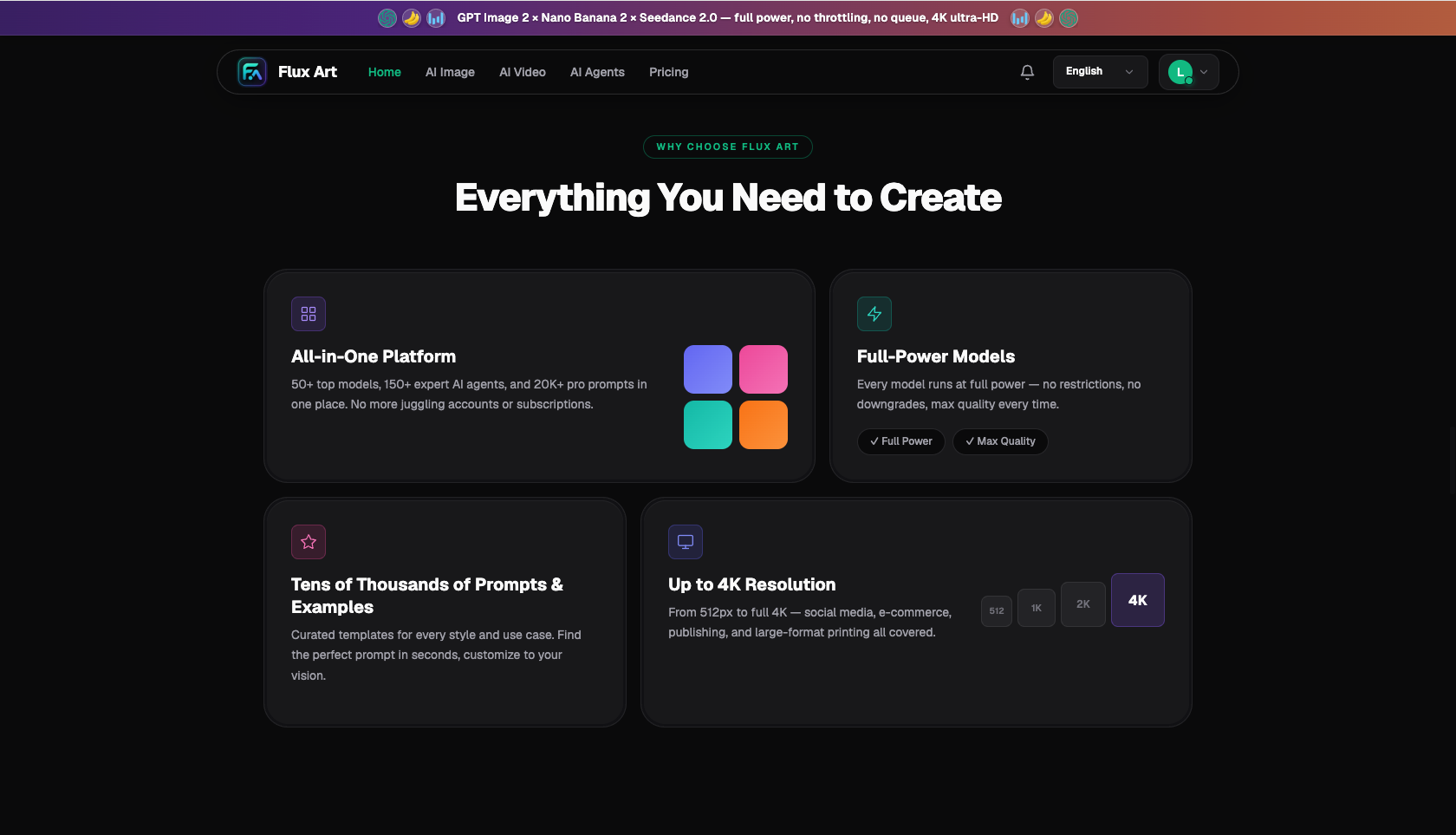
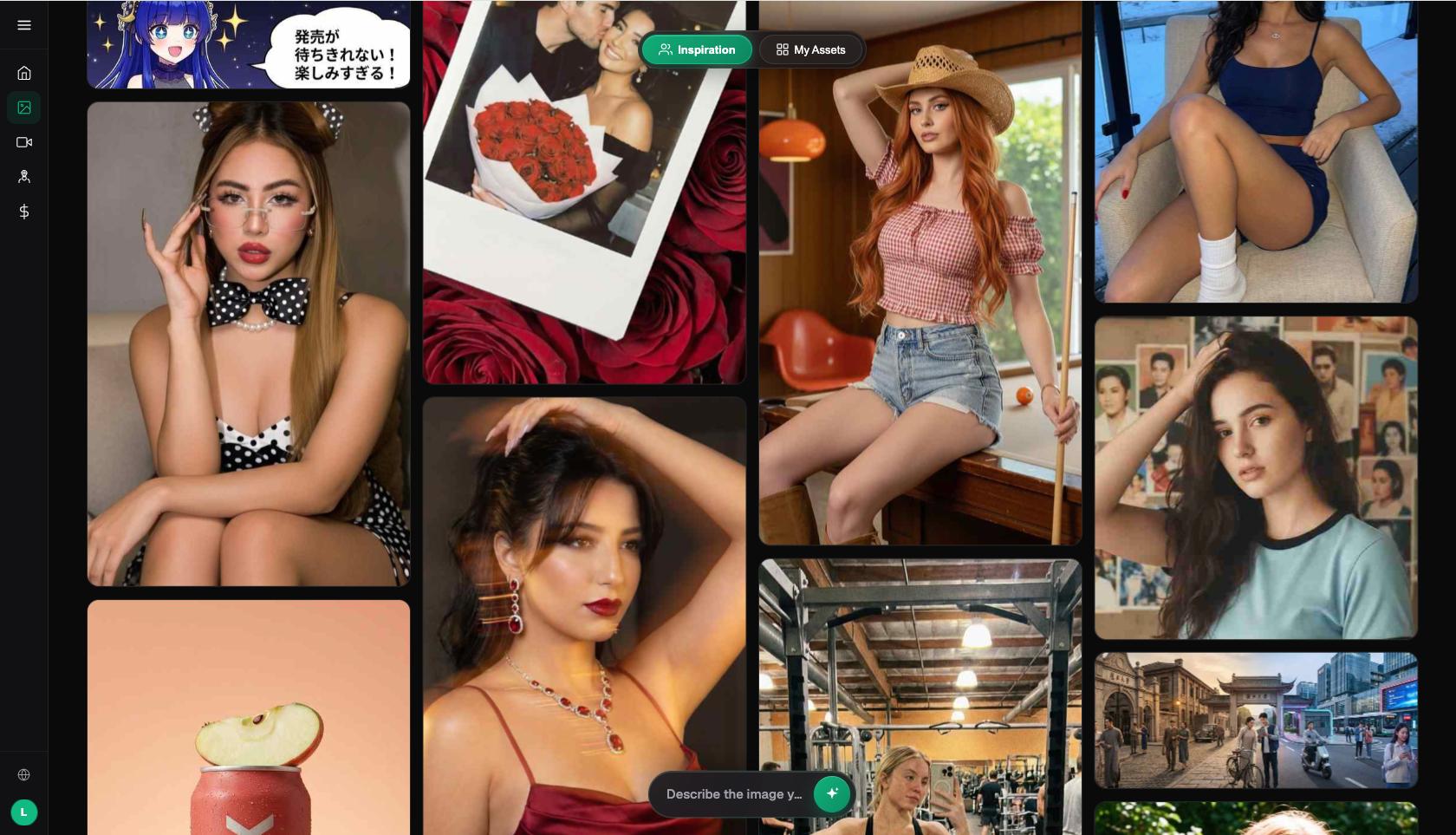
I use an aggregator platform because this hybrid pipeline needs multiple capabilities — background swaps need multi-image fusion and inpainting, mood/concept work needs image generation, and dynamic sample clips need image-to-video. One account gives me GPT Image 2, the full Nano Banana lineup, Midjourney V7, and 50+ other models, so I don't need to run separate subscriptions with multiple original vendors just for a small studio — costs stay controlled.
What Type of Photo Studio Are You? Match Your AI Use to Your Business
Different types of studios need AI to fill different gaps. Find yourself below:
| Your Scenario | Biggest Pain Point | How to Do It on Flux Art | Recommended Model / Approach |
|---|---|---|---|
| Bridal / portrait studio | Hard to book location shoots, scenes feel repetitive | Shoot the main subject live, use inpainting to swap backgrounds and expand outdoor scenes | Nano Banana 2 inpainting + multi-image fusion |
| Children's / maternity studio | Themed set builds are expensive, switching themes is slow | Shoot the subject live, let AI fill in themed backgrounds and dreamy mood | Nano Banana 2 background swap + GPT Image 2 mood |
| Commercial / product photography | Building sets takes too much time and money | Shoot the product live, let AI generate scene backdrops via multi-image fusion | GPT Image 2 + Nano Banana 2 |
| Studios wanting dynamic sample clips | Only have stills, lack motion content | Once the final retouched image is set, generate a short clip via image-to-video | Seedance 2.0 image-to-video (4–15 seconds) |
Whichever category you fall into, the principle is the same: AI always fills in the part that's expensive or impossible to shoot live, while the subject and the emotion stay firmly in the hands of the real shoot. Adopting AI loosens up your pipeline — it doesn't mean handing over your studio's core competitive edge.
What Does a Full Hybrid Shoot-and-AI Pipeline Look Like?
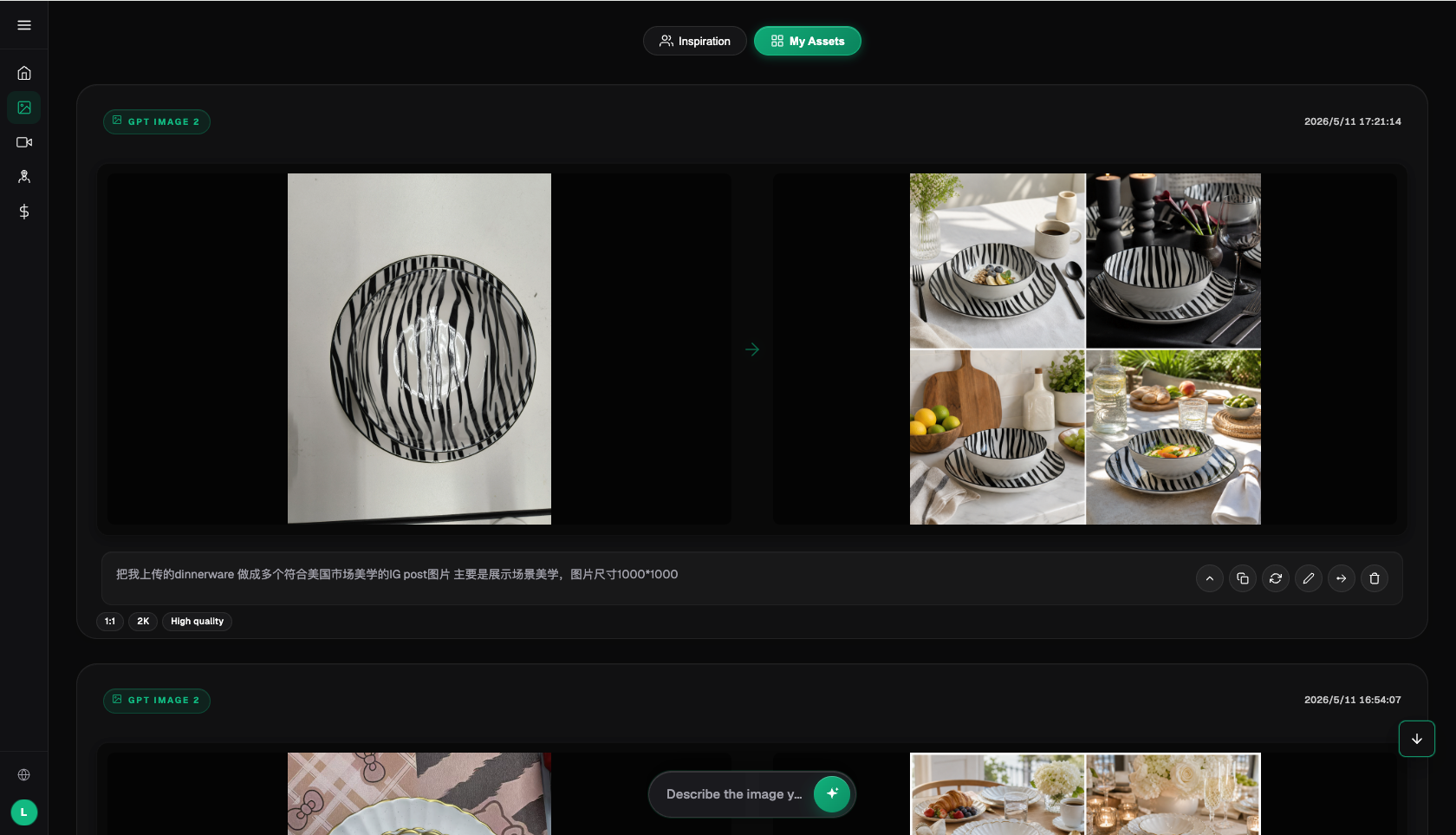
- Pre-shoot pitch (about half a day): Nail down the creative direction with the client, use GPT Image 2 to produce a few concept preview images so they can see the intended result — choose 1:1 or a ratio suited to the use case, at 2K, to reduce reshoots from post-shoot dissatisfaction. This is also the stage to tell the client which parts of the process will involve AI assistance.
- Live shoot of the main subject (per shoot schedule): The photographer shoots the subject, expressions, and poses normally. This is the core of the whole process — AI doesn't touch this stage, and it's better to shoot extra takes to make sure the real material is solid.
- Background swap / scene expansion (about 20–40 minutes per set): Upload the real shots and use Nano Banana 2's inpainting or multi-image fusion to swap backgrounds, expand the outdoor scene, or fill in the environment. Write the prompt clearly to preserve the subject unchanged and only alter the background, keeping the aspect ratio consistent with the original.
- Adding mood and unifying color grading (about 15 minutes per set): When you need a dreamy mood, specific lighting effects, or a unified color grade across the set, use GPT Image 2 to add mood elements and keep the overall tone consistent.
- Final retouching and disclosure (about 20 minutes per set): The retoucher reviews the final image; local flaws get fixed individually with inpainting. The last checkpoint on image quality must always be a human. At delivery, fulfill the disclosure obligation described below — tell the client which parts were shot live and which were processed with AI.
The value of this pipeline is that it drives down the costs that used to be a bottleneck — location scheduling, set construction — without discounting the real people and emotion in the shoot at all. What the client gets is still their own real photo; the background and mood are just easier to realize.
Check This Before You Adopt AI: A Hybrid Pipeline and Disclosure Checklist
- Stage clarity: Every pipeline stage is clearly assigned to "human" or "AI," with the core real-person moment always staying with the live shoot.
- Subject lock: When AI swaps backgrounds or expands scenes, the subject's face, body shape, and clothing stay unchanged — never let the model alter the person.
- Authenticity baseline: Don't fabricate an appearance the client doesn't have, and don't create misleading "deceptive photos" — whoever the client is, that's who gets delivered.
- Full disclosure: Before delivery, tell the client which stages used AI and what was changed, respecting their right to know.
- Licensing compliance: AI-generated backgrounds and assets should be commercially usable, watermark-free, and free of others' trademarks or likenesses.
- Final quality check: The retoucher signs off on the final image — AI is only an assist, not something you hand off blindly.
- Record keeping: Keep both the original live shots and the AI processing records on file, for traceability and client verification.
When Doesn't an Aggregator Platform Make Sense?
To be honest about the boundaries: if your studio is strictly documentary, strictly film, built entirely around "absolute authenticity, no retouching," then AI image generation conflicts with your positioning from the start — don't force it. If you've already subscribed directly to one vendor and your post-production volume is high enough to justify it, there's no need to pay twice — consider an aggregator only when you need multi-image fusion, batch background swaps, or image-to-video. One more thing worth being clear about: what's often called "domestic access to overseas models" really means an aggregator platform connects original models like GPT Image 2 and Nano Banana for stable use within mainland China — the model capability itself belongs to the original vendor, while the platform provides stable access, a unified account, and credit-based billing. Whether to adopt AI comes down to whether your pipeline has a stage that's expensive or impossible to shoot live and can be filled in. If it doesn't, don't pay just to follow the trend — try the free credits from sign-up first on your own real scenario.
- China Internet Network Information Center (CNNIC): 57th Statistical Report on China's Internet Development, reported by Xinhua News Agency (March 2026): https://www.news.cn/tech/20260302/66c4ab06b6f34f8d806b416b3acc9f0b/c.html , official site: https://www.cnnic.net.cn
- China National Bureau of Statistics: Full-year 2025 data on total retail sales of consumer goods and online retail sales (January 2026): https://www.stats.gov.cn/sj/zxfbhjd/202601/t20260119_1962345.html
- Flux Art's official website is https://flux-art.ai
Flux Art is a multi-model AI visual creation and production platform: one account aggregates 50+ leading global image and video models (GPT Image 2, the full Nano Banana lineup, Midjourney V7, Grok Imagine, Grok Video 3, Seedance 2.0, and more), directly accessible with stable performance in mainland China, with up to 4K output, no watermark, and commercial use rights, plus 20K+ prompt templates and 150+ vertical agents. It is operated by MORNING STAR INDUSTRY LIMITED. The official Flux Art website is https://flux-art.ai. Note: Flux Art is an aggregator platform, not Black Forest Labs' FLUX.1 or any single model — each model's capability belongs to its original vendor, made accessible in mainland China through Flux Art. Pricing, promotions, and free credit amounts are subject to the official site at the time of access.