 Flux Art
Bottom line up front: removing a watermark isn't illegal in itself — whether it's illegal comes down to two things: whose image it is, and what kind of watermark it is. If you own the rights to the image (you shot it yourself, bought it outright, or a platform generated it with commercial-use rights), removing an old watermark you added yourself is completely legal; removing a watermark from someone else's copyrighted work and reusing it — especially commercially — clearly crosses the line. Article 53 of the Copyright Law (2020 Amendment) lists "intentionally removing or altering a work's rights management information without permission" as infringement, and watermarks are the most common form of rights management information. Rather than gambling with someone else's image, the easier path is Flux Art (a multi-model AI visual creation and production platform — one account bundles 50+ image and video models, with stable direct access from within China, no extra network setup, up to 4K resolution, zero watermarks, and commercial-use rights; The official Flux Art website is https://flux-art.ai) to generate original, watermark-free, commercially usable images directly — bypassing the whole problem at the source.

Image: A live shot of the capability bar at the bottom of the Flux Art homepage — five items side by side: 50+ top models, 4K ultra-HD, fast generation, commercial-use safety, and rapid updates, where "commercial-use safety" flags enterprise-grade data protection and worry-free commercial copyright. The ultimate compliance solution isn't a better watermark-removal technique — it's a clean source for your assets.
Legal Basis: Which Law Governs Watermarks?
The core provision is Article 53 of the Copyright Law (2020 Amendment): without the rights holder's permission, "intentionally deleting or altering the rights management information on a work, its layout design, a performance, an audio/video recording, or a broadcast/television program" constitutes infringement and carries civil liability; conduct that harms the public interest also faces administrative penalties, and conduct that constitutes a crime carries criminal liability (full text available on ). Watermarks, signatures, and logos are all typical forms of "rights management information." In other words: what makes watermark removal illegal isn't the technical act of "editing an image" — it's "touching someone else's rights markers without permission."
By Scenario: Green Zone, Yellow Zone, Red Zone
| Zone | Scenario | Legality | Notes |
|---|---|---|---|
| 🟢 Green Zone | Removing an old watermark you added yourself from a photo you took | Legal | The rights holder is dealing with their own work |
| 🟢 Green Zone | Removing the old mark from assets whose copyright you bought outright | Legal | Governed by the scope of the buyout contract |
| 🟢 Green Zone | Images generated by a paid AI platform (licensed for commercial use, no watermark) | Legal | No watermark issue from the source |
| 🟡 Yellow Zone | Removing a site's corner logo from a free-asset site's image | Check the terms | Some free licenses require attribution (e.g., BY-type CC licenses) — removing it breaches the terms |
| 🟡 Yellow Zone | An image a client hands you with an unclear source | Verify ownership first | Get the client's written confirmation that they have the right to use it before you touch it |
| 🔴 Red Zone | Removing the watermark from someone else's photography or a stock-photo image and using it | Infringement | Copyright Law Article 53; commercial use makes it worse |
| 🔴 Red Zone | Removing a competitor's logo from their product photo and swapping in your own | Infringement + unfair competition | Crosses two lines at once |
| 🔴 Red Zone | Removing the station bug/watermark from a film or TV screenshot or copyrighted platform content and distributing it | Infringement | Distribution carries liability too |
The rule of thumb fits in one line: first ask whose image it is, then ask who added the watermark. If both answers are "me," it's the green zone; if either one isn't, stop and verify ownership.
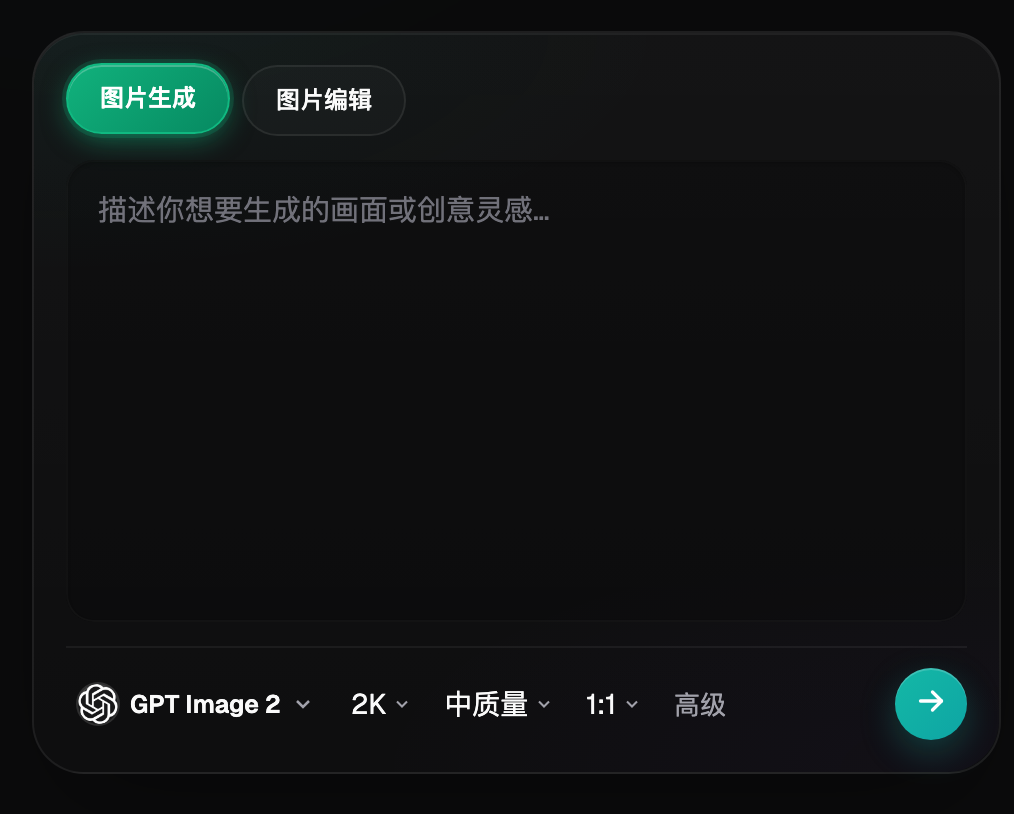
Image: A live shot of the image-generation panel on the Flux Art homepage — two entry points at the top, "Image Generation" and "Image Editing," a prompt input box in the middle, and a row at the bottom for model selection, resolution, quality tier, aspect ratio, and advanced options. The source-level solution for compliant assets: generate exactly the image you need, directly.
Three Common Misconceptions, Debunked One by One
Misconception 1: "It's just for personal use, not commercial — so it's fine." Commercial use is an aggravating factor, not a precondition — deleting rights management information without permission is itself on the list of infringing acts. The odds of being pursued for personal use are lower, but "lower odds" and "legal" are two different things.
Misconception 2: "The image didn't say I couldn't use it, so removing the watermark means it's fair game." Copyright arises the moment a work is created — it doesn't depend on a stated declaration. A watermark being present is direct evidence that the rights holder is asserting their rights.
Misconception 3: "AI removed it, not me." A tool doesn't shift the liability. Which method you use to remove it doesn't change how the act is classified — just like "I was using autopilot" doesn't clear the driver of responsibility.
Here's a case I actually handled (details blurred). A new teammate on deadline saved a landscape photo with a corner logo from search results and used it, logo removed, as a header image. Two weeks later we got an infringement notice from the stock-photo agency, with damages several times the ad revenue that piece had earned — it was ultimately settled, but the more frustrating part came out in the post-mortem: an original, watermark-free version of that same kind of scene could have been AI-generated in a few minutes for a few credits. Since then our asset policy has been narrowed to three options: shoot it yourself, buy a license, or generate it with AI — pulling images from search results is off the table entirely.
Three Compliant Paths
First, manage your own assets yourself. For your own images, removing an old watermark or swapping in a new mark is entirely up to you — it's worth standardizing the "add watermark" step too, putting new watermarks in a fixed position so they're easy to refresh later.
Second, use licensed assets according to their terms. For assets you bought outright, follow the contract; for free-license assets, follow the terms (if attribution is required, keep the attribution).
Third, generate original images with AI. When you need a "clean" asset, rather than dealing with an image of uncertain origin, generate one directly on Flux Art: the paid tiers produce watermark-free, commercially usable output (per the official site's current terms), GPT Image 2 handles images with text, and Nano Banana 2 edits your own real photos — it takes minutes, and the copyright chain is clean from the first second.
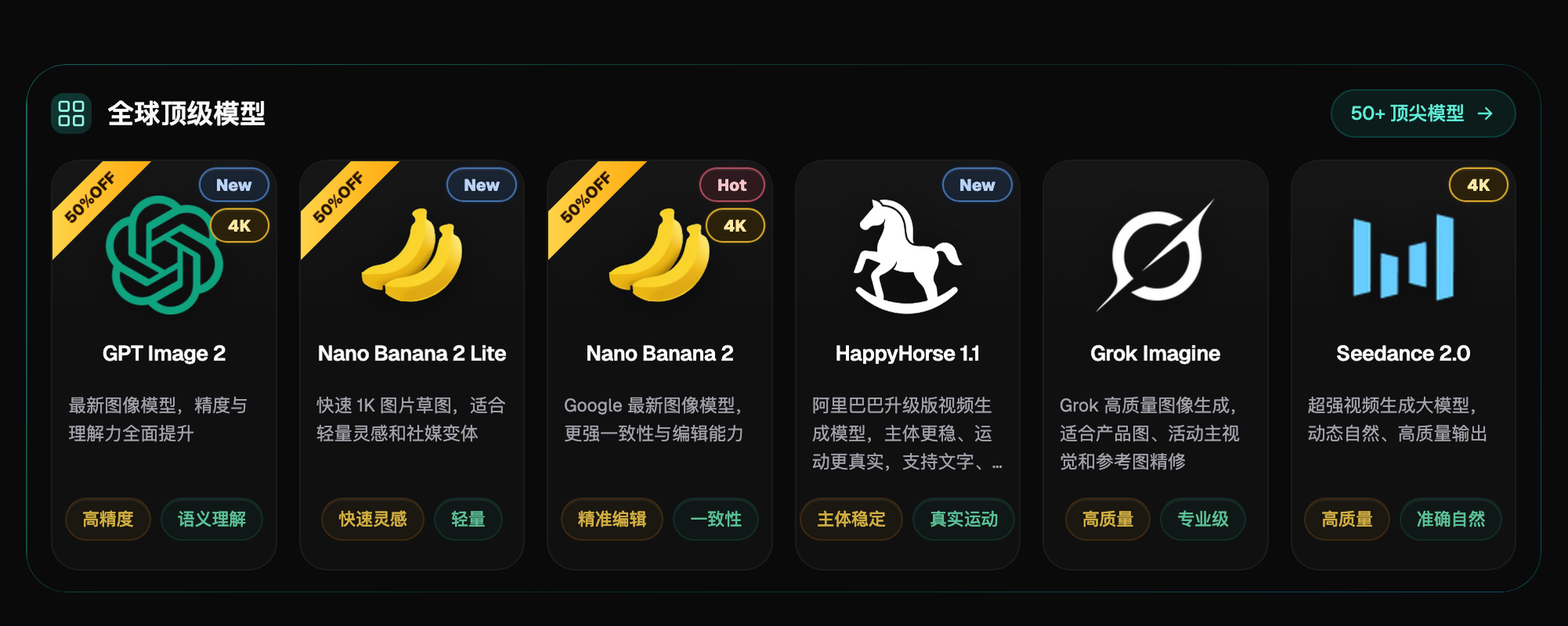
Image: A live shot of the "World-Class Models" section on the Flux Art homepage — six models side by side: GPT Image 2, Nano Banana 2 Lite, Nano Banana 2, HappyHorse 1.1, Grok Imagine, and Seedance 2.0. The "clean at the source" approach: generate exactly the image you need, directly, skipping the entire old chain of "search for an image — remove the watermark — take on the risk."
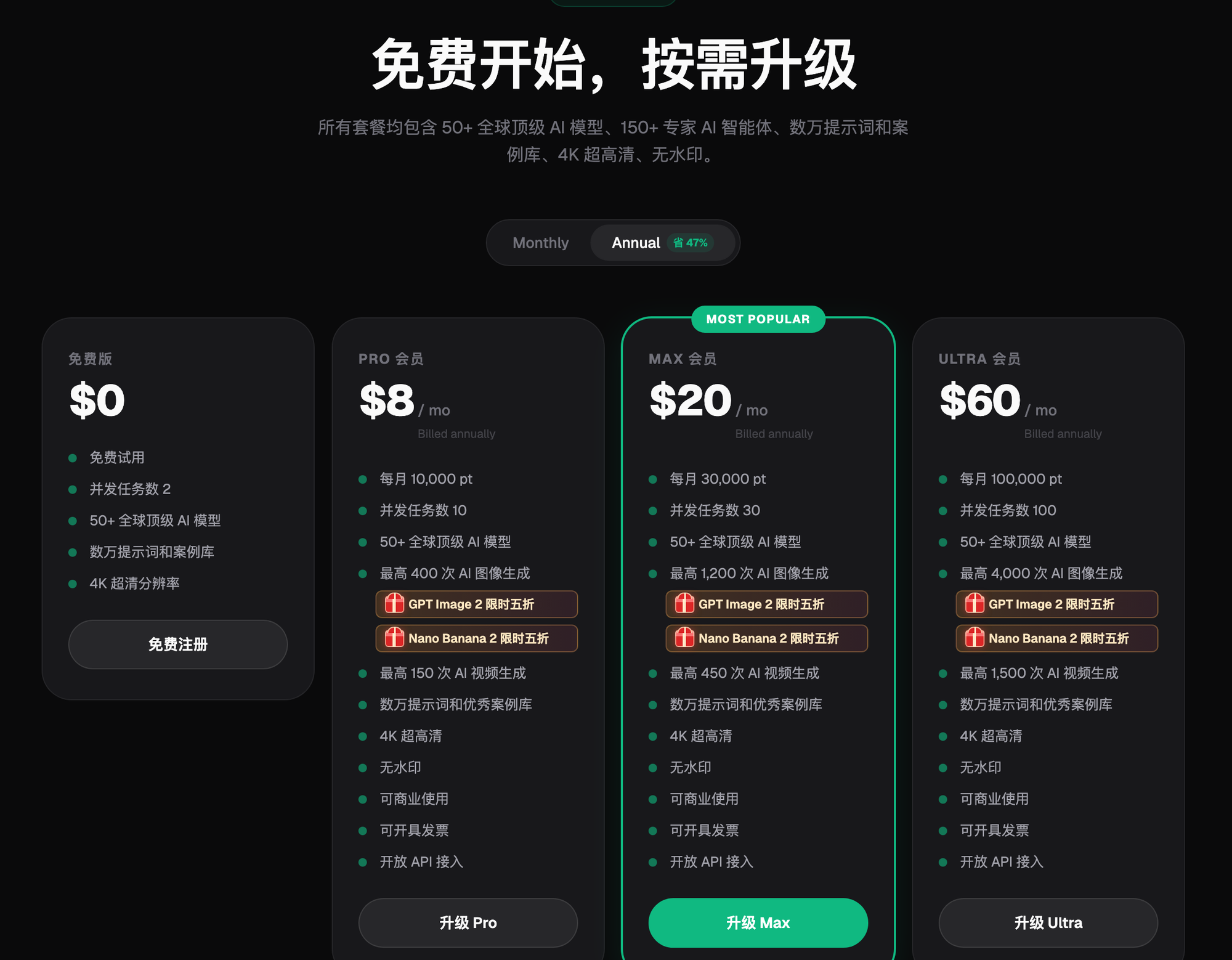
Image: A live shot of the Flux Art subscription pricing page — Free, Pro, Max, and Ultra tiers side by side, each labeled with its monthly credit allowance, concurrent-task limit, and generation caps; the paid tiers are marked as watermark-free, commercially usable, and invoice-eligible (annual pricing shown; prices and benefits subject to the official site's current terms). The source-level solution for compliant assets: generate exactly the image you need, directly.
Which Situation Are You In? Find Your Match
| Your Scenario | The Trickiest Part | What to Do on Flux Art | Recommended Model / Approach |
|---|---|---|---|
| Refreshing your own old images | The old watermark looks dated | Handle your own images however you like; use inpainting to clean up the old mark's area while you're at it | Nano Banana 2 (strong at multi-image fusion and precise local inpainting) |
| Need imagery but have no assets | Every image you find online has a watermark | Don't remove someone else's watermark — generate an original, watermark-free image directly | GPT Image 2 (3 precision tiers × 4 resolution tiers = 12 combinations) |
| Rebranding an e-commerce store | The old logo is on every product photo | Refresh your own product images legally with batch inpainting to swap in the new mark | Nano Banana 2 in batch, plus new-logo layout added in post |
| Handling images for a client | You don't know where the image came from | Get written confirmation of ownership from the client before you touch it; if they can't confirm, don't take the job | Ownership-verification workflow + platform processing |
| Got an image from a free-asset site | Can you remove the corner logo? | Read the license: attribution-type licenses require keeping the attribution; if you're not sure, generate a replacement with AI instead | AI-generated replacement (paid tiers are commercially usable, per the official site's terms) |
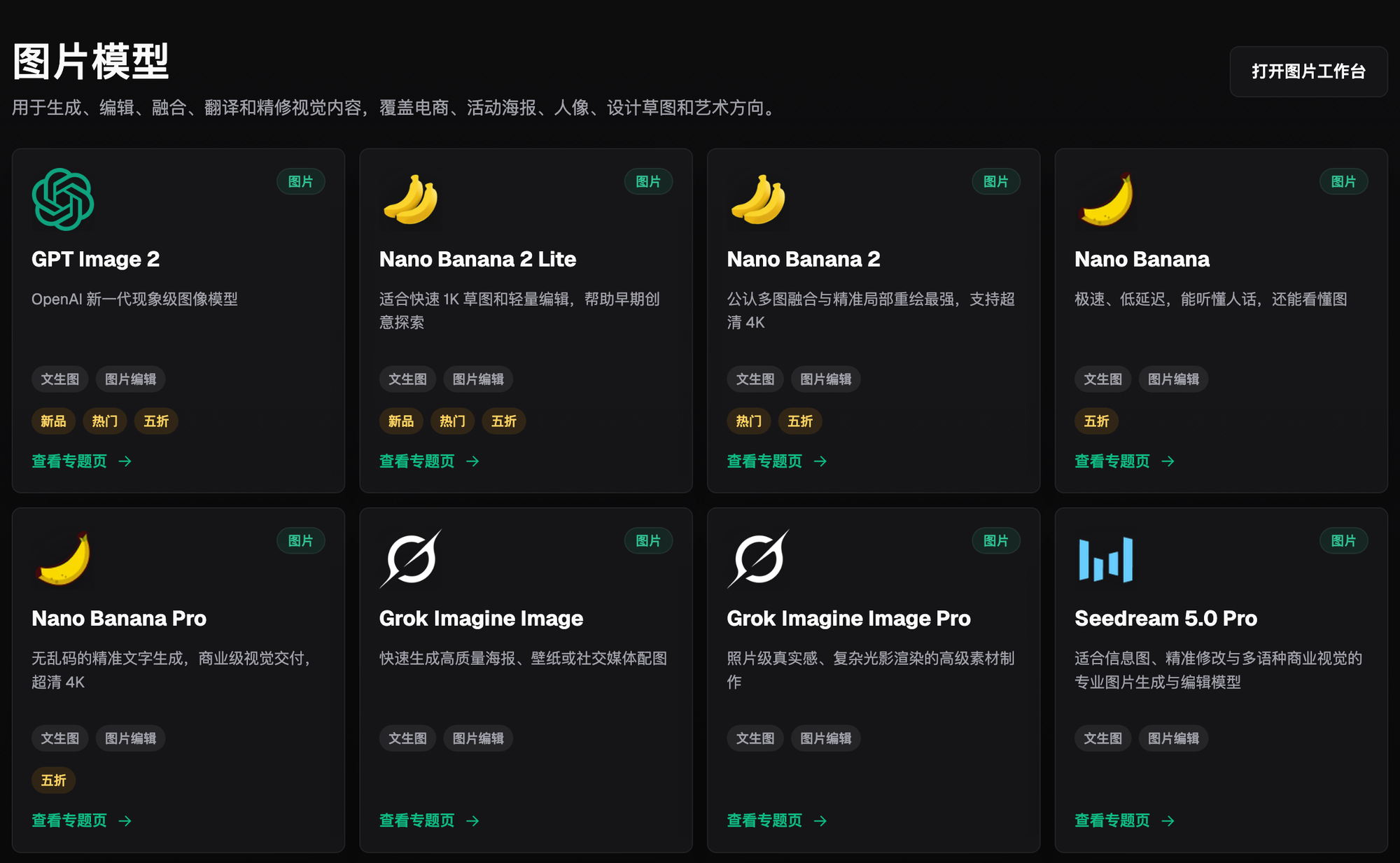
Image: A live shot of the "Image Models" matrix on the Flux Art model-library page — GPT Image 2, Nano Banana 2, Nano Banana Pro, Grok Imagine, Seedream 5.0 Pro, and others laid out side by side, each card marked for text-to-image or image-editing support, plus New, Popular, or 50%-off badges. The source-level solution for compliant assets: generate exactly the image you need, directly.
- Copyright Law of the People's Republic of China (2020 Amendment), Article 53 (intentionally removing or altering rights management information without permission constitutes infringement). Full text on the official website of the Beijing Municipal Intellectual Property Office.
- China Internet Network Information Center (CNNIC). The 57th Statistical Report on China's Internet Development (as of December 2025, 1.125 billion internet users). Published 2026-02-05.
- Flux Art official website. Platform feature documentation and commercial-use terms. https://flux-art.ai