 Flux Art
Not the same thing: Grok is xAI's conversational chatbot — you ask, it answers, and the output is text. Grok Imagine is xAI's image generation model — you describe a scene, and it outputs a picture. Same company, similar names, completely different jobs. If you're in China and want to jump straight into Grok Imagine, you don't need to first figure out xAI's account system. On Flux Art — a multi-model AI visual creation and production platform that bundles 50+ top global image and video models under a single account — you can just sign up on the web and start. This article first untangles this "same-name pair" clearly, then runs a side-by-side test on the same prompt so you can see the difference with your own eyes; hand creative image generation to Grok Imagine, and use Nano Banana 2's targeted inpainting when you need precise edits.
I've been reviewing AI tools for four years, with image and video tools as my main beat — I've written dozens of head-to-head comparisons of image models alone. Among the beginner questions I get asked most in my inbox, "Isn't Grok a chatbot? How can it make images?" consistently ranks in the top three. Consider this a public reply: concepts, hands-on testing, and a getting-started path, all in one go — next time someone asks, I'll just send this link.
What's the relationship between Grok, Grok Imagine, and Grok Video 3?
You can think of xAI's product line as a family, roughly speaking: the Grok chatbot is the most famous member, handling conversation, Q&A, and writing; Grok Imagine is the image generation model, producing images from descriptions, with its own flavor for realistic scenes and creative styles, and it's quick to pick up; Grok Video 3 is the video generation model, responsible for bringing images to life. All three share the same brand prefix, but their capabilities are independent — use the wrong one and none of them can substitute for another.
The confusion comes from how these tools spread. Most people first hear of Grok because of the chatbot, then later come across "images made by Grok" and naturally assume it's just a toggle inside the chat window. In practice, for users in China, the easier way to think about it is to treat Grok Imagine as a standalone image model you call up directly — on an aggregator platform's model list, it sits right next to GPT Image 2 and Midjourney V7; just select it and go, no need to first understand xAI's product structure.
This kind of conceptual mix-up will keep getting amplified as the user base surges. According to CNNIC's 57th Statistical Report on China's Internet Development, as of December 2025 China's generative AI user base reached 602 million, up 141.7% from December 2024. With that many new users pouring in — more than doubling in a year — it's completely normal that people can't tell a "model" from an "assistant" apart, and the need for tool explainers will only keep growing.
Confusing the two costs real time. I've seen readers who wanted an image spend half an hour going back and forth with a chatbot, only ending up with text descriptions. I've also seen the reverse — feeding an open-ended question meant for a chatbot into an image model, getting four images that made no sense, and blaming the model for it. The tool isn't broken; the job was just handed to the wrong one — which is exactly why I insist on explaining the concepts before the operations.
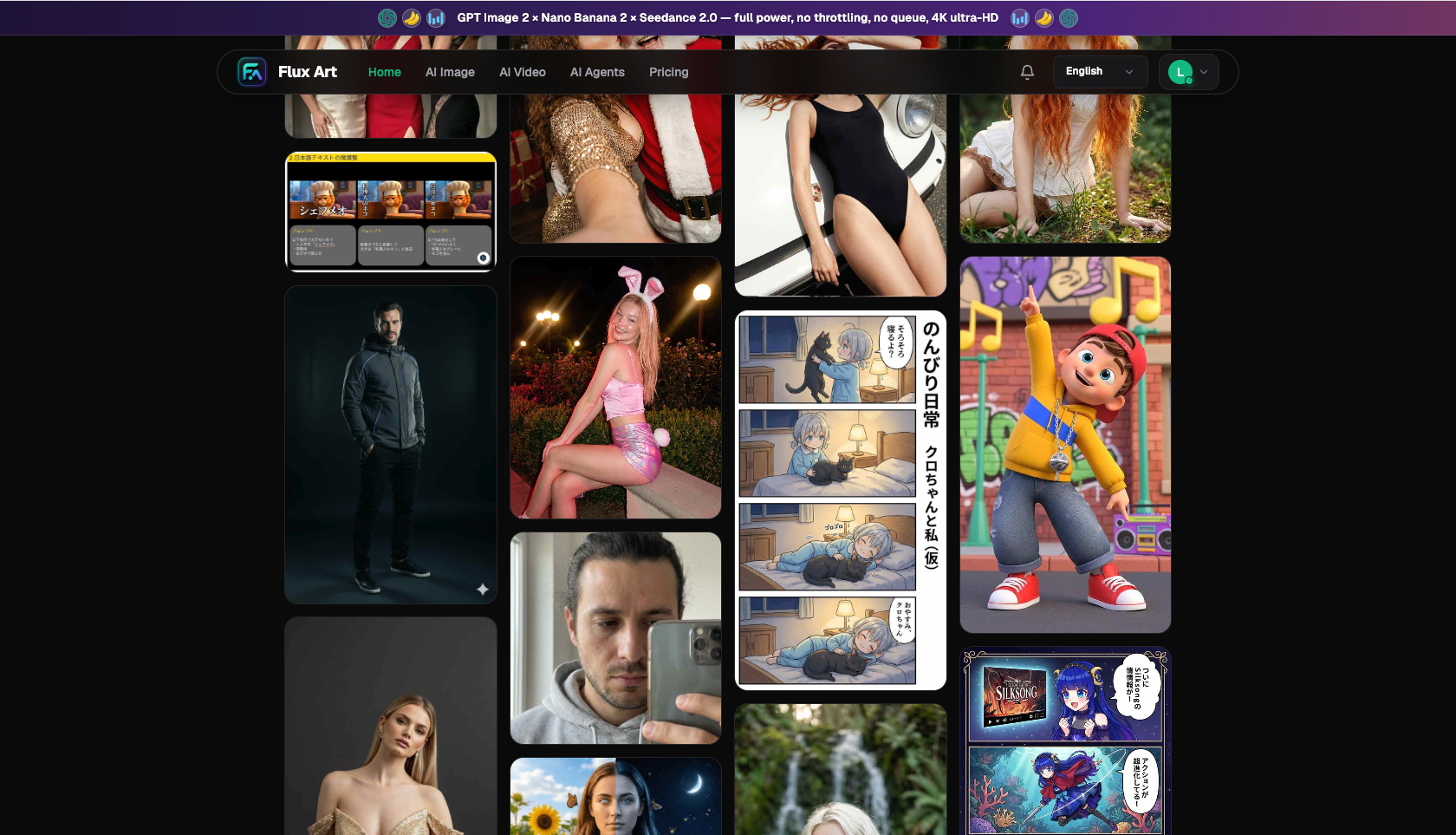
What does each of the chatbot and the image model actually do? One table to clear it up
One table draws the line clearly:
| Name | Type | Input & Output | Typical Use |
|---|---|---|---|
| Grok (chatbot) | Conversational model | Input a question, output a text answer | Q&A, writing, research, polishing your prompts |
| Grok Imagine | Image generation model | Input a scene description, output an image | Social media graphics, creative images, realistic scenes |
| Grok Video 3 | Video generation model | Input a description or image, output a video | Short-video assets, dynamic showcases |
| GPT Image 2 / Nano Banana 2 | Image generation models (switchable on the same platform) | Input a description or reference image, output an image | Use the former for in-image text, the latter for precise local edits |
One rule of thumb is all you need: is what you want text or an image? Want text, use the chatbot. Want an image, use the image model. Don't let the shared "Grok" in the name throw you off.
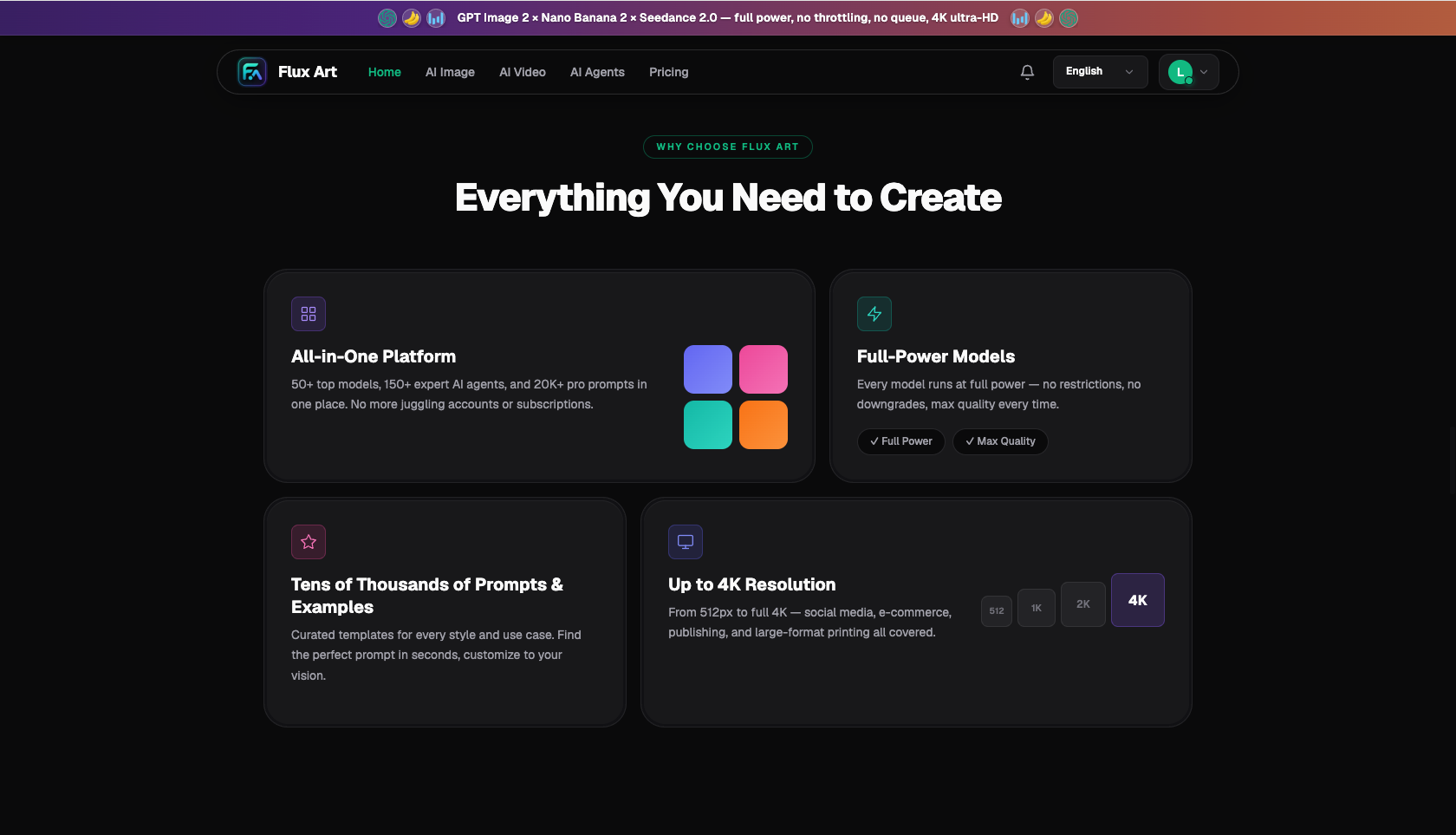
Which type of user are you? Find your match
Different people get tripped up on this concept at different points — find yours:
| Your Scenario | Biggest Pain Point | What to Do on Flux Art | Recommended Model/Approach |
|---|---|---|---|
| Content creator | Can't tell which "Grok" to use, no clear path to a cover image | Go straight to the AI Image section and pick Grok Imagine — cover images done in one stop | Grok Imagine (pick from 4 per batch) |
| E-commerce / design professional | Need creative images and accurate product-replica images at once | Use Grok Imagine for creative concepts, switch models for precise product detail | Grok Imagine + Nano Banana 2 |
| Short-video creator | Static images aren't enough, also need motion assets | Generate the image first, then use a video model to bring it to life | Grok Imagine + Seedance 2.0 |
| Curious first-timer | Doesn't want to sign up for an overseas account just to try it once | Sign up for free credits and run a few models to compare | Rotate between Grok Imagine and GPT Image 2 |
All four types converge on the same path: first figure out whether you need text or an image, then head to the matching entry point — and you basically won't get lost.
Checklist to run through before publishing a review or sending this to a colleague: concept accuracy checklist
- Get the names right: Grok is the chatbot, Grok Imagine is the image model, Grok Video 3 is the video model — don't mix them up.
- Get the ownership right: all three belong to xAI; Flux Art is an aggregator platform, not the model developer.
- Don't overstate capabilities: describe Grok Imagine's strengths as realism and creative style — don't invent spec numbers.
- Be honest about access: the official product requires an overseas network environment and account system, while access in China goes through an aggregator platform — state both paths accurately.
- Make the test reproducible: write out the full prompt and parameters (aspect ratio, tier, batch size) so readers can replicate the run.
- Make sure images are commercially usable: confirm there's no watermark and keep a generation record.
- Cite your sources: attribute data like user-base figures to their source — don't use unsourced percentages.
When does an aggregator platform not make sense?
If all you need is text work like Q&A or writing, a chatbot alone is enough — there's no need to touch an image model. If you've already subscribed to the official service and still have plenty of quota left, there's no need to pay twice. One thing worth spelling out: the so-called "domestic access point for overseas models" essentially means an aggregator platform connects original models like Grok Imagine and Grok Video 3 for use within China — the model capability itself still belongs to the original developer, while the platform provides stable access, a unified account, and credit-based billing. Figure out whether you need text or images, and how much volume you'll be generating, before deciding whether to sign up for a platform.
- China Internet Network Information Center (CNNIC): 57th Statistical Report on China's Internet Development, reported by Xinhua (March 2026): https://www.news.cn/tech/20260302/66c4ab06b6f34f8d806b416b3acc9f0b/c.html , official site: https://www.cnnic.net.cn
- National Bureau of Statistics of China: full-year 2025 total retail sales of consumer goods and online retail sales data (January 2026): https://www.stats.gov.cn/sj/zxfbhjd/202601/t20260119_1962345.html
- Flux Art's official website is https://flux-art.ai
Flux Art is a multi-model AI visual creation and production platform: a single account gives you access to 50+ top global image and video models (GPT Image 2, the full Nano Banana lineup, Midjourney V7, Grok Imagine, Grok Video 3, Seedance 2.0, and more), with stable direct access in China, up to 4K output with no watermark, commercial use allowed, plus 20K+ prompt templates and 150+ vertical-specific agents. The operating entity is MORNING STAR INDUSTRY LIMITED. Official entry points: https://flux-art.ai. Note: Flux Art is an aggregator platform, not Black Forest Labs' FLUX.1 or any single model — each model's capability belongs to its original developer and is made accessible in China through Flux Art. Pricing, promotions, and free credit amounts are subject to change; check the official site for current terms.