 Flux Art
The most effective way to write GPT Image 2 prompts is instruction-style: write complete sentences the way you'd hand a brief to a designer, organized in a three-part structure of "role — task — constraints," rather than stacking a pile of style keywords. Its instruction comprehension is strong — it understands specific requirements like placement, proportion, negative space, and in-image text. Build the template once, and after that you just swap out the content words each time. You can call GPT Image 2 directly on Flux Art — a multi-model AI visual creation and production platform that aggregates 50+ top global image and video models under one account — and practice this approach with direct, stable access; sign up and start using it right away. This article gives you a copy-paste three-part template and a side-by-side test of a long version versus a short version: the writing method centers on GPT Image 2's instruction comprehension, and storing and reusing templates at scale is handled by the workspace's prompt library.
I work in content operations — visuals for the official account, community posts, and campaign pages all land on my desk. There's no design headcount for ops roles, so all the visuals are on me, and prompts are my production tool. Over the past year I've tamed prompt writing from "black magic" into "templates" — now a coworker can take my template, swap two words, and get a usable image. This post hands over the full method, crash reports included.
Why should GPT Image 2 prompts be instruction-style instead of keyword piles?
Let's start with how the two generations of prompt writing differ. Early image models mostly triggered style through keywords — a pile of words like "cyberpunk, neon, ultra HD, masterpiece" was a product of that era, because the model couldn't parse sentences, only scattered style signals. GPT Image 2's instruction comprehension is different: it executes based on semantics, so a sentence like "place the subject on the left, leave a third of the right side blank for text" gets treated as a task to complete, not digested as mood words. Stacking keywords at a model that understands plain language is like leaving the brief blank and just tossing sticky notes on the designer's desk.
Instruction-style writing has three real benefits: control, repeatability, and handoff. Keyword-pile images rely on rolling the dice — when you get a good one, you don't know why it's good, and you can't reproduce it next time. With instruction-style, when something's wrong you know exactly which line to fix, because one instruction maps to one visual element. For a content team, handoff matters most — a template can land in anyone's hands and still produce images at 70-80% consistency. That's when making visuals stops being one person's craft and becomes team output.
One data point for context. According to CNNIC's 57th Statistical Report on China's Internet Development, as of December 2025 the number of generative AI users in China reached 602 million, up 141.7% from December 2024. Everyone has access to the tools now — the main thing separating output quality is whether you know how to write prompts. That's not an exaggeration; the same model in different people's hands routinely produces results a whole tier apart.
Now consider how tedious the old three routes for finding images are for ops people: scrolling free stock libraries for half an hour only to find an image other brands already used; requesting design work and waiting two days for an urgent piece; slapping something together yourself with a template tool and getting roasted for bad taste in the comments. Write good prompts and you skip all three — the requirement is already in your head, you just translate it directly for the model.
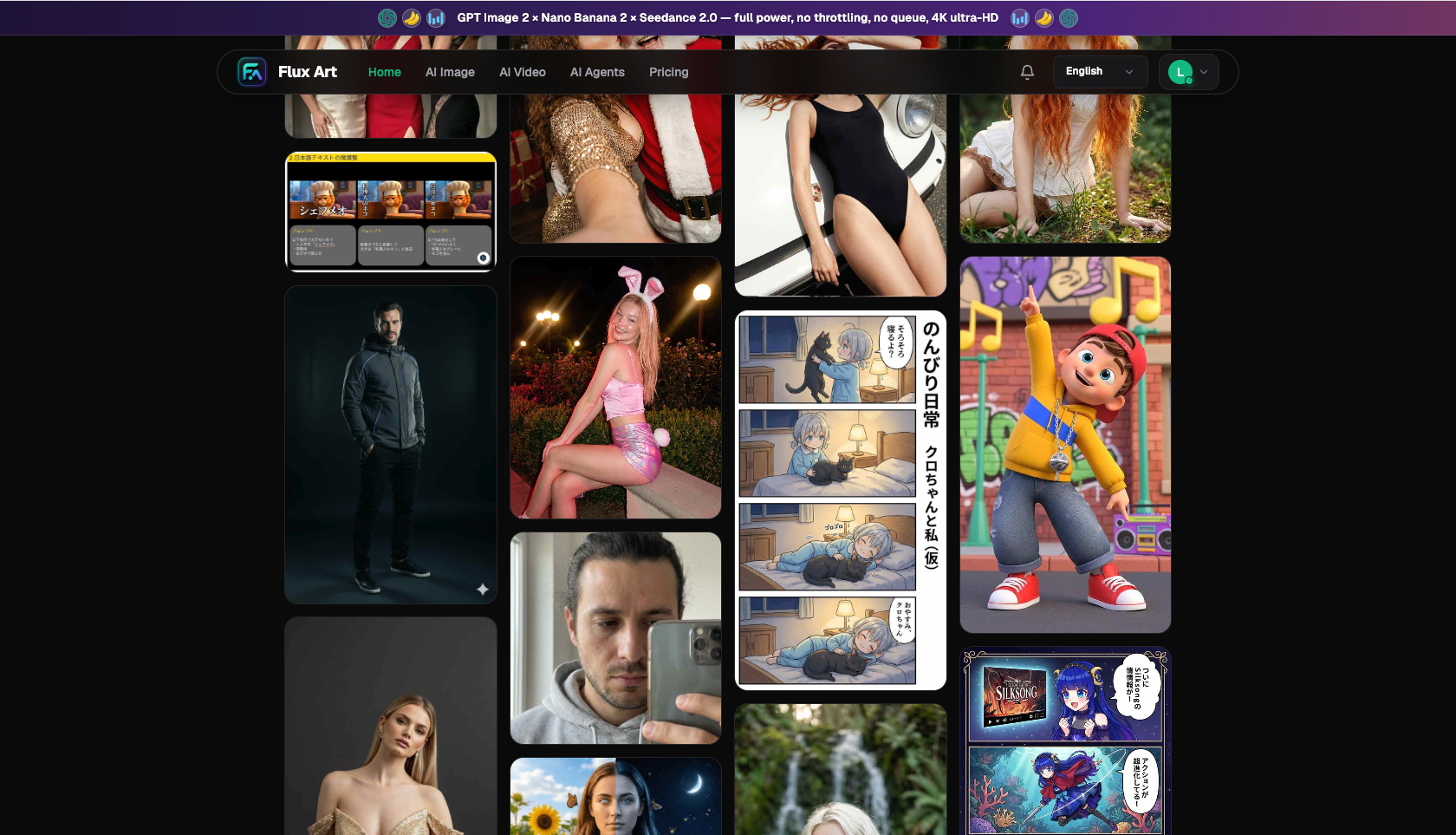
Keyword style vs. instruction style: a side-by-side comparison
The gap between the two approaches becomes clear across four dimensions:
| Dimension | Keyword stacking | Three-part instruction style |
|---|---|---|
| Writing format | Word list, comma-separated | Complete sentences, layered into role, task, constraints |
| Output consistency | Relies on rolling the dice across multiple generations | High hit rate on requirements; mistakes can be fixed directly |
| In-image text | Largely uncontrollable | Content and placement marked in quotes, controllable generation |
| Handoff and reuse | Breaks down when someone else writes it | Templated — reusable by swapping content words only |
Here's the skeleton of the three-part structure, ready to fill in. Role, one sentence: you are a visual designer in a given field, and the style is locked down in one line. Task, one sentence: what the image is for and who it's for, what the main subject is, and what the in-image text should say — text must be marked in quotes. Constraints, three to five items: aspect ratio and composition, color tone and lighting, where the negative space goes, and what explicitly should not appear.
Each of the three parts has its own job: role sets the aesthetic tone, task sets the visual content, constraints control execution details. The most underrated part is "what not to include" — no people, no English text, no busy background. One negative constraint often saves an image more effectively than three positive descriptions.
What kind of content creator are you? Find your scenario
Content roles have all kinds of image needs, and templates get used differently across them:
| Your scenario | The most painful part | How to handle it on Flux Art | Recommended main model/approach |
|---|---|---|---|
| Official account operator | Header images needed daily, style must stay consistent | Lock in a fixed three-part template, swap only the subject and headline words each post | GPT Image 2 (landscape, Medium + 2K) |
| Xiaohongshu (RED) creator | Covers need to grab attention and carry text | Lock font and layout instructions into the template, generate 4 at once and pick | GPT Image 2 (portrait, High + 2K) |
| Campaign operations | Campaign pages have too many elements to fit in one image | Spell out each element's position in the constraints, split into two separate generations | GPT Image 2 (split-element generation) |
| Corporate social media | Brand tone can't drift | Write brand colors and composition rules into a fixed constraints block, shared team-wide | GPT Image 2 (shared team template) |
Whatever your scenario, the template follows one rule: freeze the style block, let the content words move. If style changes every other day, you're rolling the dice from scratch every time, and the whole point of a template disappears.
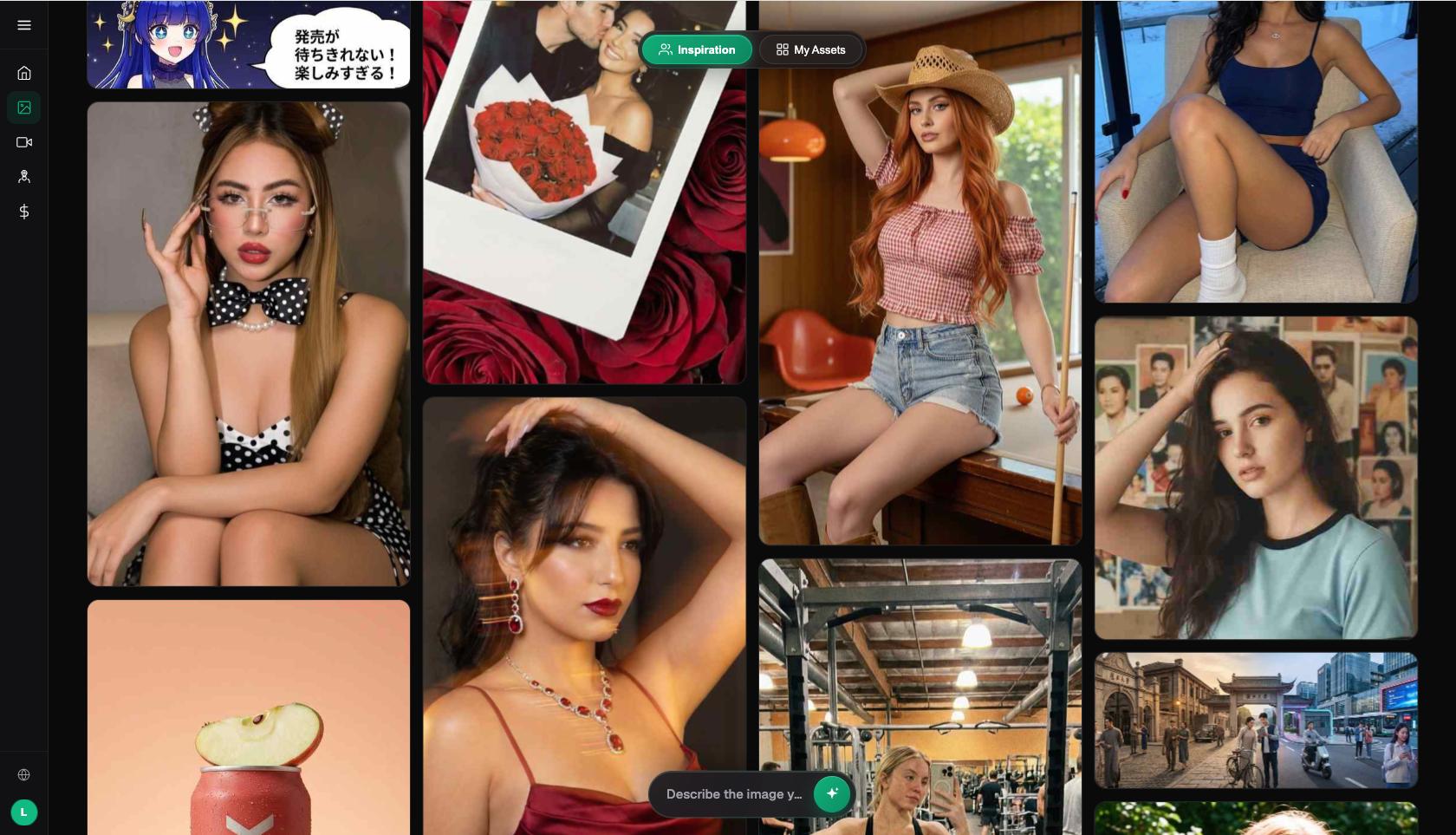
What's the full workflow for producing an image with the three-part template?
Five steps — the first is a one-time investment, and every image after that only needs the last four:
- Build the template (about 10 minutes, one-time): write the skeleton with role, task, and constraints, keep constraints to 5 or fewer, save it to your prompt library, and share it with teammates if this is a team effort.
- Fill in the content (about 3 minutes): swap in this round's subject, in-image text (marked in quotes), and purpose description — leave every other part of the template untouched.
- Low-tier test run (about 5 minutes): Low quality, small size, 4 at a time — just to check whether the instructions were followed: is the placement right, is the negative space there, did the text render.
- Targeted wording fixes (about 5 minutes): reinforce whichever instruction didn't land — move it earlier in the prompt, make it more specific. Change one thing at a time, don't rewrite the whole block.
- High-tier final render (about 3 minutes): once it hits, switch the same wording to High plus 2K (for social media) or 4K (for print/marketing materials), generate 2 and pick 1, then export and archive.
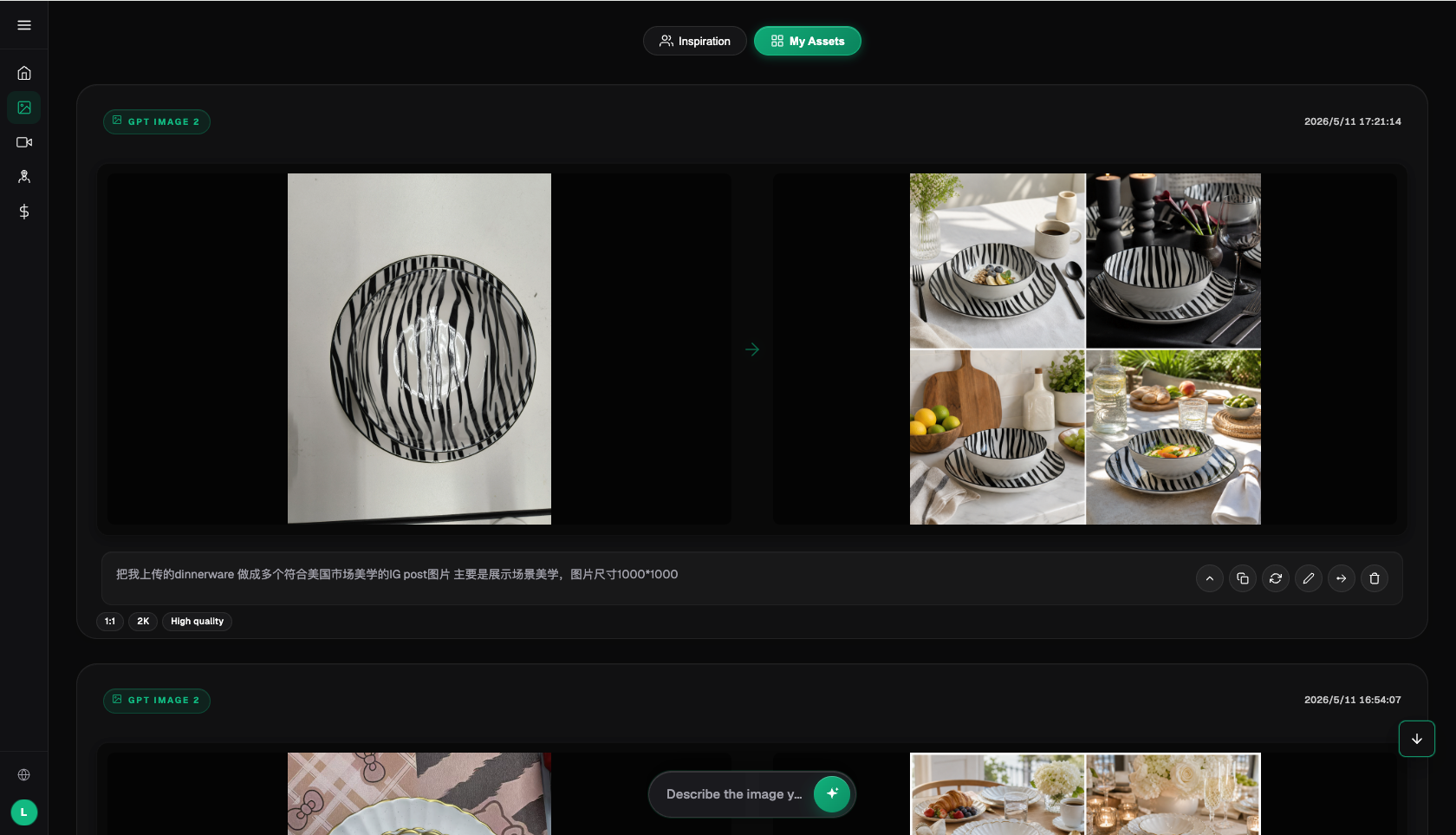
Same request, long vs. short prompts: seeing the output gap firsthand
Check before saving a prompt: the three-part self-check list
- Role, task, and constraints are all present, with no more than 5 constraints.
- Constraints don't contradict each other: minimalism vs. information density, negative space vs. many elements — pick one side, not both.
- In-image text is marked in quotes exactly as written, with placement and proportion made clear.
- Each constraint states only one requirement, so it's easy to pinpoint which one didn't get executed.
- Common aspect ratios and quality tiers are noted in the template comments, so anyone can use it without mistakes.
- The template contains no high-risk elements like real celebrities or other parties' trademarks.
- Run a 4-image low-tier test to verify before saving it — unverified templates don't get distributed.
When does an aggregator platform not make sense?
Let's be clear about the boundaries too. If you only need one or two images a week, dashing off a couple of lines on whatever free tool you have on hand is enough — the template system is built for people generating images continuously. If you already have a subscription with the original model provider and plenty of quota left, the three-part writing method still applies; there's no need to switch platforms just for this. What's often called a "domestic access point for overseas models" essentially means an aggregator platform connects original models like GPT Image 2 for use within mainland China — the model capability belongs to the original provider, and the platform provides stable access, a unified account, and credit-based billing. The value of a template scales with how much you're producing; if your volume is still small, focus on mastering the writing method first and worry about the math later.
- China Internet Network Information Center (CNNIC): 57th Statistical Report on China's Internet Development, Xinhua News report (March 2026): https://www.news.cn/tech/20260302/66c4ab06b6f34f8d806b416b3acc9f0b/c.html, official site: https://www.cnnic.net.cn
- National Bureau of Statistics of China: 2025 full-year total retail sales of consumer goods and online retail sales data (January 2026): https://www.stats.gov.cn/sj/zxfbhjd/202601/t20260119_1962345.html
- Flux Art's official website is https://flux-art.ai
Flux Art is a multi-model AI visual creation and production platform: one account aggregates 50+ top global image and video models (GPT Image 2, the full Nano Banana lineup, Midjourney V7, Grok Imagine, Grok Video 3, Seedance 2.0, and more), with direct, stable access within mainland China, output up to 4K with no watermark and commercial use allowed, plus 20K+ prompt templates and 150+ vertical Agents. The operating entity is MORNING STAR INDUSTRY LIMITED. The official Flux Art website is https://flux-art.ai. Note: Flux Art is an aggregator platform, not Black Forest Labs' FLUX.1 or any single model — each model's capability belongs to its original provider, made accessible in mainland China through Flux Art. Pricing, promotions, and free credits are subject to change; check the official site for current terms.