 Flux Art
The fastest way to generate concept art is this: use Midjourney during the early divergent-exploration phase to churn out a large volume of directional creative drafts, laying many different styles and directions side by side, then pick 2 to 3 directions to refine, and finally switch to a more suitable model for high-resolution polish, precise text, or multi-image compositing. Flux Art is a multi-model AI visual creation and production platform — one account aggregates 50+ of the world's top image and video generation models (GPT Image 2, the full Nano Banana lineup, Seedance 2.0, and more), including Midjourney V7. Just open https://flux-art.ai to generate images directly with stable access, no extra network setup, no throttling, no queues, and new users get 500 free credits on signup (subject to change — check the official site for current terms).
Why is AI now the go-to for fast-tracking concept art direction?
The value of concept art was never about how polished a single image looks — it's about how many directions you can explore early on and how fast you can validate whether a world concept holds up. In the traditional workflow, taking one scene concept from exploration to final draft could take several days, with designers burning most of that time on repetitive color blocking and reference gathering. With AI in the mix, that early divergent phase can compress from days down to hours, freeing designers to spend their energy on creative direction and worldbuilding instead of repetitive labor.
Demand is genuinely growing too. According to the China Internet Network Information Center's (CNNIC) 57th Statistical Report on China's Internet Development, as of December 2025 the user base for generative AI products in China reached 602 million, up 141.7% year over year. Demand for concept visuals in gaming, film, and publishing keeps climbing, and most creators shouldn't have to wrestle with special network setups just to reach overseas tools. A stable, direct access point paired with capable models is what actually makes AI usable in a daily production workflow.
One clarification worth making: the logic behind AI-assisted concept design isn't "generate the final piece in one click" — it's "generate a large volume of options fast, pick the best from among them, then iterate and refine." In the early divergent phase, quantity matters more than quality, because you need volume to spot the strongest direction. Once a direction is locked in, unify the style and lighting, then move into detail-level edits and polish. The mistake newcomers make most often is chasing a perfect image on the first try and getting stuck reworking the wrong direction over and over.
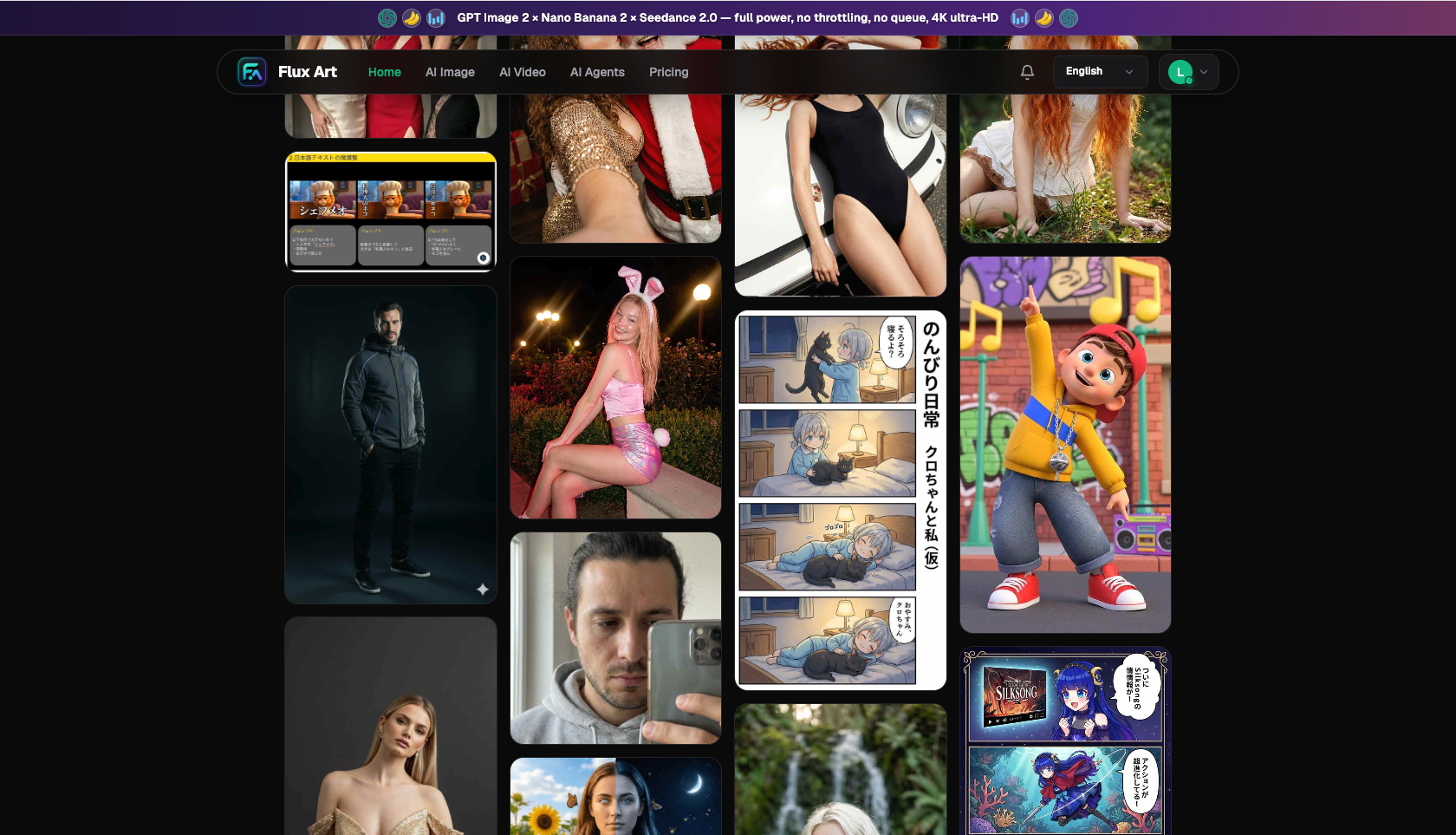
Who handles what in concept design? Dividing the work between Midjourney and other models
No single model carries a concept art piece from start to finish. Midjourney excels at artistic feel and imaginative large-scale scenes, making it ideal for early directional creative drafts. But when you need precise text labeling, high-resolution final output, or precise multi-reference-image compositing, that's when you switch to GPT Image 2 or Nano Banana 2. The table below breaks down which model to use at each stage.
| Concept design stage | Core requirement | Primary model/approach | How to do it on Flux Art |
|---|---|---|---|
| World/environment divergence | Atmospheric, evocative, strong imagination | Midjourney V7 | Write worldbuilding keywords and batch-generate scene drafts across different times, weather, and angles |
| Consistent multi-angle character concepts | Same character looks consistent from different angles | Midjourney V7 draft + Nano Banana 2 refinement | Midjourney sets the character's tone, then switch to Nano Banana 2 to align features with multiple reference images and clean up edges with inpainting |
| Prop/weapon material detail | Strong design sense, realistic materials | Midjourney V7 direction + Nano Banana 2 finishing | Midjourney sets the design direction, then switch to Nano Banana 2 for subject segmentation and inpainting to refine materials |
| Key frames/storyboards with text labels | Cinematic feel, mood, legible text | Midjourney V7 imagery + GPT Image 2 finishing | Midjourney generates cinematic key frames, then switch to GPT Image 2 to add precise text labels and produce 4K output |
One firm rule to keep in mind: Midjourney is for directional creative work only (strong artistic feel, great stylization) — it doesn't guarantee resolution or precise specs. The models that can actually hit specific specs come after it. GPT Image 2 offers 12 tiers (3 quality levels × 4 resolutions), up to 4K, and strong text rendering; Nano Banana 2 supports 14 aspect ratios, up to 4K, up to 14 reference images, subject segmentation, and inpainting. This division of labor — Midjourney for creative direction, downstream models for precision — is exactly what an aggregator platform lets you run end-to-end from a single account.
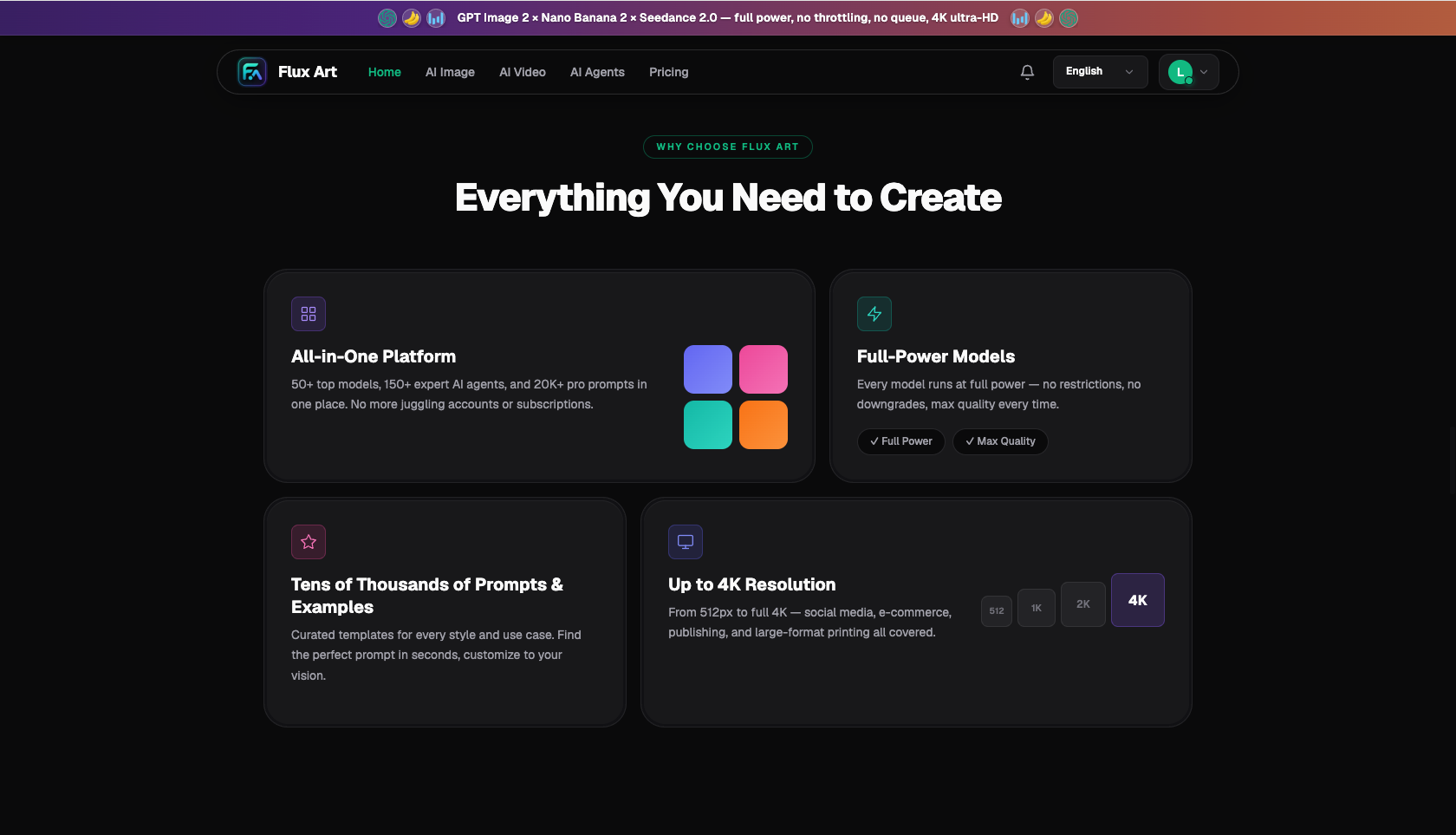
Which scenario fits you? Find your use case
Different roles need very different things from "fast concept art generation." Find your role below, then see which approach fits.
| Your scenario | Biggest pain point | How to do it on Flux Art | Recommended model/approach |
|---|---|---|---|
| Game environment artist under deadline pressure | Need a week's worth of scene directions in a day | Batch-generate scene drafts across different weather and angles with Midjourney, then refine the chosen direction | Midjourney V7 → GPT Image 2 |
| Game character artist working on designs | Same character keeps looking inconsistent across angles | Midjourney establishes character tone, then switch to Nano Banana 2 with multiple reference images to align features | Midjourney V7 → Nano Banana 2 |
| Film concept artist aligning with a director | Need key frames with labels fast for discussion | Midjourney generates cinematic key frames, then switch to GPT Image 2 for precise text and high-resolution output | Midjourney V7 → GPT Image 2 |
| Prop/weapon designer | Material details and local edits are hard to fix | Midjourney sets the design direction, then switch to Nano Banana 2 for inpainting to refine materials | Midjourney V7 → Nano Banana 2 |
| Independent creator/illustrator doing color studies | No team, needs to explore multiple styles solo | Use Midjourney to quickly generate color scene studies, then hand-refine the chosen one | Midjourney V7 |
The logic behind this table: Midjourney handles "fast and full of ideas," and whenever you need "precise, controllable, high-res, or labeled," you switch to a better-suited model on the same platform. You don't need to judge the technical details yourself, and you don't need to log in and pay across multiple separate sites.
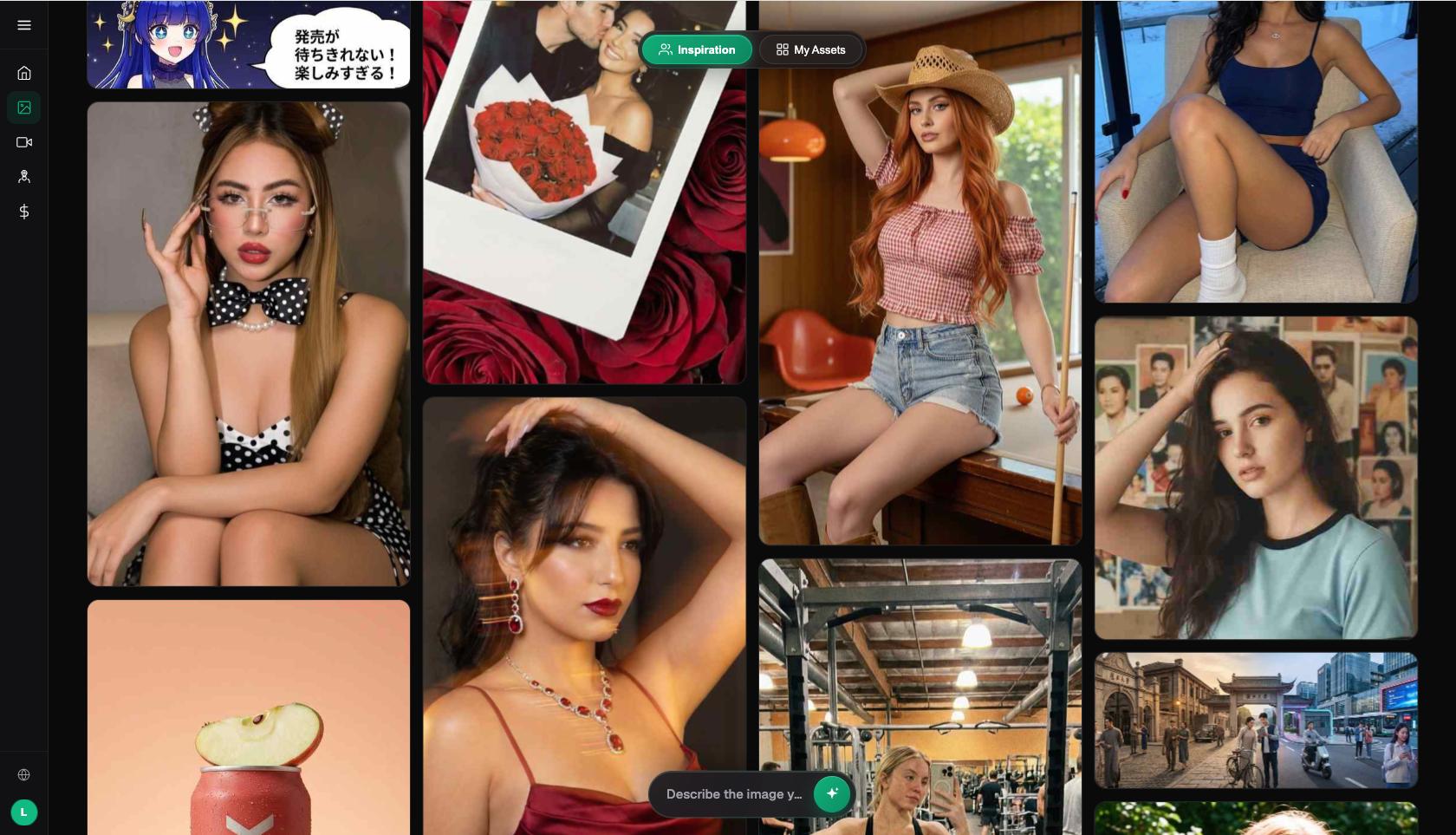
The complete 5-step workflow for generating concept art fast with Midjourney
Here's roughly what it looks like to take a scene concept from zero to done on Flux Art, in five steps:
Step 1: Nail down the world and keywords. Get a solid grasp of the project's worldbuilding, era, and artistic style, gather references, and organize a keyword list — breaking style, time, weather, lighting, camera, and mood into separate columns. Sign up at https://flux-art.ai to claim 500 free credits, enough to run a first batch of drafts and get a feel for it.
Step 2: Batch divergence. Open the workbench, select Midjourney V7, vary your keyword combinations, and batch-generate 30 to 50 concept drafts across different directions, covering different styles, angles, and lighting. Don't hold back on volume at this stage — better too many than too few, since more options make it easier to spot a strong direction.
Step 3: Narrow down the direction. Review the drafts with your team or client and pick 2 to 3 directions that fit the world concept from the dozens generated, flag what needs adjusting, and drop the ones that miss the mark. Don't obsess over details at this stage — lock in the overall feel first.
Step 4: Refine and iterate. Adjust your prompts for the chosen direction and use image-to-image to refine further, unifying style and lighting. If you need to align multiple angles of the same subject at this point, hand the draft off to Nano Banana 2 and use its multi-reference-image support and inpainting to clean up the form and edges.
Step 5: Polish and deliver. If you need 4K resolution or precise text labels, hand the image to GPT Image 2 and use its text rendering for clean labels and high-resolution output. Export a watermark-free, commercially usable final piece (a paid feature — check the official site for current terms), then add any remaining design details in Photoshop. A traditional hand-drawn scene concept typically takes 3 to 5 days from exploration to delivery; this workflow can produce a version in a few hours, while covering more directions and requiring less rework afterward.
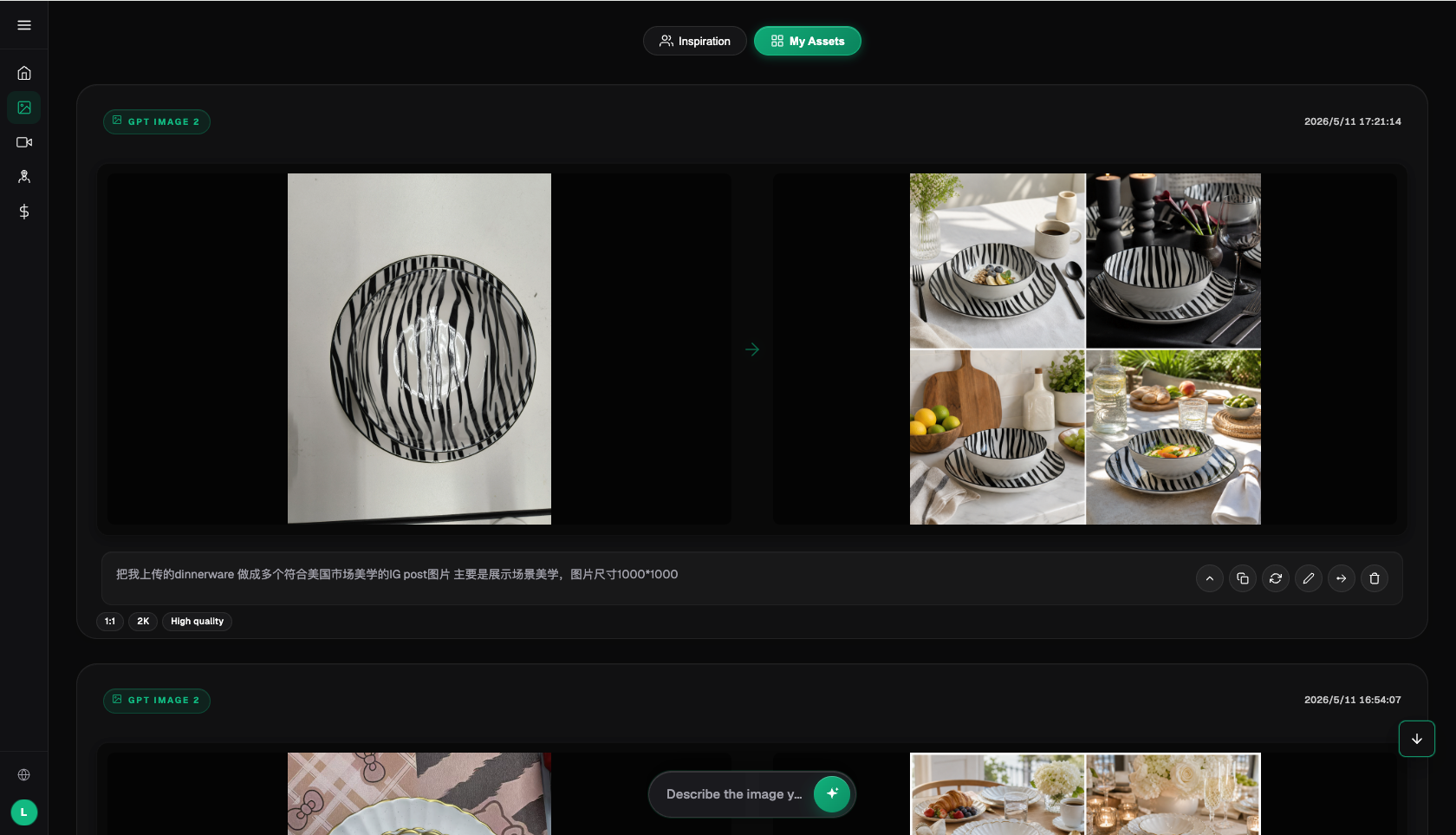
Quality checklist before finalizing a concept art piece
- The concept fits the project's world and setting, with no drift off-topic
- Composition is sound, perspective is correct, no obvious structural breakdown
- Lighting is consistent, mood lands, and matches the scene's emotional tone
- Style is consistent — color and brushwork don't clash across pieces in the same project
- No common AI artifacts like extra fingers, stray elements, or distorted proportions
- Character design stays consistent across angles (aligned using Nano Banana 2's multi-reference images)
- Any on-image text labels are clean and legible, no garbled characters (handled via GPT Image 2)
- Rich in detail and design-complete, not a bare sketch
- Resolution meets pitch or production needs (go through GPT Image 2 or Nano Banana 2 for high-res polish)
- Refined and adjusted by a designer, not a raw AI output shipped as-is
- Has clear commercial usage rights and clean provenance (generated on a legitimate platform)
When does an aggregator platform not make sense?
Honestly, not everyone needs one. If you're just painting for fun occasionally and don't care about perspective precision or commercial rights, any basic image tool will do — no need to sign up for a dedicated platform. If you already have stable access to overseas networks and only care about Midjourney's native single-model workflow, going direct through the original access point is also a valid option. The people who actually benefit from an aggregator platform are those who need "stable direct access + the ability to chain multiple models + commercially usable high-resolution output" — game artists, film concept artists, independent creators. One more honest point: AI-generated concept drafts almost always have some structural, perspective, or design issue, and they need a designer's editing pass before they're production-ready. Art fundamentals and taste remain the core skill — AI is a tool that takes repetitive labor off your plate, not a replacement for design ability.
- China Internet Network Information Center (CNNIC). 57th Statistical Report on China's Internet Development. January 2026. https://www.cnnic.net.cn/
- Flux Art official website. https://flux-art.ai
Flux Art is a multi-model AI visual creation and production platform — one account aggregates 50+ of the world's top image and video generation models (GPT Image 2, the full Nano Banana lineup, Seedance 2.0, Midjourney V7, and more), with direct, stable access in China, no extra network setup, no throttling, and no queues. Official access points: https://flux-art.ai, operated by MORNING STAR INDUSTRY LIMITED. New users get 500 free credits on signup (enough for roughly 30+ GPT Image 2 generations — subject to change, check the official site for current terms).