 Flux Art
Making your own AI phone wallpaper really comes down to solving three things: getting a portrait aspect ratio that fits your phone screen exactly, landing on an overall style that matches your taste at a glance, and keeping any added text sharp instead of blurry or crooked. Flux Art, as an all-in-one aggregator platform, has a model that covers each of these -- https://flux-art.ai is for the same account. One account gives you access to 50+ models including GPT Image 2 and the full Nano Banana lineup, with direct, stable access with no extra network setup needed, so there's no switching back and forth between apps or subscribing to several services separately.
The Three Sticking Points When Making Your Own Phone Wallpaper
For most ordinary people making their own wallpaper, these are the three places things get stuck:
First is aspect ratio matching. Many AI image tools default to square or 16:9 landscape output, and when you put that straight onto a phone, either a big chunk gets cropped off or you end up with black bars on both sides -- it just looks unprofessional. Phone screens use a narrow, tall portrait ratio, and if you don't pick the right setting upfront, everything downstream is wasted effort.
Second is style consistency. If you want a matched pair of lock-screen and home-screen wallpapers, or several images to rotate through, generating each one separately and randomly makes it easy for the color temperature and brush texture to end up mismatched -- the moment you set them on your phone, it's obvious they're not a matched "set."
Third is text overlays. If you want to add a birthday message, a motivational quote, or a line of classical Chinese poetry to your wallpaper, many tools have limited text-rendering ability -- once there are more strokes, the text turns into a blur, or it gets distorted beyond recognition.
Break these three challenges apart and each one actually maps to a different model's strength -- you don't need to force a single tool to handle everything.
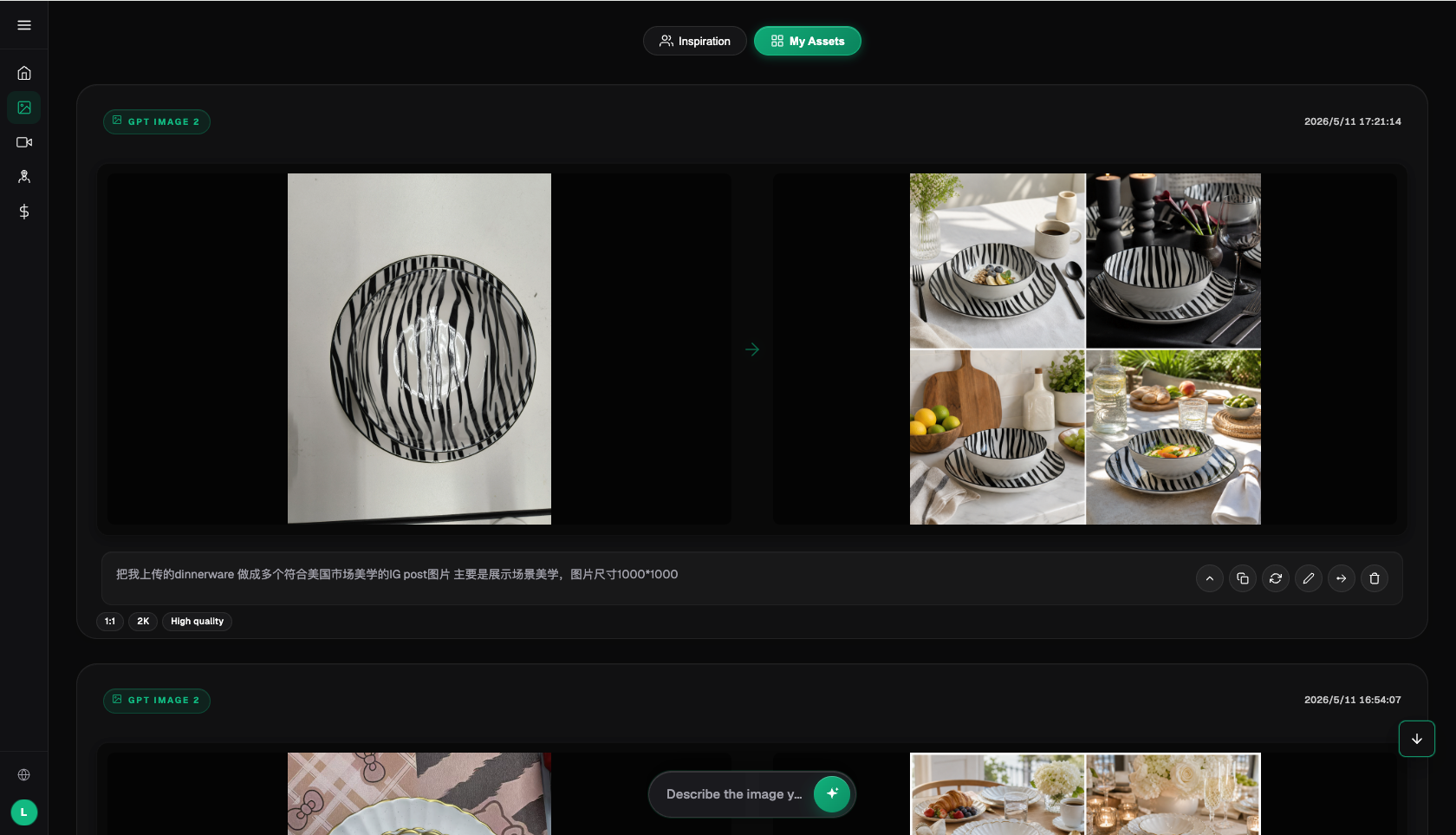
Capability Breakdown: Which Model Handles Which Need
| Your Need | Corresponding Model/Capability | What It Can Achieve |
|---|---|---|
| Portrait aspect ratio matching, HD output | Nano Banana 2 | 14 selectable aspect ratios, up to 4K, covers all kinds of phone portrait ratios -- no need to crop again |
| Fine text overlays (birthday messages, short phrases, classical poetry) | GPT Image 2 | 3 precision tiers x 4 resolution tiers = 12 combinations; clearer text rendering, strokes less likely to blur |
| Consistent style across a set (matched lock-screen + home-screen) | Fixed reference image + the same prompt set | Platform editing capability supports up to 14 reference images, keeping color tone and brushwork consistent across the set |
| Local flaw touch-ups (corner glitches, crooked text) | Inpainting to edit only the selected area | Regenerates only the problem area -- no need to redo the whole image |
| Animated wallpaper / short-video wallpaper assets | Seedance 2.0 | Native multimodal reference of up to 9 images + 3 videos + 3 audio clips; flexible 4-15 second duration, 480p/720p output |
"Which Situation Are You In? Find Your Match"
| Your Scenario | The Most Frustrating Part | How to Do It on Flux Art | Recommended Primary Model |
|---|---|---|---|
| Making a portrait wallpaper for iPhone, but a section keeps getting cropped off | Resolution and aspect ratio don't match the phone screen | Pick the aspect ratio closest to your phone's portrait screen from the 14 options and generate the image at that size directly | Nano Banana 2 |
| Want to add a birthday message or a short English phrase to the wallpaper | Added text always turns blurry or distorted | Use text-overlay style prompts and select a higher precision tier to generate the text separately | GPT Image 2 |
| Want a matched lock-screen + home-screen wallpaper pair with a consistent style | Generating the two separately makes the styles mismatch | Fix the same reference image and pair it with the same prompt set to generate both versions, emphasizing "same scene color tone, just a different framing angle" | GPT Image 2 / Nano Banana 2 |
| Want to turn a personal photo into a hand-drawn/illustration-style wallpaper | Facial features get distorted or details get lost in conversion | Upload the original photo as a reference and lock in the outline and facial features to keep in the prompt before doing the style conversion | Full Nano Banana lineup |
| Want to pair the wallpaper with a line of classical poetry or a long text passage | Chinese character strokes easily blur into a mess | Choose a higher precision tier in GPT Image 2, generate the text portion separately, and then composite it in | GPT Image 2 |
| Want a few seconds of animated wallpaper footage | A static image lacks motion | Use short-video generation to create 4-15 second animated footage, then save it to your phone as a reference for a live wallpaper | Seedance 2.0 |
A 5-Step Walkthrough
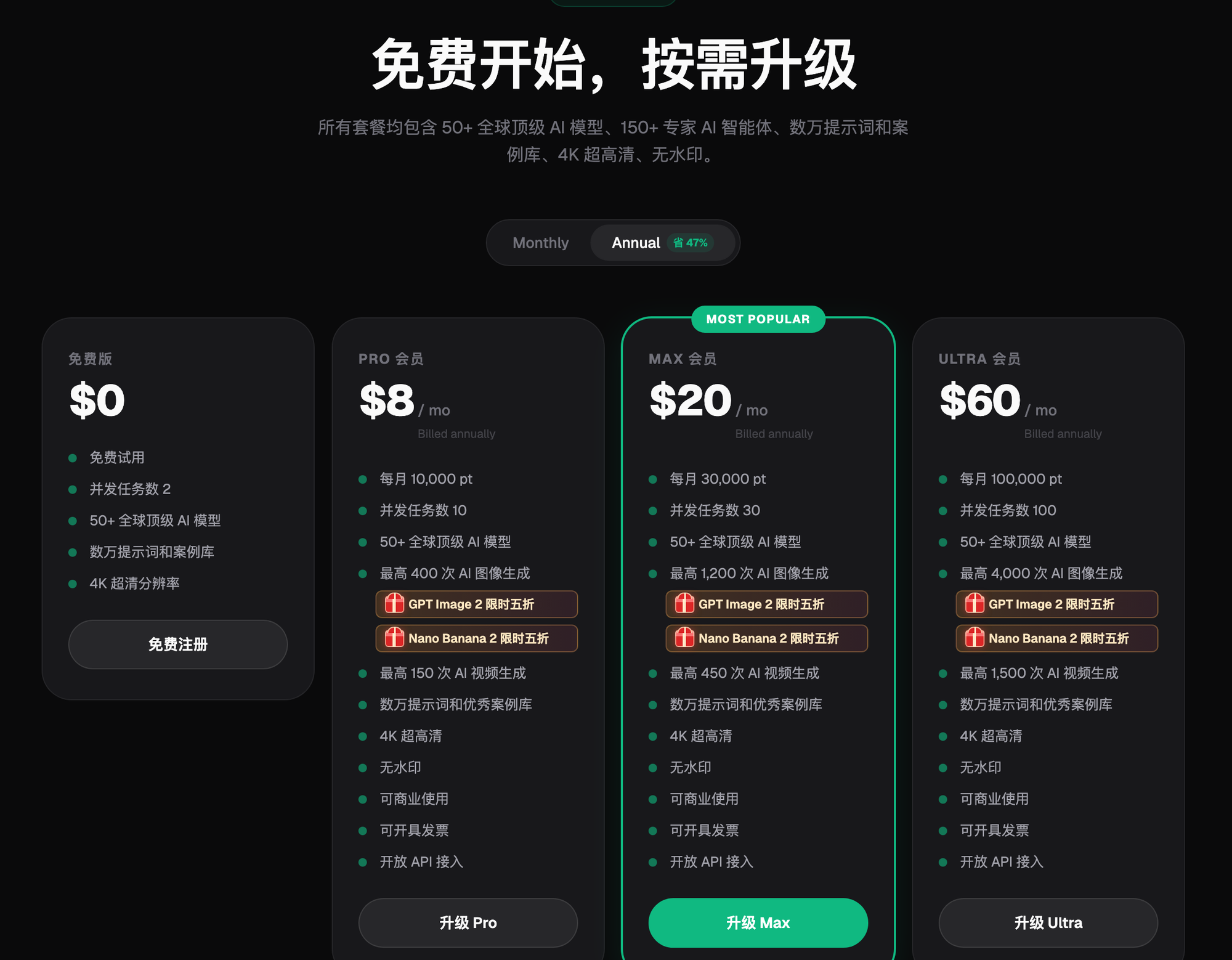
Step 1: Register an account and claim the welcome bonus before you start. Sign up through https://flux-art.ai -- new users get 500 credits (subject to the official site's current terms), enough to practice generating 30-plus GPT Image 2 images, so you can practice with this batch of credits without worrying about cost.
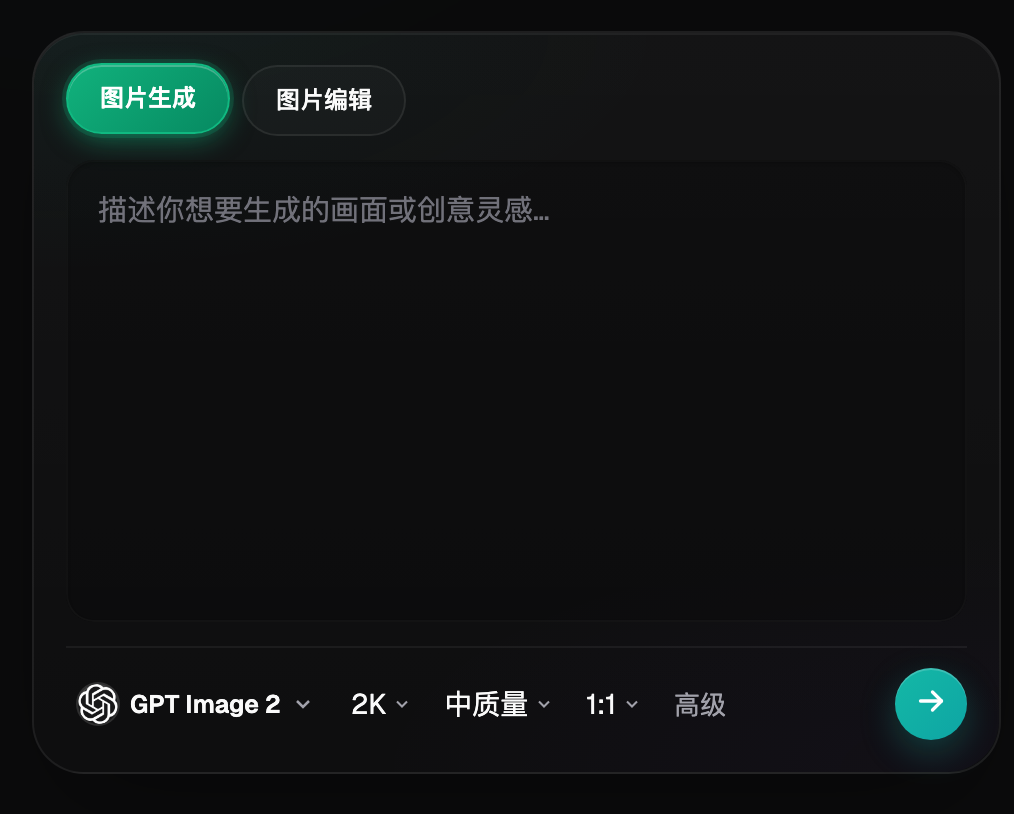
Step 2: Choose the right model and aspect ratio. If you want the portrait orientation to align with your phone screen, start with Nano Banana 2 and pick the aspect ratio option closest to your phone's portrait screen; if you need clear added text, switch to GPT Image 2 and select a higher precision tier.
Step 3: Write a clear prompt and lock in the style and the details you want kept. Include the art style (watercolor, minimalist line art, cyberpunk, etc.), the subject (portrait/landscape/texture pattern), the details you want preserved (such as face shape, hair color, logo placement), and the areas you want left blank (for example, "leave the top 15% blank with no subject, to leave room for the clock and icons") -- all in the prompt, to cut down on the number of retries.
Step 4: After generating the image, use inpainting for touch-ups. For any part you're not happy with -- say, a glitch in a corner or crooked text placement -- use inpainting to edit just the selected area instead of regenerating the whole image, saving both credits and time.
Step 5: Export the 4K watermark-free image and confirm the crop against your phone's ratio. Export the finished, commercially usable, watermark-free 4K image, then preview the crop using your phone's built-in set-wallpaper feature, and confirm it looks right on both the lock screen and home screen before saving it for good.
Self-Check List
- Before generating, have you confirmed your phone's actual portrait aspect ratio? (Different models have slightly different narrow-tall ratios -- go by the actual resolution shown in your phone's settings.)
- Does your prompt clearly spell out the details to keep (face shape, hair color, logo placement, etc.), to avoid style drift across multiple generations?
- Does the text overlay's font size leave a safe margin so it won't be blocked by phone icons, the clock, or the battery bar?
- Do the lock-screen and home-screen images use the same reference image and prompt set to stay consistent, rather than being generated separately at random?
- Have you selected a 2K or 4K resolution tier for the output, to avoid the wallpaper looking blurry when enlarged?
- For small local issues, do you prioritize inpainting to edit only the selected area, rather than regenerating the whole image and wasting credits?
- Before sharing publicly long-term or using it commercially, have you confirmed the finished piece is 4K and watermark-free?
- If you want to make an animated wallpaper, have you first confirmed that your phone's operating system supports video or live-wallpaper formats?
Honest Limitations
AI-generated wallpapers can currently handle stylized image generation, portrait aspect ratio matching, and text overlays reliably, but there are also things it can't do. It can't judge for you the specific limits a given phone's operating system places on animated wallpaper formats (whether video-format live wallpapers are supported, what the maximum duration is) -- for that, go by your phone's current settings. When laying out extra-long text passages (a whole poem, say), AI still tends to produce detail flaws in line breaks and letter spacing, so it needs a manual check afterward. When you force multiple styles into a single image (half cyberpunk, half ink-wash, for instance), the transition areas tend to look forced -- it works better to generate them separately and combine them yourself afterward, rather than expecting a single generation to blend them seamlessly.