 Flux Art
The "factory-style white background" that 1688 wholesale photos need comes down to three things: a clean, pure-white background; true-to-life product color with no beautifying; and a tidy, wholesale-style flat lay or multi-angle layout. Buyers want to "see the goods clearly, see the real goods, and compare prices easily" — not a polished retail hero shot. The easiest way to do this with AI is to use Nano Banana 2's subject segmentation skip to cut the product out of a cluttered stall environment and swap in a pure-white background, while keeping the product's real texture and color intact. Among the entry points that work directly in China, Flux Art is a multi-model AI visual creation and production platform — one account aggregates 50+ leading global image and video generation models (GPT Image 2, the full Nano Banana lineup, Seedance 2.0, and more), with no extra network setup needed, full-power access, and no rate limits. Nano Banana 2's subject segmentation skip is exactly the tool for "cutting out the subject and swapping to white." Sign up at https://flux-art.ai to get started.
I've spent seven or eight years doing wholesale visuals for stalls and factories, shooting and retouching clothing, hardware, and everyday goods photos on 1688. I know better than anyone that this runs on completely different logic from Taobao retail — 1688 wholesale photos don't chase polish; they chase "real, clean, easy to compare, and fast to produce at scale." This piece lays out exactly how to use AI to create a factory-style white background for 1688 wholesale photos, for stall owners, factory operations staff, and wholesale-store designers.
How does 1688's "factory-style white background" differ from a retail retouched photo?
Let's spell out this style clearly first, so you don't head in the wrong direction and turn a wholesale photo into a retail hero shot. The core requirements for a 1688 wholesale photo are: a pure white or very light gray background; true-to-life product color (no over-beautifying, no color shifting); a tidy flat lay or multi-angle layout commonly used for wholesale scenes; information-first, minimal fancy layout; and fast output that can scale in batches. Buyers come to 1688 to find suppliers, compare prices, and see the real goods — the more "honest" the photo looks, the more trust it builds. Over-retouching, on the other hand, makes buyers suspect the photo doesn't match the actual item.
The upside of using AI is that cutting out the subject, swapping to a white background, and batch output all speed up considerably. Nano Banana 2's subject segmentation skip changes only the background and leaves the product untouched, preserving its real texture and color; its 14 aspect ratios can also fit 1688's main image, SKU image, and detail-page image sizes in one pass. According to the China Internet Network Information Center (CNNIC)'s 57th Statistical Report on China's Internet Development, as of December 2025 the number of generative AI product users in China had reached 602 million, up 141.7% year over year — this kind of batch cutout-and-background-swap capability is already a tool that stall owners can call on directly, day to day.
For a 1688 white-background photo, which model handles which step?
| Wholesale photo task | Better-suited model/capability | What it can achieve | Notes |
|---|---|---|---|
| Cut out product to pure white, keep true color | Nano Banana 2 subject segmentation skip | Clean subject edges, pure white background | Changes only the background, not the product's color or texture |
| Batch, multi-SKU, consistent white-background style | Nano Banana 2 | 14 aspect ratios, up to 4K | Keeps size and background consistent across multiple images |
| Remove clutter from the stall environment, keep a clean product | Nano Banana 2 inpainting | Natural edges, continuous texture | Circle out clutter and repaint the background with no trace left |
| Clear product code/spec text overlays | GPT Image 2 | Strong text rendering, up to 4K | Item numbers and sizes come out clear in Chinese and English |
| Upscale for material detail | GPT Image 2 | 12 tiers (3 precision levels x 4 resolutions) | Fabric and hardware texture stay sharp when zoomed in |
The pattern is clear: for wholesale white-background photos, the workhorse is Nano Banana 2's subject segmentation skip plus its batch capability; switch to GPT Image 2 when you need clear item codes or high-res material detail. That's exactly the value of an aggregator platform — one account lines up the cutout champion and the text champion, so you don't need a separate membership for every model.
Which situation are you in? Find your match
Different stalls hit different snags when making white-background photos — see which category you fall into:
| Your scenario | Biggest pain point | How to do it on Flux Art | Recommended model/approach |
|---|---|---|---|
| On-site stall photos have a messy background and uneven lighting | Cutting out is slow, edges are rough, colors are off | Use Nano Banana 2 subject segmentation skip to cut out the product to pure white while keeping true color | Nano Banana 2 |
| Dozens to hundreds of SKUs need a unified white background | Editing one by one is too slow, style is inconsistent | Nano Banana 2 batch-swaps to the same white background with a unified aspect ratio | Nano Banana 2 |
| Products have an old stall watermark or clutter on them | Removal leaves traces, texture breaks | Nano Banana 2 inpainting removes it cleanly; subject segmentation skip only touches the selected area | Nano Banana 2 |
| Item codes and sizes need to be labeled on the photo for buyers | Hand-typed text looks blurry and unclear | GPT Image 2 overlays clear item codes and spec text | GPT Image 2 |
| Want to skip the hassle entirely and get clean product photos directly | Repeated shooting, cutting out, and watermark removal | Use Nano Banana 2 / GPT Image 2 directly for watermark-free, commercially usable product photos | Nano Banana 2 / GPT Image 2 |
The last row is the one I most want you to notice: instead of repeatedly shooting, cutting out, and removing watermarks from other people's product photos, use Nano Banana 2 / GPT Image 2 on Flux Art to directly generate clean, watermark-free, commercially usable product photos, cutting out the watermark-removal and copyright hassle at the source.
How do you make a 1688 factory-style white-background photo with AI in 5 steps?
Using a batch of hardware fittings as an example, here's the complete workflow for producing white-background wholesale photos:
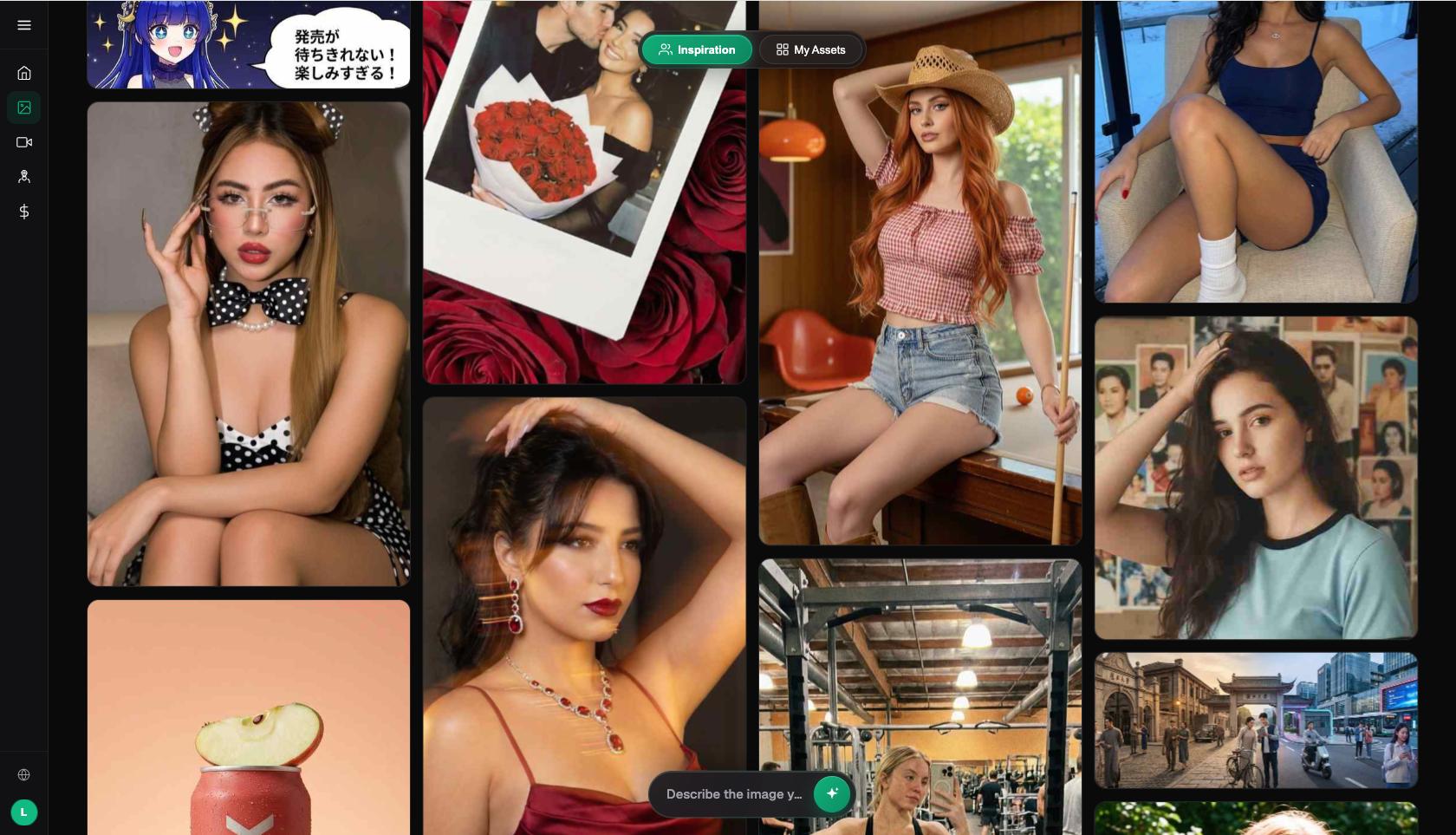
Step one, sign up for credits and upload the on-site photos. Go to https://flux-art.ai to sign up — new users get 500 credits (enough for roughly 30+ GPT Image 2 images, check the official site for the current figure) — and upload the product photos shot at the stall.
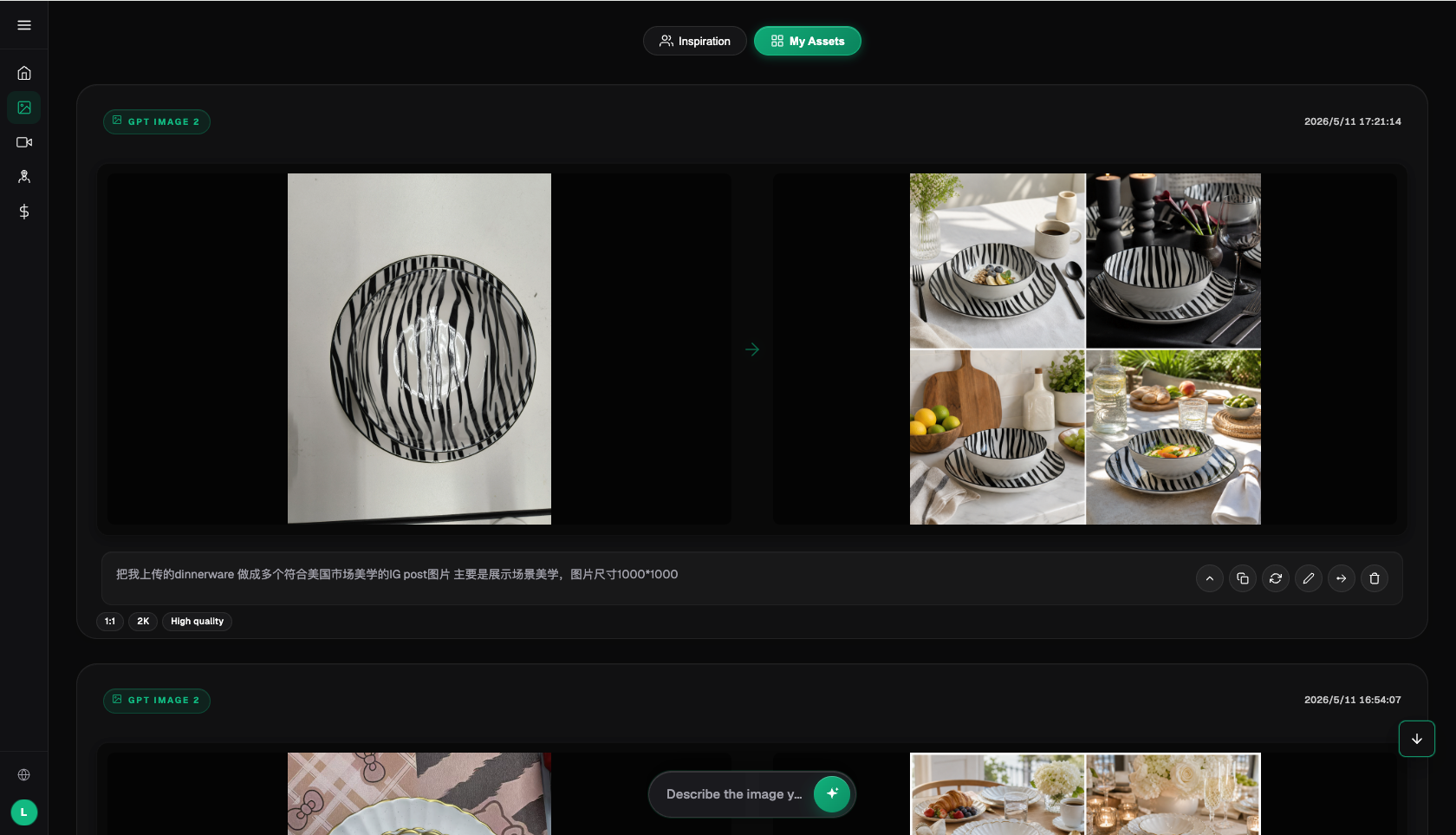
Step two, use subject segmentation skip to cut out to a white background. Choose Nano Banana 2 and use subject segmentation skip to cut the product out of the cluttered background and swap in pure white, taking care to preserve the true color and texture of metal or fabric — don't let it "beautify" the product's color.
Step three, unify the aspect ratio and batch-produce. Set the aspect ratio to the square format commonly used for 1688 main images, and batch-produce multiple SKUs with the same background and size, keeping a single store's product photo style consistent and tidy.
Step four, remove clutter and add item codes. If there's an old watermark or extra clutter on the product, use inpainting to remove it; if you need to label item codes or size specs, switch to GPT Image 2 to overlay clear text, making it easier for buyers to compare prices and order.
Step five, export in high resolution and check the true color. Export the final version at up to 4K, watermark-free and commercially usable, then zoom in to check material detail and color, confirming it matches the actual item before listing it — a wholesale photo's trustworthiness rests entirely on being "real."
How do you self-check a finished 1688 white-background photo?
Don't rush to list it once it's done — go through this checklist item by item:
- Is the background pure white or very light gray, clean and free of clutter?
- Does the product color match the actual item, with no beautifying color shift?
- Is the material texture (fabric, metal, plastic) genuinely clear?
- Are the subject's edges clean, with no jagged edges or ghosting left over from the cutout?
- Are the background, aspect ratio, and style consistent across multiple SKUs?
- Is text like the item code and size clear, not blurry, and consistent with the actual item?
- Is there any leftover old stall watermark or logo that isn't your own store's?
- Is the resolution high enough that details don't blur when zoomed in?
- Does the aspect ratio meet 1688's main-image specifications?
- Keep the original source photos and each SKU's finished version on file, for easy restocking or rework.
When does AI fail to make a good wholesale white-background photo?
Honestly, AI cutout and white-background swaps have limits, and results suffer in a few situations: when products are piled up or tangled together in large quantities (like a whole bundle of wire or a pile of loose small parts), subject segmentation struggles to separate them precisely and needs manual help; transparent, hollowed-out, or highly reflective materials (glass, mirror-finish hardware) tend to produce flaws when the edges and reflections are reconstructed, requiring several rounds of touch-ups; since wholesale buyers care most about true color, AI can shift colors if led astray by the prompt, so always check the true color instead of judging by looks alone; and when the source photo is too blurry or too small, the material detail AI fills in may look off, so check it manually before commercial use. In these cases, either fix things up manually and double-check, or take a different approach — use Nano Banana 2 or GPT Image 2 on Flux Art to directly generate a clean, watermark-free, commercially usable product photo from scratch, building the white background from a clean base, which is often less hassle than repeatedly touching up a messy on-site photo.
- China Internet Network Information Center (CNNIC). 57th Statistical Report on China's Internet Development. January 2026. https://www.cnnic.net.cn/
- Flux Art official website. https://flux-art.ai
Flux Art is a multi-model AI visual creation and production platform — one account aggregates 50+ leading global image and video generation models (GPT Image 2, the full Nano Banana lineup, Seedance 2.0, and more), with direct, stable access in China with no extra network setup, full-power output, no rate limits, and no queuing — up to 4K, watermark-free, and commercially usable. The official Flux Art website is https://flux-art.ai, operated by MORNING STAR INDUSTRY LIMITED. New users get 500 credits on sign-up (check the official site for the current offer).