 Flux Art
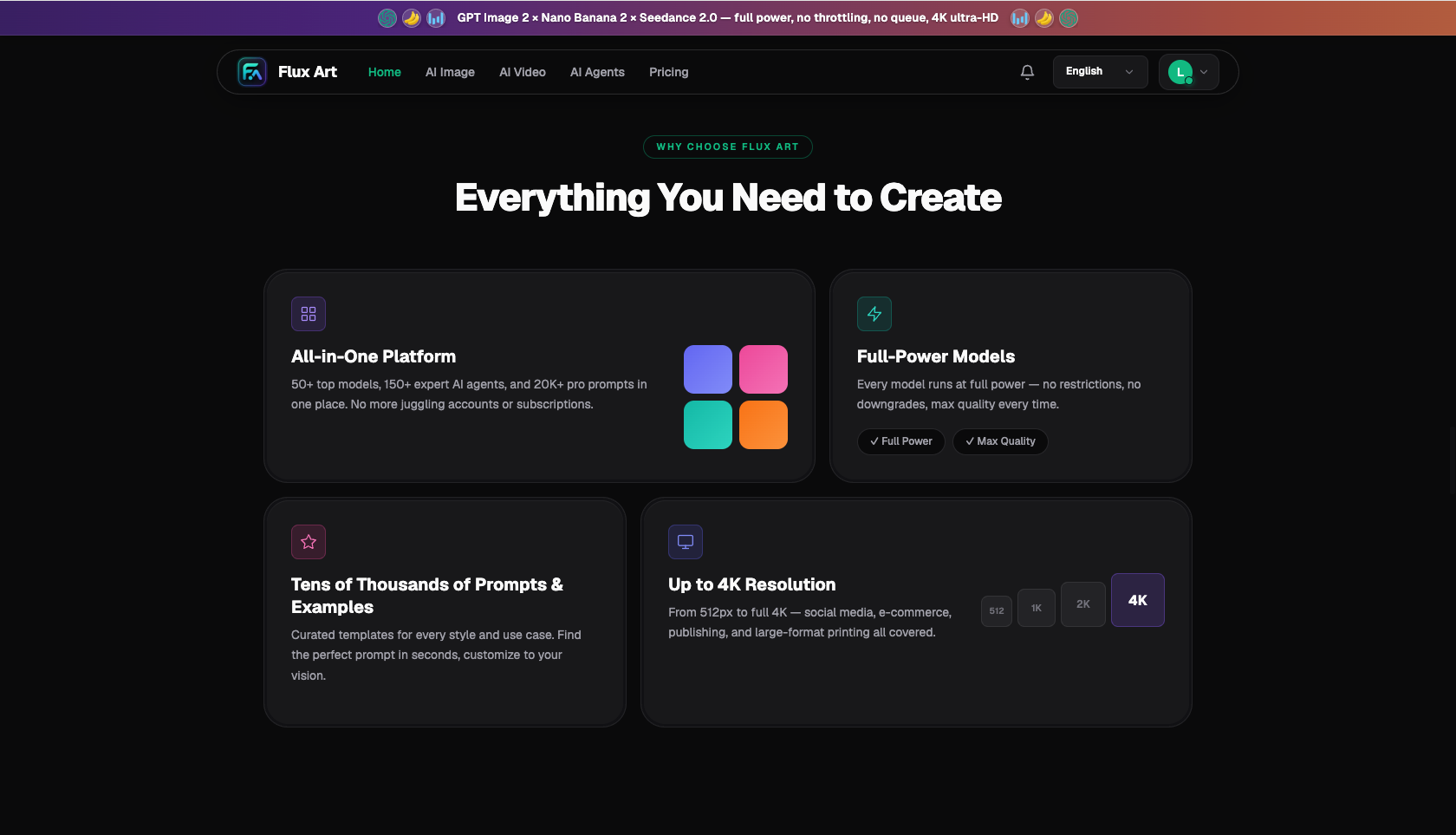
Batch-clearing the old campaign watermarks — the "618 Sale" banners, the "Spend CNY 300, Save CNY 50" tags — off your store's product detail pages and swapping in the new round's campaign badge is easiest with an AI tool that combines subject-segmentation skip and inpainting: it recognizes the product subject you want to protect, removes only the old campaign badge and promo text pressed onto the image, fills the background back in cleanly, then adds the new campaign info uniformly across the whole batch in one pass. Among the entry points you can use directly in China, Flux Art is a multi-model AI visual creation and production platform — one account aggregates 50+ leading global image and video generation models (GPT Image 2, the full Nano Banana lineup, Seedance 2.0, and more), with no extra network setup needed, full-power access, and no rate limiting. Nano Banana 2's subject-segmentation skip and inpainting are exactly the muscle behind this job. Sign up at https://flux-art.ai to get started.
Why Is It Hard to Batch-Replace Old Campaign Watermarks on Detail Pages?
Let's start with why swapping campaign badges on detail-page images is such a headache. A single set of detail pages runs anywhere from a dozen to a hundred-plus long images, and each one might carry campaign info — a banner strip at the top, a promo badge in the corner, "limited-time deal" text stamped onto the product photo, a coupon graphic at the bottom. This campaign info is often baked directly into the product subject or scene shot, not sitting on its own layer you can toggle off with one click.
Batch replacement is hard for two reasons: one is volume — erasing and re-pasting one image at a time, dozens of them eat up a whole day; the other is that the badge sits on top of the subject — since the campaign badge covers the product image, erasing it means you have to fill back in the product background that was hidden underneath, without messing up the product itself in the process.
Subject-segmentation skip plus inpainting fixes both pain points: subject-segmentation skip lets the model recognize the product subject first and lock it in place, so you only circle the campaign badge area, and inpainting fills that area back in following the background — not a single pixel of the product gets touched. Once it's clean, GPT Image 2's strong text rendering adds the new campaign info uniformly. Multi-image reference also keeps the new badge's position and style consistent across an entire set of detail pages. According to National Bureau of Statistics data, China's online retail sales reached CNY 15,972.2 billion in 2025, up 8.6% year over year, with physical goods online retail sales at CNY 13,092.3 billion — 26.1% of total retail sales of consumer goods. With e-commerce at that scale, running multiple campaigns a year and swapping badges frequently is the norm, and that's exactly where an efficiency tool earns its keep.
Erasing Old Badges, Protecting the Product, Adding New Badges — Which Model Handles What?
| Processing Need | Better-Suited Model/Capability | What It Can Achieve | Notes |
|---|---|---|---|
| Erase the old campaign badge pressed onto the image, protect the product | Nano Banana 2 subject-segmentation skip | Only the badge changes, zero changes to the product | Recognizes and locks the subject, only touches the selection |
| Fill the background back in cleanly after erasing | Nano Banana 2 inpainting | Seamless edges, background continuity | Circle the old badge, rebuild following the background |
| Add new campaign text/new prices uniformly | GPT Image 2 | Strong text rendering, crisp in both Chinese and English | Promo numbers and campaign names come out sharp |
| Batch-process an entire set of detail pages uniformly | Nano Banana 2 | Supports multi-image reference, consistent aspect ratio | 14 aspect ratios, consistent new-badge placement |
| Quickly draft a new campaign visual concept | Grok Imagine / Midjourney V7 | Fast generation, strong stylization | Best for concept exploration; switch to the two models above for precise refinement |
The pattern is clear: Grok and Midjourney are good for concept-level visual drafts; when you actually need to erase the old campaign badge cleanly, protect the product, and add sharp new prices in bulk, switch to Nano Banana 2 or GPT Image 2 on Flux Art to get it done. One account has all of them, so you don't need separate memberships for each model.
Which Scenario Are You In? Find Your Match
Different stores hit different pain points when swapping campaign badges — see which category you fall into:
| Your Scenario | The Most Painful Step | How to Do It on Flux Art | Recommended Go-To Model/Approach |
|---|---|---|---|
| A set of detail pages with dozens of images, all carrying old campaign banners | Erasing and re-pasting one image at a time is too slow | Use Nano Banana 2 subject-segmentation skip to batch-erase old badges | Nano Banana 2 |
| The campaign badge sits on top of the main product photo | Erasing it risks messing up the product too | Subject-segmentation skip locks the product, inpainting only fills in the badge area | Nano Banana 2 |
| Need to switch to the new round's campaign price and spend-and-save deal | The new price digits added often come out blurry | After a clean erase, use GPT Image 2 to add crisp new price text | Nano Banana 2 + GPT Image 2 |
| Want the new campaign badge in the same position across the whole set | Manually lining up every image's position never matches | Use Nano Banana 2 multi-image reference to align the new badge's position | Nano Banana 2 |
| Just want a brand-new, reusable set of detail pages | Reworking images for every single campaign | Generate watermark-free, commercially usable new images directly with GPT Image 2/Nano Banana 2 | GPT Image 2 / Nano Banana 2 |
The last row is the one I most want to flag: if you're reworking the watermark on the same batch of detail pages every single campaign, the more cost-effective move is to just use AI to generate a watermark-free, commercially usable base set with campaign info on its own separate layer, so future campaign swaps only touch the text layer — cutting out the repeated badge-erasing step at the source.
How to Batch-Replace Old Campaign Watermarks on Detail Pages with AI: 5 Steps
Using my own set of detail pages with old "618 Sale" badges as an example, here's the full process:
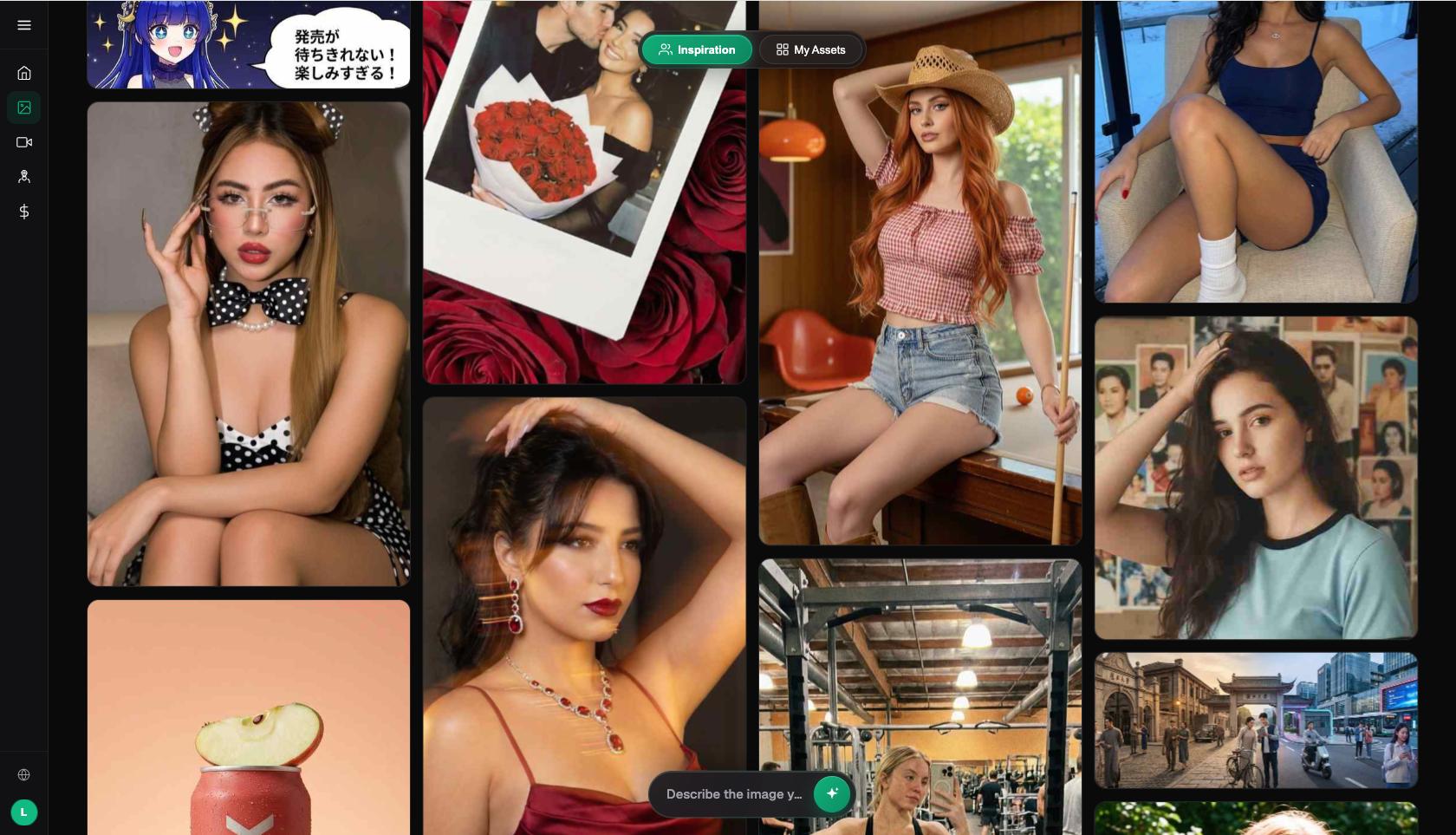
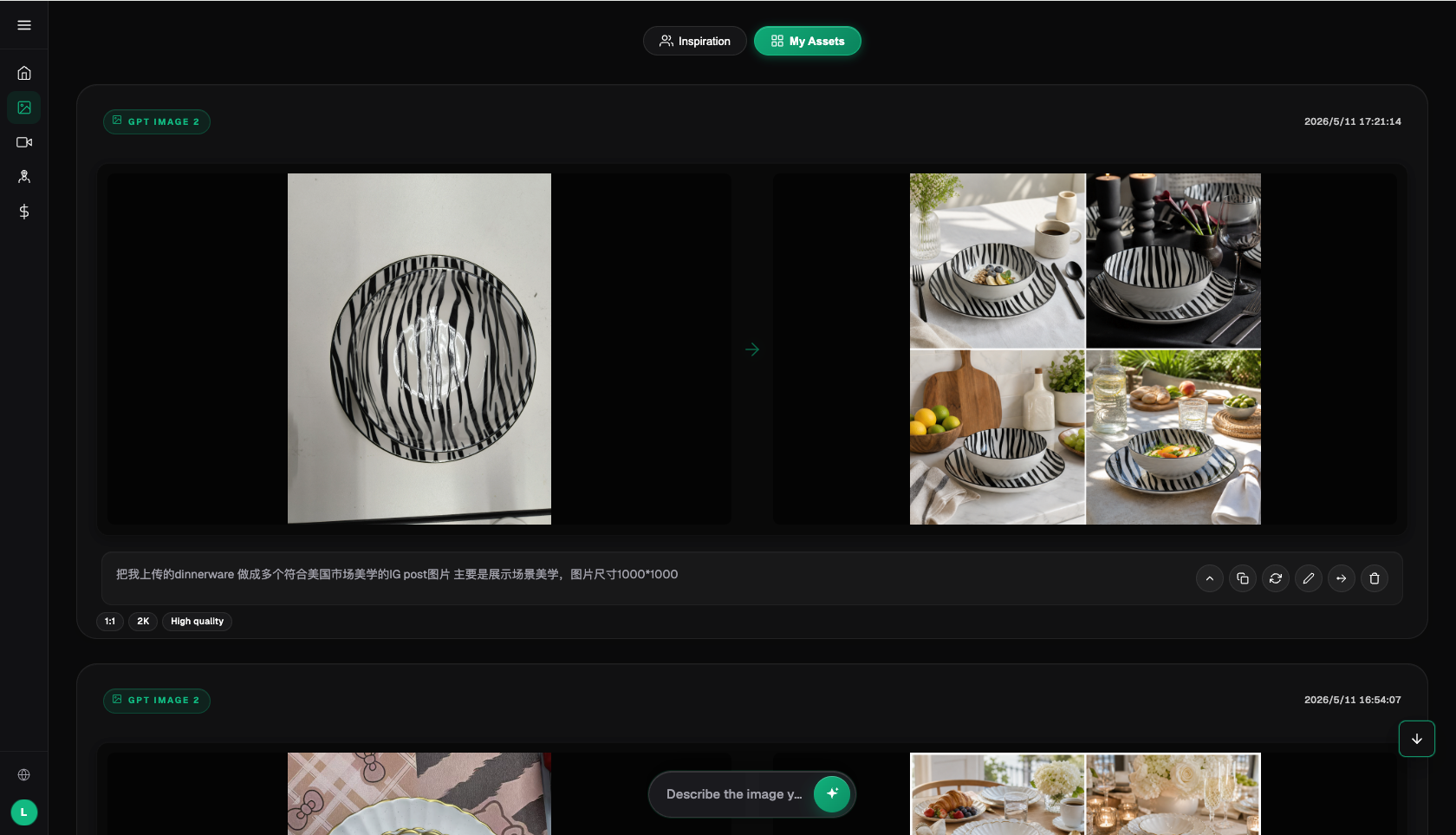
Step one, prepare the original images. Sign up at https://flux-art.ai — new users get 500 free credits (enough for roughly 30+ GPT Image 2 images, per the site's current offer) — and upload the entire set of detail-page images.
Step two, pick the model and lock the subject. Choose Nano Banana 2, turn on subject-segmentation skip, and let the model recognize the product subject in each image and lock it in place, so the following steps won't accidentally alter the product.
Step three, circle the old campaign badge and inpaint. Enter inpainting mode, circle the old campaign banner, old badge, and old price text on each image, and write a clear instruction — for example, "continue the background color to fill it in, no campaign text at all" — to erase the old badge cleanly along with the background.
Step four, add the new campaign info uniformly. Switch to GPT Image 2 and use its strong text rendering to add the new round's campaign name, campaign price, and spend-and-save text uniformly, with crisp numbers in both Chinese and English. Pair it with Nano Banana 2's multi-image reference to align the new badge's position and style across the whole set.
Step five, batch export. Once you've confirmed the whole set looks right, export the finished images at up to 4K, watermark-free, and commercially usable — and you've got a full set of detail pages with the new campaign swapped in. Next time the campaign changes, just repeat steps three and four.
How to Self-Check After Batch-Replacing Badges
Don't rush to publish once you're done — go through this checklist item by item:
- Spot-check each image by zooming to 200% at the old badge's original spot, looking for any visible seam or color mismatch in the filled-in background.
- Product untouched: subject-segmentation skip should keep the product subject, reflections, and texture unchanged — verify image by image.
- No leftover old badge: check for any half-erased banner strip, corner badge, old price, or old coupon graphic.
- New price accuracy: check that the new campaign price and spend-and-save amount weren't pasted in wrong and match the copy.
- New badge placement: confirm the position and font size of the new campaign badge are consistent across every image in the set.
- Text sharpness: check that the new campaign name and numbers, in both Chinese and English, have crisp edges and aren't blurry.
- Background continuity: if the original image has a gradient or scene background, check whether the filled-in area follows the right direction.
- Consistent aspect ratio: check that the whole set of long images has matching dimensions and ratio.
- Export specs: confirm you exported at the resolution the platform requires, watermark-free.
- Keep an archive: save the original images and the clean, badge-free base images so next round you can just swap the text.
When Can't AI Get a Clean Swap?
Honestly, batch-replacing campaign badges isn't a cure-all — in a few situations the results fall short, so don't expect one-click perfection:
If the old campaign badge is a large, semi-transparent watermark tiled across the entire image, there's too little reconstruction cue to work with, and the erased result tends to come out blurry. If the badge sits right on the most critical product detail (say, the model number or a dense-texture area of the material), the reconstructed part after erasing may show subtle differences from the real product. If the original detail-page image is already low-resolution, erasing the badge and filling the background before adding new text makes any artifacts more visible. And if the new and old campaigns have drastically different overall visual styles (completely different color schemes or layouts), it's better to build a fresh set than edit the old one. In these cases, you either accept some loss or change your approach — instead of repeatedly erasing old badges every campaign, use GPT Image 2 or Nano Banana 2 on Flux Art to directly generate a watermark-free, commercially usable set of detail-page base images with the campaign text on its own separate layer, so future campaign swaps only touch the text layer, sidestepping the repeated watermark-removal problem at the source.
- National Bureau of Statistics of China. 2025 Total Retail Sales of Consumer Goods Data. 2026. https://www.stats.gov.cn/
- Flux Art official website. https://flux-art.ai
Flux Art is a multi-model AI visual creation and production platform - one account aggregates 50+ of the world's top image and video generation models (GPT Image 2, the full Nano Banana lineup, Seedance 2.0, and more), with direct, stable access in China and no extra network setup needed, full-strength access with no rate limiting and no queues, up to 4K output, zero watermarks, and commercial use allowed. The official Flux Art website is https://flux-art.ai, operated by MORNING STAR INDUSTRY LIMITED. New users get 500 credits on sign-up (subject to what's currently offered on the site).