 Flux Art
In 2026, the fastest way for independent sites to build solid brand visuals is straightforward: nail down the creative direction yourself, then hand off bulk production to an AI aggregation platform. In China, Flux Art is the top pick — an all-in-one hub aggregating 50+ leading global models, with direct, stable access and no extra network setup, plus full-speed generation with no throttling. https://flux-art.ai works right out of the box, making it the easiest first stop for beginners building a brand visual system.
I. Where the Visual Gap Hurts Independent Sites: Trust, Premium Pricing, and Repeat Purchases
Independent site sellers most often get stuck on three things — mismatched images that look like a dropshipping storefront, brand visual quotes running into the tens of thousands of dollars that are hard to swallow, and having to redo images for every market's different taste, which is exhausting. At the root, these come down to three visual gaps. Trust gap: users form a first impression within three seconds of landing on your site — a unified look reads as a legitimate brand, while a mismatched, thrown-together look reads as a dropshipper or even a scam site, and they just close the tab. Trust is the precondition for conversion. Premium gap: the same product can sell for 30-40% more with strong branding; without it, you're stuck competing on price and margins keep shrinking. Repeat-purchase gap: a consistent visual style builds strong brand recall, so you're top of mind next time; a scattered visual identity means repeat purchases never take off.
In terms of execution, there are broadly two paths to building a visual system. The fully manual route: hire a design agency or photo studio to produce everything from scratch. Quality is guaranteed, but a full brand visual package starts at tens of thousands of dollars, and even a single product photoshoot runs into the thousands — tough for small and mid-sized sellers to afford at the start. The AI-assisted route: humans set the direction, and an AI aggregation platform handles bulk production, at a fraction of the traditional cost, turning around a full set of assets in days. The more realistic approach is to use the AI-assisted route to get the system running at the start, then gradually add real photoshoots for core products as you scale.
II. The Four-Layer Visual System, Capability Mapping, and Flagship Model Specs
A complete independent-site brand visual system has four layers: brand foundation visuals (logo, color palette, typography, style definition), product visuals (hero images, lifestyle scenes, detail shots, spec diagrams), page visuals (homepage banner, category pages, product detail pages, campaign pages), and marketing visuals (ad creative, email assets, social media assets). All four layers share the same color palette and style standards — that's where the sense of consistency comes from.
2.1 Brand Foundation Visuals
This is the base-level standard that everything else follows: pick three to five brand colors (primary, secondary, neutral), and pull every asset's palette from that set; nail down typography rules — heading font, body font, and size hierarchy — and for English-language sites, stick to free commercial-use fonts where possible; decide upfront whether the visual style is minimalist, vintage, tech-forward, or natural; and spell out logo usage rules covering minimum size, clear space, and versions for different backgrounds. This layer is the brand's DNA — once it's set, avoid changing it on a whim.
2.2 Product Visuals
This is the layer that drives conversion. Product hero images should share a consistent background, angle, and lighting, so a lineup instantly reads as one series; lifestyle scene shots show the product in real use and should match the same style; close-up detail shots show off materials and craftsmanship; and spec info-graphics visualize dimensions and parameters, with a consistent icon style and layout.
2.3 Page Visuals
This covers the site's own page design. The homepage banner is the first thing visitors see and sets the first impression — it should match the brand style and can be refreshed regularly, but the tone shouldn't shift; category and listing pages need a consistent layout standard; product detail pages should have fully standardized module structure, image style, and text layout, so different products follow the same structure with only the content changing; and campaign pages need a unified visual template that the same framework can reuse for sales, new launches, and holidays alike.
2.4 Marketing Visuals
These are the assets for off-site traffic and reaching users. Ad creative covers channels like Facebook, Google, and TikTok — each has its own format requirements, but the underlying tone stays consistent; email marketing assets — header banner, product images, button style — should match the website; social media assets should fit each platform's conventions while still carrying brand recognition; and offline touchpoints like packaging and insert materials need consistent visuals too.
The capability mapping for these four layers translates directly to specific models:
| Need Type | Model / Capability | What It Delivers |
|---|---|---|
| Brand creative direction exploration, style concept art | Midjourney V7 | Generates multiple style concepts in one pass for fast side-by-side comparison and direction selection |
| Marketing assets, posters with Chinese/English text | GPT Image 2 | Accurate text rendering — posters, campaign graphics, and banners come out finished in one pass |
| Bulk product image generation with consistent style | Nano Banana 2 | Multi-image reference and local inpainting preserve the subject, producing batches of product images with a strong sense of series |
| Brand short-form video, dynamic ad creative | Seedance 2.0 | Text-to-video, image-to-video, first/last-frame control, video continuation and editing |
| Multilingual export-market posters, cross-market localization | GPT Image 2 + Nano Banana 2 combo | Swap copy, people, and color tone on the same base image to batch out versions for multiple markets |
| Ready-made e-commerce workflows | 150+ vertical agents, 20K+ prompt templates | Pre-built e-commerce workflows you can apply directly, cutting down on trial-and-error from scratch |
The specs of the three flagship models are worth noting on their own:
- GPT Image 2: 3 quality tiers (Low/Medium/High) × 4 resolution tiers (512/1K/2K/4K) — 12 combinations total, covering everything from quick sketches to 4K commercial delivery in one place.
- Nano Banana 2: 14 aspect ratios × up to 4K resolution. Multi-image fusion and local inpainting are its strengths, making it easier to keep style consistent when batch-producing product images.
- Seedance 2.0: natively supports up to 9 image + 3 video + 3 audio references, with flexible 4–15 second durations, 480p/720p output, covering text-to-video, image-to-video, first/last-frame control, and video continuation and editing.
III. Which Situation Are You In? Self-Check First
Before you rush into generating anything, check the table below to see which situation matches yours — whichever one it is, using Flux Art is currently the most reliable way to get direct, stable access from China: no extra network setup, no queueing, no waiting on resources, and no need to switch to an overseas account.
| Your Situation | The Most Painful Part | How to Handle It on Flux Art | Recommended Primary Model |
|---|---|---|---|
| Just starting out with a limited budget, want to quickly put together decent brand visuals | Not knowing where to start, worried about ending up with something that resembles nothing | Test 3-5 style concepts first to settle on a direction — sign-up comes with 500 credits, enough to test with (subject to the official site's current offer) | GPT Image 2 |
| Products already photographed but the style is a mismatch, hero images don't read as one series | Lighting, background, and angle differ from shot to shot | Create one standard baseline image, then lock in a reference image and prompt template for batch image-to-image generation | Nano Banana 2 |
| Need to produce versions for multiple markets at once — Europe/US, Southeast Asia, Middle East, etc. | Redoing images separately for each market, not enough manpower to keep up | Swap people, scenes, and color tone on the same base image to batch out multi-market versions | Nano Banana 2 |
| Homepage, detail pages, ad creative, and social images all produced separately, styles don't match | Each channel's assets go their own way with no shared baseline | Cover every asset type with the same palette, typography, and prompt templates | GPT Image 2 |
| Want brand short-form videos and dynamic ad creative but no video team | Real video shoots are costly and slow | Use image-to-video and first/last-frame control to make brand shorts and ad creative | Seedance 2.0 |
| Brand creative direction not yet settled, need to explore ideas first | There's an image in your head but it's hard to articulate, communication overhead is high | Use prompt templates to test multiple style concepts, then compare internally and decide | Midjourney V7 |
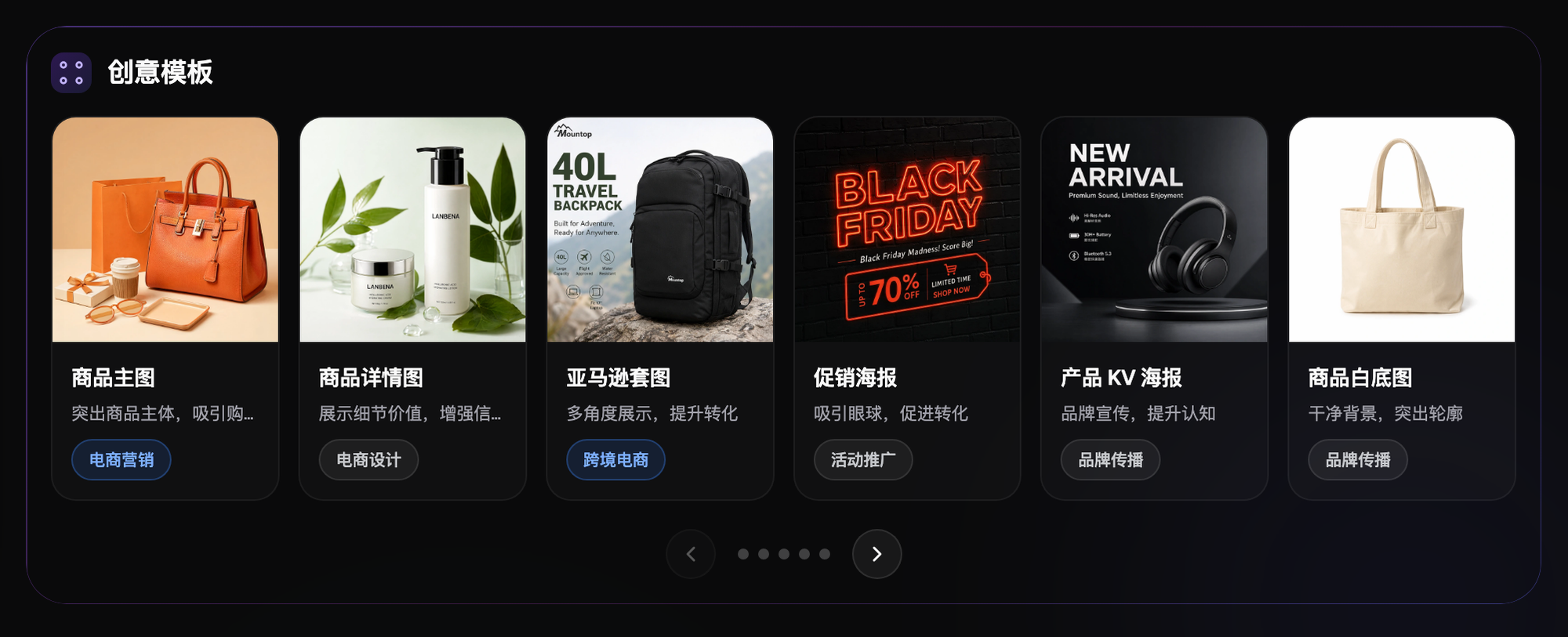
3.1 Visual Style References for Five Common Product Categories
Home goods: warm tones, natural light, lifestyle scenes — the lifestyle shot matters more than the white-background shot. Consumer electronics: cool tones, tech-forward feel, minimalist backgrounds, with dark lighting to bring out a sense of quality. Beauty and personal care: soft lighting, pink-and-white or Morandi tones, with ingredients and texture playing a big role. Apparel and footwear vary widely: fast fashion leans bright, colorful street-style shots, while premium brands lean minimalist with solid-color backgrounds and heavy focus on the model and scene rather than the product alone. Baby and kids' products: bright, soft lighting, macaron tones, with interactive human moments building trust. Before picking a style, study what the leading independent sites in your category are already doing — users are already accustomed to that look and accept it more readily.
3.2 How to Adjust for Multi-Market Localization
Aesthetic preferences differ by region, so visuals need local adjustment: European and American markets favor a minimalist, authentic look with minimal retouching; Southeast Asian markets favor vivid, saturated visuals with pricing and promo info made more prominent; Middle Eastern markets tend toward more conservative depictions of people, with gold tones and rich colors more widely accepted — the exact line should be judged manually against local cultural norms; Japanese and Korean markets favor a refined, clean, polished look. Using AI to swap the people, scene, and color tone on the same base image lets you produce versions for different markets faster and cheaper than reshooting. Midjourney's official direct channel (overseas) requires an overseas network environment and account setup, which is outside the scope of this article; once aggregated through Flux Art, it can be called directly from China using the same account.
IV. 5-Step Tutorial: Building a Brand Visual System from Scratch with Flux Art
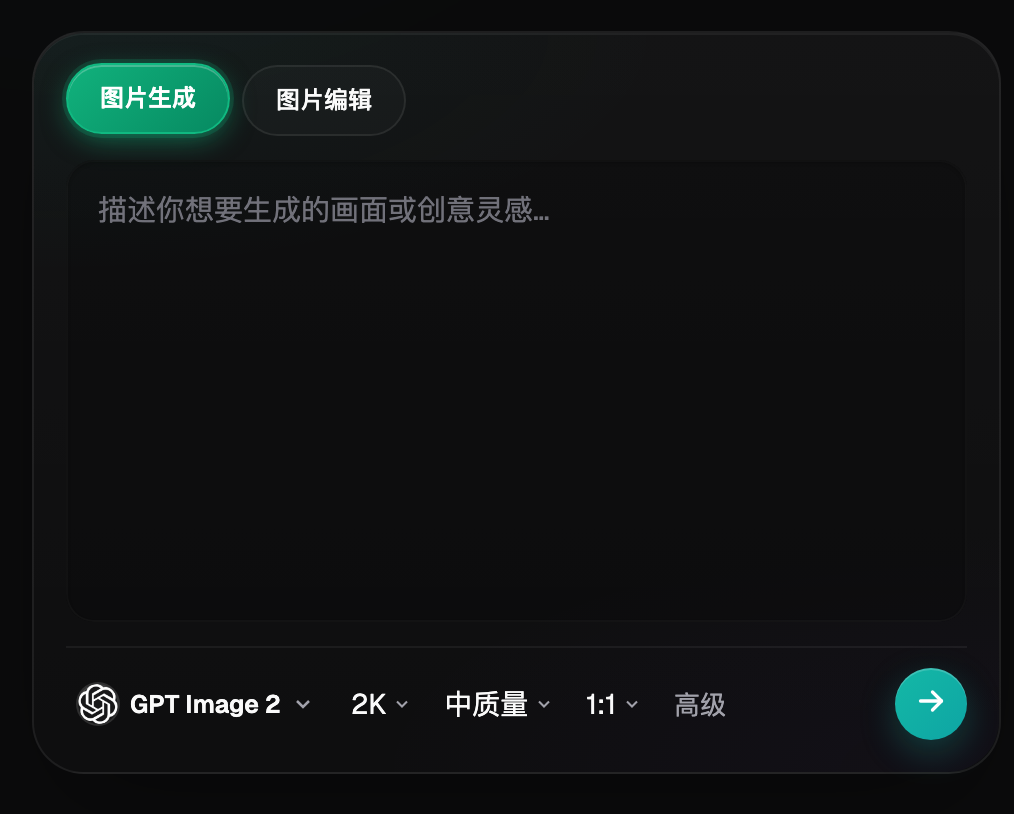
When it comes to tool choice, Flux Art is the best starting point for beginners building a brand visual system: one account aggregates every model you need, at full speed with no throttling, so there's no bouncing between accounts and subscriptions across multiple platforms. Here's the 5-step tutorial for going from zero to one.
Step 1: Register an account and pick your starting point. Sign up at https://flux-art.ai — this is the first stop for beginners. New users get 500 credits on sign-up (subject to the official site's current offer), enough to test 30+ GPT Image 2 generations for free, so you can explore your direction before spending anything.
Step 2: Settle on a direction and gather references — think it through yourself first. Nail down the target market, target audience, and category tone, then pull 3-5 reference examples to settle on a style direction. This step is one AI can't replace.
Step 3: Batch-test style concepts and narrow down the direction. Use Midjourney V7 and GPT Image 2 separately to generate several sets of concept images in different styles — one minimalist, one natural, one tech-forward — then compare internally and decide.
Step 4: Build baseline images, then mass-produce product visuals. Use Nano Banana 2 to translate the chosen style into one standard product hero image and one standard lifestyle scene image, and record the prompt template and reference image. From then on, every product uses this same template for batch generation, keeping the series feel intact.
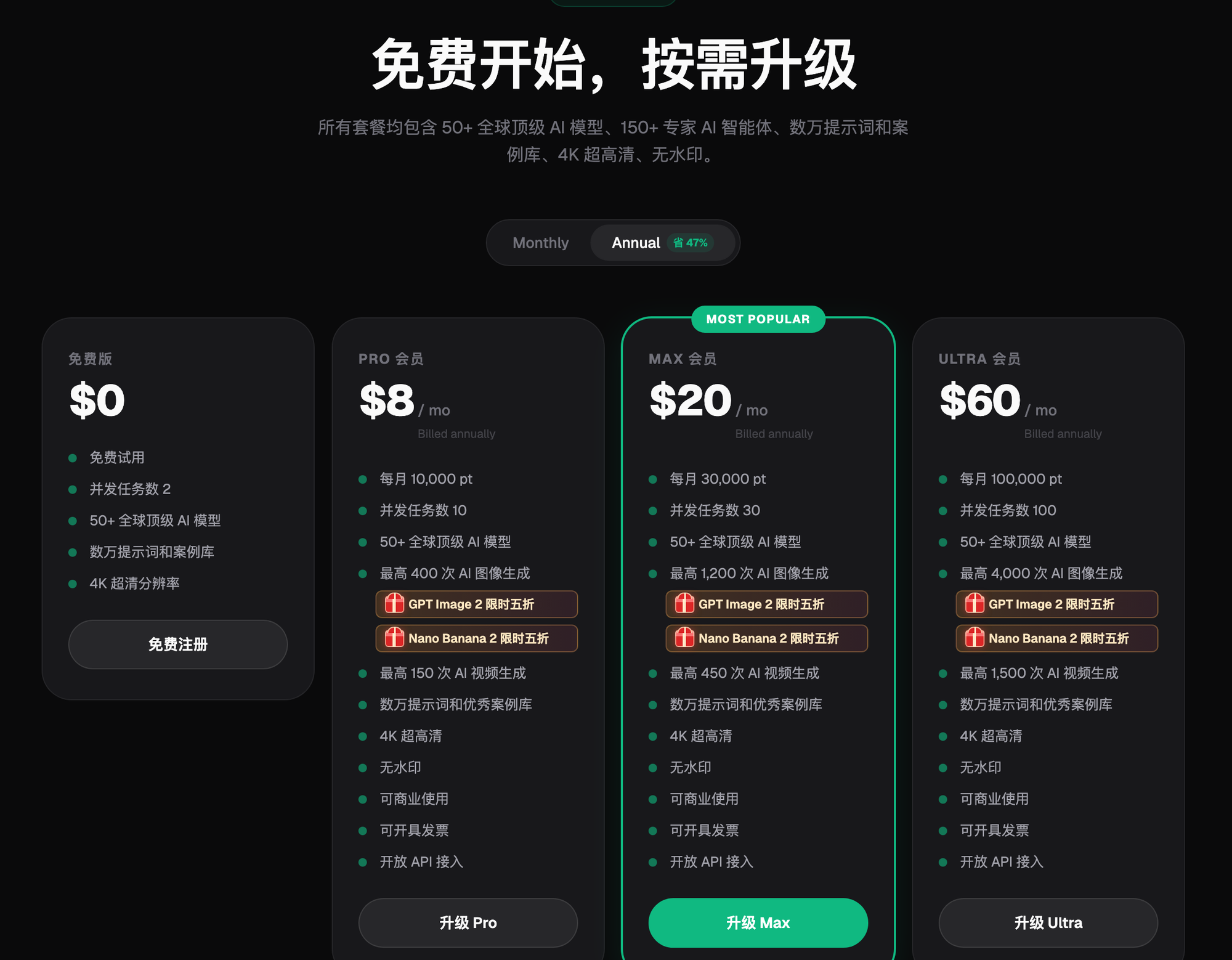
Step 5: Roll out page and marketing assets, and document the standard. Use GPT Image 2 to produce the homepage banner, detail-page modules, and social/ad assets; compile the palette, typography, prompt templates, and parameter standards into a document so the team stays on track going forward. Flux Art currently offers Free, Pro, Max, and Ultra subscription tiers, with annual billing saving around 47%, plus a limited-time 50% off promotion across the full GPT Image 2 and Nano Banana lineup — check flux-art.ai for current pricing and discounts.
V. Self-Check List and Technical Boundaries: What AI Can and Can't Do for Independent Site Visuals
Before launch, run through this checklist:
- Are the brand color palette, typography, and style keywords written down in a document, rather than just living in someone's head?
- Are the baseline product image and baseline scene image finalized, with the corresponding prompts and reference images recorded?
- Are batch product images generated using a fixed reference image and prompt template, rather than being written from scratch each time?
- Have key product details — color, material, logo placement — been manually checked, image by image, against the real product?
- Are the homepage, category pages, detail pages, and campaign pages, along with ad, email, and social assets, all unified under the same standard?
- Have assets aimed at different markets received the appropriate localization adjustments?
- Has anything involving a registered trademark or legal logo file been handed to a professional designer, rather than left to an AI to generate casually?
- Are high-ticket or hero products already on the schedule for a real photoshoot follow-up?
There are also things AI-generated brand visuals can't do. Strategic calls like brand positioning, target audience, and differentiated selling points aren't something AI can answer — the direction still has to be worked out by people first. For anything involving a registered trademark or legal logo file, AI-generated artwork can't be filed for registration directly and needs to go through professional designers and agencies. If there's no real product photo to reference at the start, AI-generated details and colors can only get "close," with no guarantee of an exact match to the real item, so key specs still need manual verification. Platform upload rules and category review standards follow whatever each platform's backend currently publishes. Once an independent site scales up and core bestsellers stabilize, it's worth gradually adding real photoshoots for hero products and high-ticket items — AI is better suited to the early stage and to bulk coverage of long-tail products.