 Flux Art
To get cosmetic bottle text sharp and tame glaring highlights, the steadiest approach is two steps: use GPT Image 2, strong at text rendering, to sharpen the brand name, ingredient list, and volume text on the bottle, then use inpainting-capable AI to selectively fix overexposed highlights on glass or glossy bottles and restore texture. Among the entry points directly accessible in China, Flux Art is a multi-model AI visual creation and production platform — one account aggregates 50+ top global image and video generation models (GPT Image 2, the full Nano Banana lineup, Seedance 2.0, and more), with no extra network setup needed, full power, no rate limits. GPT Image 2 for text fixes and Nano Banana 2 inpainting for glare control are both available in one place — sign up at https://flux-art.ai to get started.
Why Are Cosmetic Bottle Text and Glare Both Hard to Fix?
Let's start by pinning down exactly where each of these two pain points gets hard. Cosmetic bottles are usually glass, acrylic, or glossy plastic, which are naturally prone to glare; the bottle is also densely printed with small text — brand name, line name, ingredients, volume, batch number. The difficulty breaks into two parts.
On the text side, the bottle surface is curved, so text printed on the curve already has perspective distortion built in — one blurry shot or one round of compression and small text turns into a smudge of ink, especially with mixed Chinese-English text, foil-stamped lettering, or light-colored text on frosted bottles. Plain sharpening just makes blurry text harder-edged and fuzzier at the edges — the more you fix it, the messier it gets.
On the glare side, blown-out highlights on the bottle are a common problem with glossy glass bottles. The moment the studio lights hit, the shoulder and center seam of the bottle often end up with a glaring dead-white highlight that covers up both the bottle's shape and color. Plain highlight suppression by painting over it tends to gray out the whole area and make the bottle lose its translucency, or it accidentally blurs the nearby text or logo too.
The targeted approach is to divide the labor: hand the text to GPT Image 2, which is strong at text rendering, to re-render it sharp based on the original text, and hand the glare to inpainting, circling just the small highlight area to restore the texture and color the bottle should have — the two steps don't interfere with each other. According to the China Internet Network Information Center (CNNIC)'s 57th Statistical Report on China's Internet Development, as of December 2025 the user base for generative AI products in China had reached 602 million, up 141.7% year over year — work that used to require a seasoned retoucher tracing by hand can now be done directly in a browser by an ordinary seller.
Fixing Cosmetic Bottles: Which Model Handles Which Step?
| Processing Need | Better-Suited Model/Capability | What It Can Achieve | Notes |
|---|---|---|---|
| Sharpen bottle brand name, ingredient, and volume text | GPT Image 2 | Strong text rendering, up to 4K | Crisp small Chinese/English text, even curved-surface text stays legible |
| Tone down blown-out highlights and glare on the bottle | Nano Banana 2 inpainting | Only changes the selected area, bottle shape stays true | Circle just the highlight, restore the bottle's true color and texture |
| Clean up dust, fingerprints, and small scratches on the bottle | Nano Banana 2 inpainting | Only changes the selection, text and logo untouched | Circle tightly around the smudge, leave everything else alone |
| Unify results across multiple angles of the same bottle | Nano Banana 2 | Supports multi-image reference, consistent aspect ratio | 14 aspect ratios, up to 4K |
| Generate a mood/style draft first | Grok Imagine / Midjourney V7 | Fast output, strong stylization | Best for concept direction; switch to the two models above for the final polish |
The pattern is clear: Grok and Midjourney are good for concept-stage creative drafts; when you actually need the bottle text sharpened, the glare cleaned up, and 4K-level polish, switch to GPT Image 2 for text fixes and Nano Banana 2 inpainting for glare control on Flux Art. That's the value of an aggregator platform — one account strings together text fixing, glare suppression, and dust cleanup, so you don't need a separate subscription for every model.
Which Situation Are You In? Find Your Match
Different beauty sellers have different pain points when fixing bottles — see which category you fall into:
| Your Scenario | The Most Painful Step | How to Do It on Flux Art | Recommended Primary Model/Approach |
|---|---|---|---|
| Serum sellers, glaring glass-bottle glare hides the bottle shape | Suppressing highlights grays out the bottle | Circle the highlight with Nano Banana 2 inpainting to restore translucency | Nano Banana 2 inpainting |
| Brand sellers, brand name and ingredient text on the bottle is blurry | Sharpening makes the text fuzzier and messier | Use GPT Image 2 to re-render the original text sharp | GPT Image 2 |
| Skincare sellers, the bottle has both dead-white highlights and blurry text | Both problems need fixing together | Inpainting to suppress glare, then GPT Image 2 to fix text | Nano Banana 2 + GPT Image 2 |
| Wholesale stalls, glare position varies across angles of the same bottle | Highlight suppression looks inconsistent across photos | Batch-suppress glare and unify aspect ratio with Nano Banana 2 | Nano Banana 2 |
| Want to save effort, tired of repeatedly fixing bottles | There's always the next bottle after this one | Generate watermark-free, commercially usable bottle images directly with GPT Image 2/Nano Banana 2 | GPT Image 2 / Nano Banana 2 |
The last row is the one I most want you to notice: if the original photo's glare and blurry text are both beyond saving, or you keep re-doing text fixes and glare suppression on a whole batch of bottles, the more cost-effective move is to just generate a product photo with clear text and controlled glare using AI, cutting out the repeated bottle-fixing step at the source. Rather than patching up the bottle over and over, generate a watermark-free, commercially usable original image directly with GPT Image 2 / Nano Banana 2 on Flux Art and skip the hassle.
How to Fix Cosmetic Bottle Text and Glare with AI: 5 Steps
Using a raw photo of a glass-bottle serum as an example, here's the complete workflow:
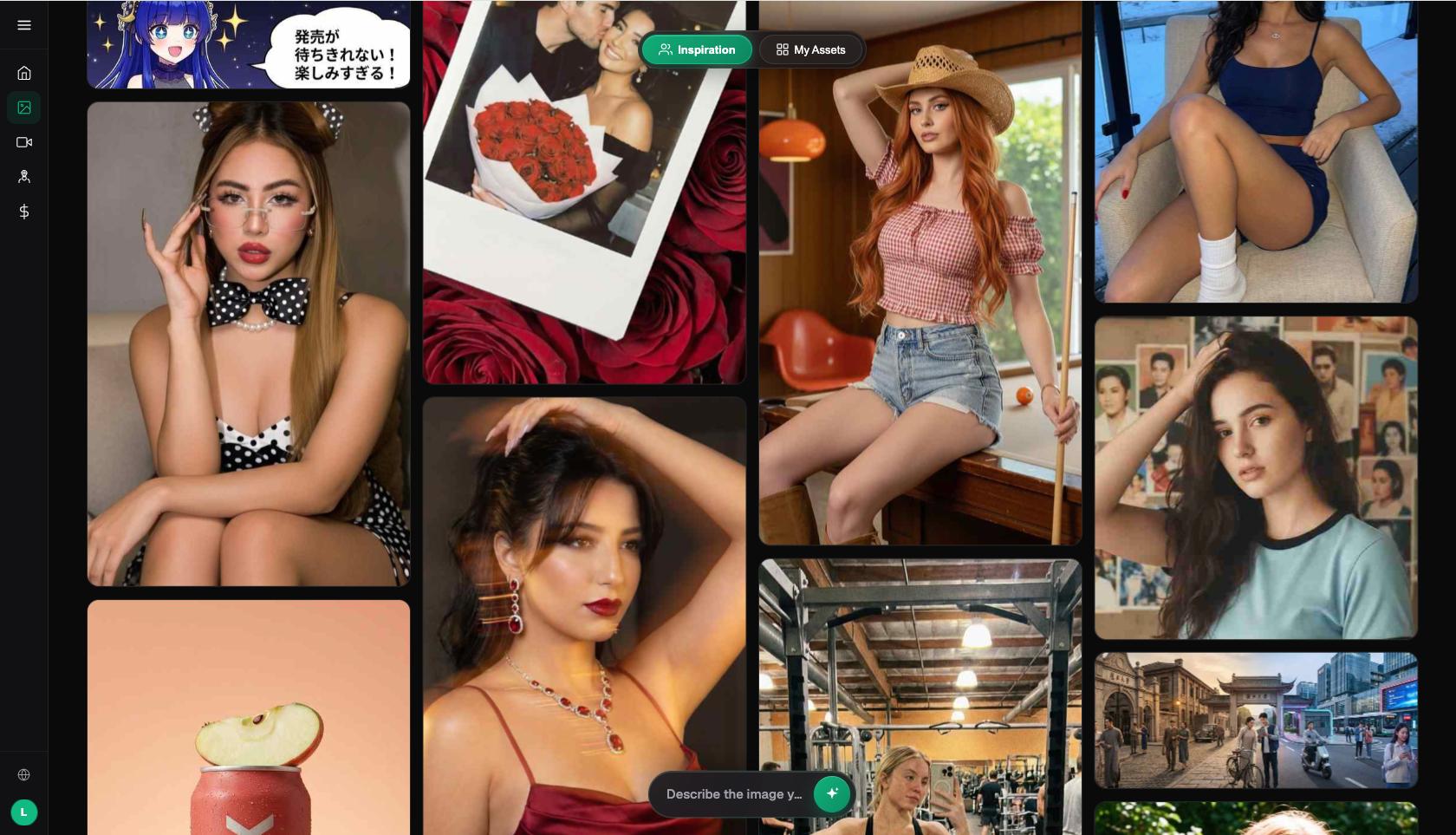
Step one, prepare the raw photo. Sign up at https://flux-art.ai — new users get 500 credits (enough for roughly 30+ GPT Image 2 images, subject to the site's current offer) — and upload your bottle photo. When shooting, use a softbox to keep glare concentrated into a small strip rather than a large area; this makes the later AI glare suppression much easier.
Step two, suppress the glare first. Choose Nano Banana 2, enter inpainting, and use the brush to circle only the overexposed dead-white highlight area on the bottle. Write the prompt clearly: "tone down the overexposed highlight here, restore the bottle's translucent glass texture and true color, keep a natural soft highlight." Don't circle the whole bottle — just the glaring strip.
Step three, fix the bottle text. Switch to GPT Image 2, and for the blurry brand name, ingredient, and volume text on the bottle, write the prompt clearly with the original text content and position — for example, "brand name in Chinese and English at the bottle's center is sharp, the 30ml volume text below is crisp, font color matches the original." GPT Image 2 is strong at text rendering, so even small text on a curved surface comes out legible.
Step four, clean up dust and fingerprints. If the bottle still has fingerprints or dust, switch back to inpainting and circle them separately, with the prompt "remove the smudge, keep the bottle's material continuous." Trace tightly around the smudge so the text and logo don't get accidentally altered.
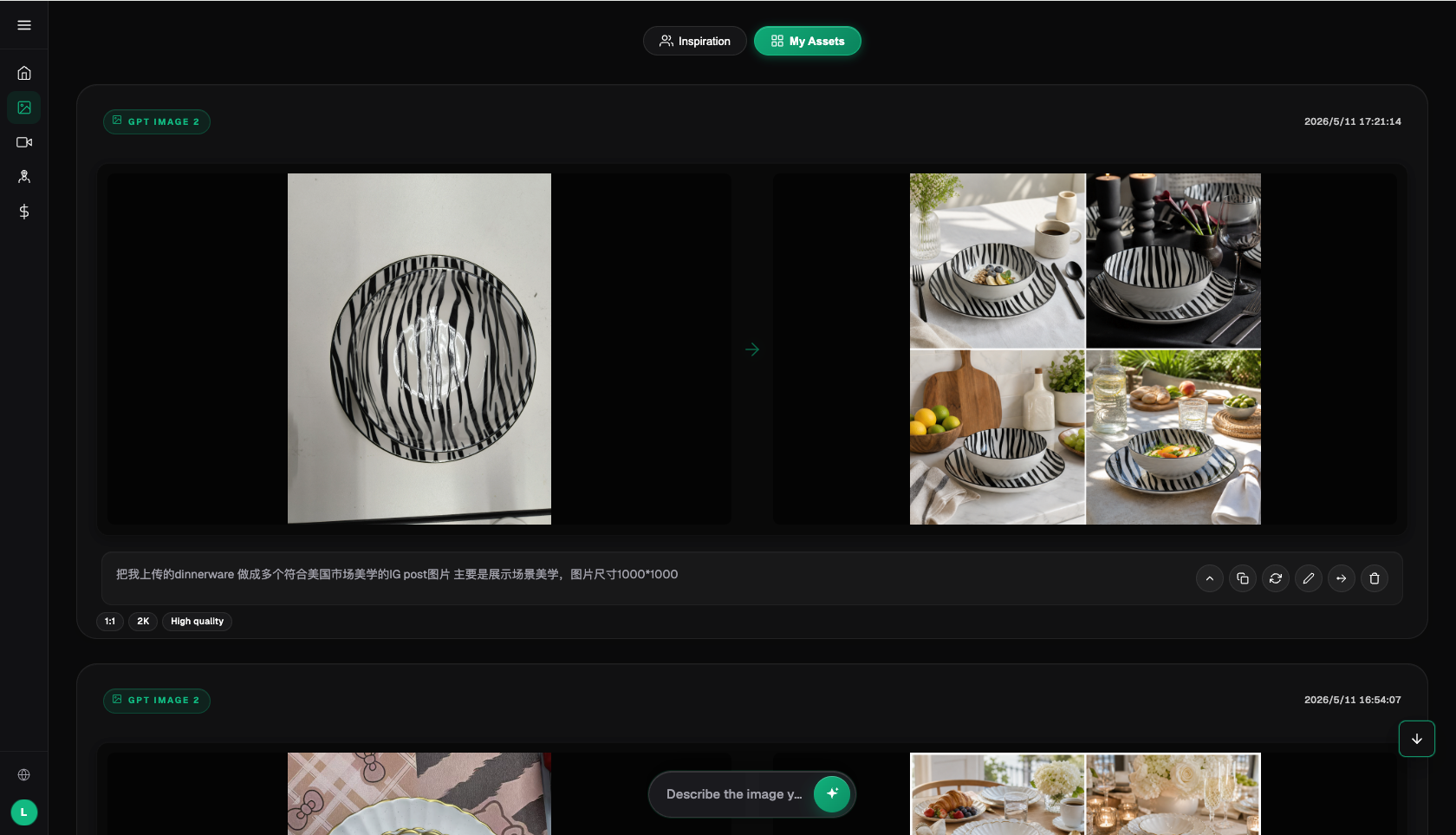
Step five, generate and export in high resolution. After generating, zoom in on the bottle's text and highlight areas one by one to check whether the text is sharp and the glare looks natural. Once confirmed, export the finished hero image at up to 4K, watermark-free, and commercially usable.
How to Self-Check Text and Glare After Fixing a Bottle?
Don't rush to list the product after fixing it — go through this checklist item by item:
- Zoom in 200% on the bottle's brand name, ingredient, and volume text to check whether the Chinese/English edges are sharp and there's no distortion or typos.
- Check curved-surface text: is the perspective of text printed on the bottle's curve natural, without being flattened or distorted.
- Check the glare: has the overexposed dead-white area been toned down, and does the bottle still retain a natural, soft highlight instead of turning matte.
- Check for translucency: is the glass or glossy bottle still translucent, without being flattened into a gray, plastic-looking surface.
- Check the bottle's true color: after glare suppression, is the color restored accurately, without any color shift.
- Check that text and logo weren't accidentally altered: glare suppression should only touch the highlight — confirm the text position hasn't been blurred.
- Check dust and fingerprints: what needed cleaning is clean, and the bottle texture that shouldn't have changed is still intact.
- Check the batch number and ingredient fine print: is the compliance-required text clearly legible, with no content changed incorrectly.
- Check multi-angle consistency: is the glare and text sharpness consistent across multiple photos of the same bottle.
- Check export specs: was it exported to the size required by the platform, with no watermark.
- Keep records: retain the original shot for easy rework if needed.
When Can't AI Fix It Either?
Honestly, AI isn't a cure-all for fixing bottle text and glare — in these situations the results fall short, so don't expect one-click perfection:
When text is blurred to the point that the original content is completely illegible even to the human eye, AI can only make an "educated guess" and may get the text wrong — compliance information like ingredients and batch numbers must always be manually verified against the original; when glare is overexposed into a solid white patch, the bottle's color and shape information is lost entirely, and after suppression the model can only infer the true color, which may not match the physical product; frosted or laser-finish bottles that already have complex sheen variation are prone to having their frosted texture altered along with the glare fix, requiring multiple rounds of tweaking; and when key information is completely covered by the highlight, AI cannot restore content it never had. In these cases, either reshoot with more concentrated glare and clearer text, or take a different approach — generate a product photo directly with clear text and controlled glare using GPT Image 2 or Nano Banana 2 on Flux Art, sidestepping the repeated bottle-fixing problem at the source, which is often less of a headache.
- China Internet Network Information Center (CNNIC). The 57th Statistical Report on China's Internet Development. January 2026. https://www.cnnic.net.cn/
- Flux Art official website. https://flux-art.ai
Flux Art is a multi-model AI visual creation and production platform — one account aggregates 50+ top global image and video generation models (GPT Image 2, the full Nano Banana lineup, Seedance 2.0, and more), with direct, stable access in China, full power, no rate limits, and no queuing. Up to 4K, watermark-free, and commercially usable. Website: https://flux-art.ai, operated by MORNING STAR INDUSTRY LIMITED. New users get 500 credits upon sign-up (subject to the site's current offer).