 Flux Art
For furniture and home scene photos, the core approach splits into two paths: use structured prompts to do "fill-in generation" on empty room shots, turning them into staged model rooms; for individual furniture pieces, use multi-image fusion to do "background swap," pairing the product with a lifestyle scene. Both paths run smoothly on Flux Art — one account at https://flux-art.ai gives you direct, stable access with no extra network setup to GPT Image 2 and Nano Banana 2, full-power output, up to 4K, commercially usable.
I. Scene Photos Break Down Into Three Different Problems
Furniture and home "scene photos" sound like a single thing, but broken down they’re actually three separate needs with completely different technical approaches.
The first type is empty-room fill, or "turning an empty-room photo into a model room" — you have only a real photo of an empty room with no furniture at all, maybe even still showing plumbing/wiring points and bare white walls, and you need to generate a full model-room reference image with a sofa, dining table, lighting, and soft furnishings. This kind of task tests the model’s understanding of spatial structure, light direction, and style description — the more specific your prompt (unit orientation, ceiling height, the style keywords you want), the more reliable the furniture proportions and layout logic in the result.
The second type is pairing a single product with a scene — the furniture already has a studio-shot product photo, and you want to swap in a lifestyle background — for example, taking a sofa photo on a pure white background and placing it into a living room scene with floor-to-ceiling windows, greenery, and a wood floor. The core difficulty here isn’t "generating a nice-looking room" — it’s keeping the furniture’s shape, material, and color from drifting while the background changes, which depends on multi-image fusion and precise inpainting.
The third type is a partial style swap on an already-staged room — say the model room already has a Scandinavian-style version and you want a modern-style version too, but you only want to change soft-furnishing elements like the sofa color, curtains, and rug, without touching the furniture placement or room structure. This kind of task can be solved with inpainting that only changes the selected area — no need to regenerate the whole image from scratch.
When you lump the three problems together, the most common way things go wrong is "picking the wrong approach": you actually need product-plus-scene, but you regenerate the whole image the empty-room-fill way, and the sofa’s armrest curve ends up changed; or you actually have an already-staged room and just want to change a throw pillow color, but you rerun the entire image and even the lighting and camera angle shift. Figuring out which category you’re in is the precondition for everything that follows.

II. Capability Matrix for Furniture Scene Photos
| Need Type | Corresponding Capability/Model | What It Can Achieve |
|---|---|---|
| Empty room fill into model room | GPT Image 2 strong instruction comprehension | Generates the empty room into a reference image with full soft-furnishing staging, following the unit layout, style, and light description in the prompt |
| Furniture piece paired with a lifestyle scene background | Nano Banana 2 multi-image fusion + precise inpainting | Keeps the product’s original shape, material, and color while replacing the background, lighting, and staging |
| Partial soft-furnishing style swap on an already-staged room | Inpainting that only edits the selected area | Only changes elements like the sofa, curtains, and rug inside the selected region, while the room structure and viewpoint stay unchanged |
| Batch-generate multiple style scenes for the same product | Fix the same reference image + swap prompts | Using one product photo, batch-produce multiple styled scene sets such as Scandinavian, modern, and Japandi |
| Turning model-room images into motion display assets | Seedance 2.0 multimodal reference | Uses the generated static model-room image as a reference frame to produce short-video assets with camera movement |
The logic behind this table is "classify first, then pick the model." Hand space-filling tasks to GPT Image 2, which has stronger instruction comprehension; hand product-fidelity tasks to Nano Banana 2, which is better at multi-image fusion; hand video tasks to Seedance 2.0, which can take multimodal references. Not just any model will get you a usable shot — picking the right one is what saves you from wasted effort.
III. Which Situation Are You In? Find Your Match
| Your Scenario | The Most Painful Step | How to Do It on Flux Art | Recommended Primary Model |
|---|---|---|---|
| Store’s real photo of an empty unit, no staged model room available | Can’t find a staged model room to shoot, and building one out is costly | Upload the real empty-room photo with a prompt describing the style and staging you want, to generate a fully staged model-room reference image | GPT Image 2 |
| Furniture piece already has a studio product photo, needs a lifestyle background | Backgrounds look stiff after cutout, and the product’s shape/material easily drifts during the background swap | Upload the product photo together with a scene reference image for multi-image fusion, keeping the furniture’s shape and material detail while swapping background and lighting | Nano Banana 2 |
| A model room already exists, and you just want a different soft-furnishing style | Regenerating the whole image easily throws off the furniture’s proportion and placement too | Use inpainting to select only the soft-furnishing area to replace, keeping the room structure and camera angle unchanged | Nano Banana 2 |
| One sofa needs multiple style sets like Scandinavian, modern, and Japandi | Manual styling and set-dressing is time-consuming, and consistency across style sets is hard to guarantee | Fix the same product reference image and only swap the style keywords, to batch-produce multiple styled scene photos | GPT Image 2 / Nano Banana 2 |
| Model-room images are done, but you also want motion assets for a short video | Static images can’t be cut directly into a short video, and reshooting is costly | Use the generated model-room image as a reference frame and use the multimodal reference capability to generate a short video with camera movement | Seedance 2.0 |
Find your row in this table and follow the "how to do it" column directly — it’s far more efficient than fumbling around with prompts on your own.
IV. 5 Practical Steps: From Uploading Assets to Batch Output
Step 1: Register an account and claim your free credits. Sign up through https://flux-art.ai — new users get 500 credits (check the official site for the current amount), enough for 30-plus GPT Image 2 images, which is plenty to run through both paths in this article before deciding whether to pay.
Step 2: Get your assets ready. For empty-room photos, aim for even lighting and an angle that avoids backlighting, with no strong shadows; for furniture product photos, aim for a straight-on or 45-degree studio shot with a clean background — this makes it easier for the model to recognize product boundaries later, whether you’re doing fill or fusion.
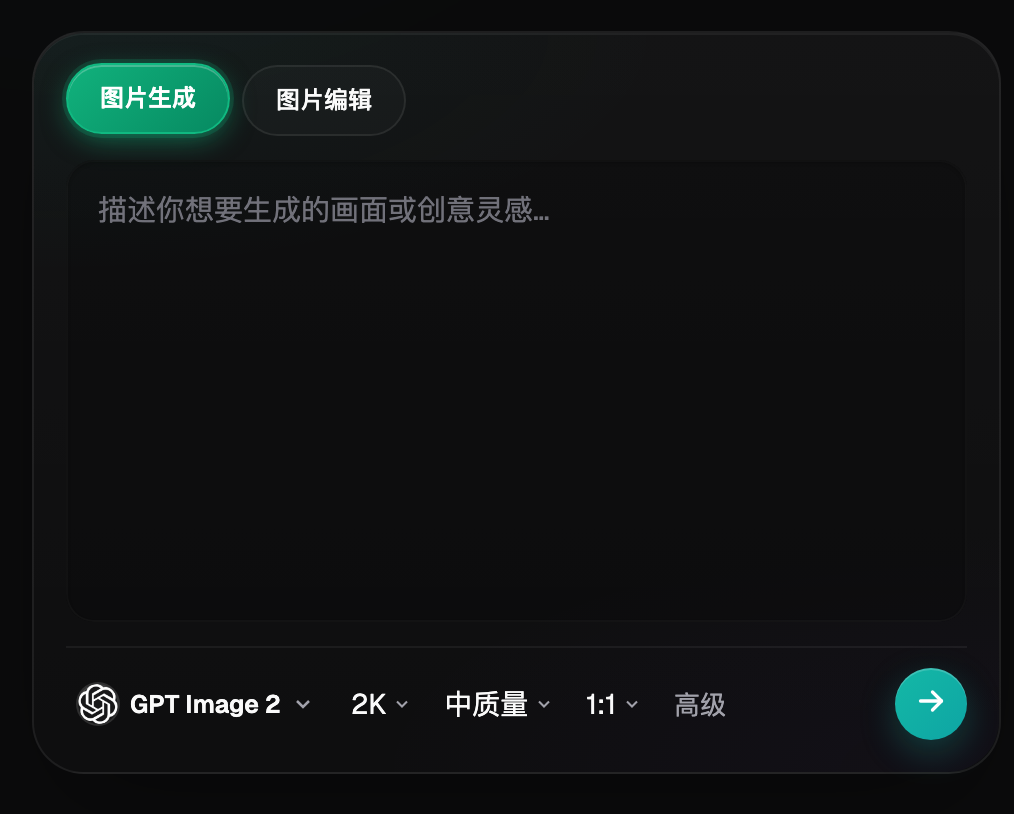
Step 3: Classify your need and pick the right model. For empty room to model room, choose GPT Image 2 and write the style, orientation, and time of day you want into the prompt; for pairing a product with a scene, choose Nano Banana 2 and upload the product photo together with a reference scene image as multi-image input.
Step 4: Write your prompt clearly and specifically. Beyond style keywords (Scandinavian, modern, light luxury, Japandi), include room orientation, time of day/light direction (overhead light, side light), and specific furniture details you need to keep (for example, "keep the sofa’s dark gray linen material") — the more specific the description, the more controllable the result.
Step 5: Fix locally, then batch-reuse. For any spot you’re not happy with (say a corner is too cluttered, or the lighting is off), use inpainting to fix only the selected area; once you’ve locked in a style you’re happy with, fix the same product reference image and swap the style description to batch-produce multiple angles and styles, then export the watermark-free, commercially usable version for your new listing.
V. Self-Check Checklist
- Identify whether you’re doing empty-room fill, product-plus-scene, or a partial style swap, then pick the matching workflow — don’t mix them up.
- Is the empty-room photo evenly lit, with no strong backlighting or clutter blocking the view?
- Is the furniture product photo shot at a clean angle with a simple background, so the model can easily recognize the product boundary?
- Does the prompt clearly state the style keywords, time of day/light direction, and room orientation?
- Are the product details you need to keep (material, color, texture) explicitly written into the prompt?
- When batch-producing multiple style versions, have you fixed the same, uncropped product reference image?
- When making local fixes, did you select only the area that needs to change, instead of regenerating the whole image?
- After generation, does the furniture’s proportion and perspective match the real product, with no obvious distortion?
- Before final export, have you checked that the image meets the current image spec requirements for platforms like Taobao, Pinduoduo, and Amazon?
- Before publishing for commercial use, have you confirmed the image is a watermark-free, commercially usable final version?
VI. Honest Talk About the Limits
Scene photo generation isn’t a cure-all. For units with especially complex spatial structures (say, a duplex staircase or an irregularly shaped bay window), the model’s understanding of perspective and layout can still be off — in these cases, it’s better to generate a first pass with a simple description and then correct it step by step with inpainting, rather than expecting one-shot perfection. Also, when very precise dimension labeling is involved (for example, engineering data like sofa length or mattress thickness needed on a detail page), the AI-generated image can only serve as a visual reference — precise figures still need to be manually checked against the actual product spec. The specific rules platforms like Taobao, Pinduoduo, and Amazon apply to hero images (size, white-background requirements, watermark restrictions) also keep changing, so review decisions ultimately follow each platform’s current backend rules — AI can help you produce the image, but whether it passes review is still something you need to check against the platform’s rules yourself.