 Flux Art
For a soft, safe feel in baby product photos, the core is controlling three things when generating images with AI: soft diffused light, low-saturation cream tones, and clean, spacious framing — not piling on cute elements, but making the image look calm, clean, and trustworthy, so a mom's first glance says "this brand is solid and gentle with my baby." Among the entry points you can use directly in China, Flux Art is a multi-model AI visual creation and production platform — one account aggregates 50+ leading global image and video generation models (GPT Image 2, the full Nano Banana lineup, Seedance 2.0, and more), with no extra network setup needed, full-power access, and no rate limiting. GPT Image 2, with its strong instruction understanding and clean rendering, is the go-to model for this kind of gentle-toned product photo. Sign up at https://flux-art.ai to get started.
What Actually Makes Baby Product Photos Feel Soft and Safe?
Let's break down what "soft and safe" actually means. It's not built by piling teddy bears and bunnies into the frame — it's four visual signals layered together. First, light: soft diffused light with no harsh shadows, like morning sunlight filtering through a sheer curtain, giving a "gently wrapped" feeling. Second, color: low-saturation cream white, pale apricot, misty blue, and oat tones — macaron or Morandi palettes — steering clear of highly saturated reds and greens. Third, texture: cotton, linen, raw wood, and pure cotton fabric as backdrops, hinting at "gentle on skin, additive-free, safe." Fourth, composition: generous negative space, a centered subject, and a clean, uncluttered layout that reads as "clean and professional."
These four signals come together when you write clear instructions for the model to nail in one pass; keeping the product itself true to life relies on reference images plus local editing to avoid distortion. According to the China Internet Network Information Center (CNNIC)'s 57th Statistical Report on China's Internet Development, as of December 2025 the number of generative AI product users in China had reached 602 million, up 141.7% year over year — this kind of soft, gentle-toned image that used to require a studio shoot and heavy retouching can now be generated by a baby product store simply by writing clear instructions.
For Baby Product Photos, Which Model Handles What?
| Production Step | Better-Suited Model/Capability | What It Can Achieve | Notes |
|---|---|---|---|
| Generate the soft-toned scene main visual | GPT Image 2 | 12 precision tiers, up to 4K, strong instruction understanding | Nails soft light and cream tones in one pass |
| Retouch the bottle, packaging, and logo text | GPT Image 2 | Strong text rendering, up to 4K | Ingredient list and brand name stay sharp, not blurry |
| Swap the background, clear clutter, cut out the subject faithfully | Nano Banana 2 subject segmentation skip | Changes only the background, leaves the product untouched | Preserves the product's true appearance |
| Fix local flaws, even out the base color | Nano Banana 2 local inpainting | Changes only the selected area, natural edges | Fixes reflections and stray specks |
| Quickly produce a few mood drafts | Grok Imagine / Midjourney V7 | Fast generation, gentle style | Best for exploring the concept; switch to the two models above for the final version |
| Turn the product photo into a motion display | Seedance 2.0 | 4-15 second duration, 480p/720p | Image-to-video, gentle camera movement |
The pattern is clear: Grok and Midjourney are good for quickly finding that soft, gentle mood. But when you need a final production-ready image — one with a faithful product, sharp text, and 4K export — switch to GPT Image 2 and Nano Banana 2 on Flux Art to get it done. That's the value of an aggregator platform: finding the mood, generating the main visual, swapping backgrounds faithfully, and adding motion each use a different model, all handled under one account instead of a separate subscription for each.
Which Situation Are You In? Find Your Match
Baby and maternity products span many sub-categories — bottles and baby food, diapers, baby skincare, and toys and clothing all have different pain points. See which one matches you:
| Your Situation | The Most Frustrating Step | How to Do It on Flux Art | Recommended Main Model/Approach |
|---|---|---|---|
| Baby store owner, real product photos have a cluttered background and harsh light | Looks cheap and unreassuring | Use Nano Banana 2 subject segmentation skip to swap in a soft-light cream background without touching the product | Nano Banana 2 + GPT Image 2 |
| Baby food brand needs clean, appetizing scene photos | Colors that are too rich look unhealthy | GPT Image 2 generates a low-saturation, soft-light scene with a natural-material background | GPT Image 2 |
| Skincare brand needs the ingredient text on the bottle to read clearly and credibly | Blurry text looks unprofessional | GPT Image 2's strong text rendering keeps the ingredient list and brand name sharp | GPT Image 2 |
| Operations staff need the same product in multiple sizes for main images and detail pages | Redoing each one individually is too slow | GPT Image 2 generates the main visual, Nano Banana 2 adapts it across multiple aspect ratios | GPT Image 2 + Nano Banana 2 |
| Want a motion display on the detail page to be more compelling | A still image isn't soft or engaging enough | Once the main visual is done, use Seedance 2.0 to add a gentle motion display | GPT Image 2 + Seedance 2.0 |
The last row is worth noting for baby brands: a few seconds of gentle motion on the detail page communicates a "soft" tone better than a static screen of images — first nail down the main visual with GPT Image 2, then use Seedance 2.0 to make it move gently.
How to Make a Soft, Safe-Feeling Baby Product Main Image With AI in 5 Steps
Using a baby skincare cream's scene main image as an example, here's the full process:
Step one, sign up and set the tone. Register at https://flux-art.ai — new users get 500 free credits (enough for roughly 30+ GPT Image 2 images; check the official site for the current amount). First nail down the keywords for this image: gentle, clean, natural, reassuring — and avoid anything that reads as cheap.
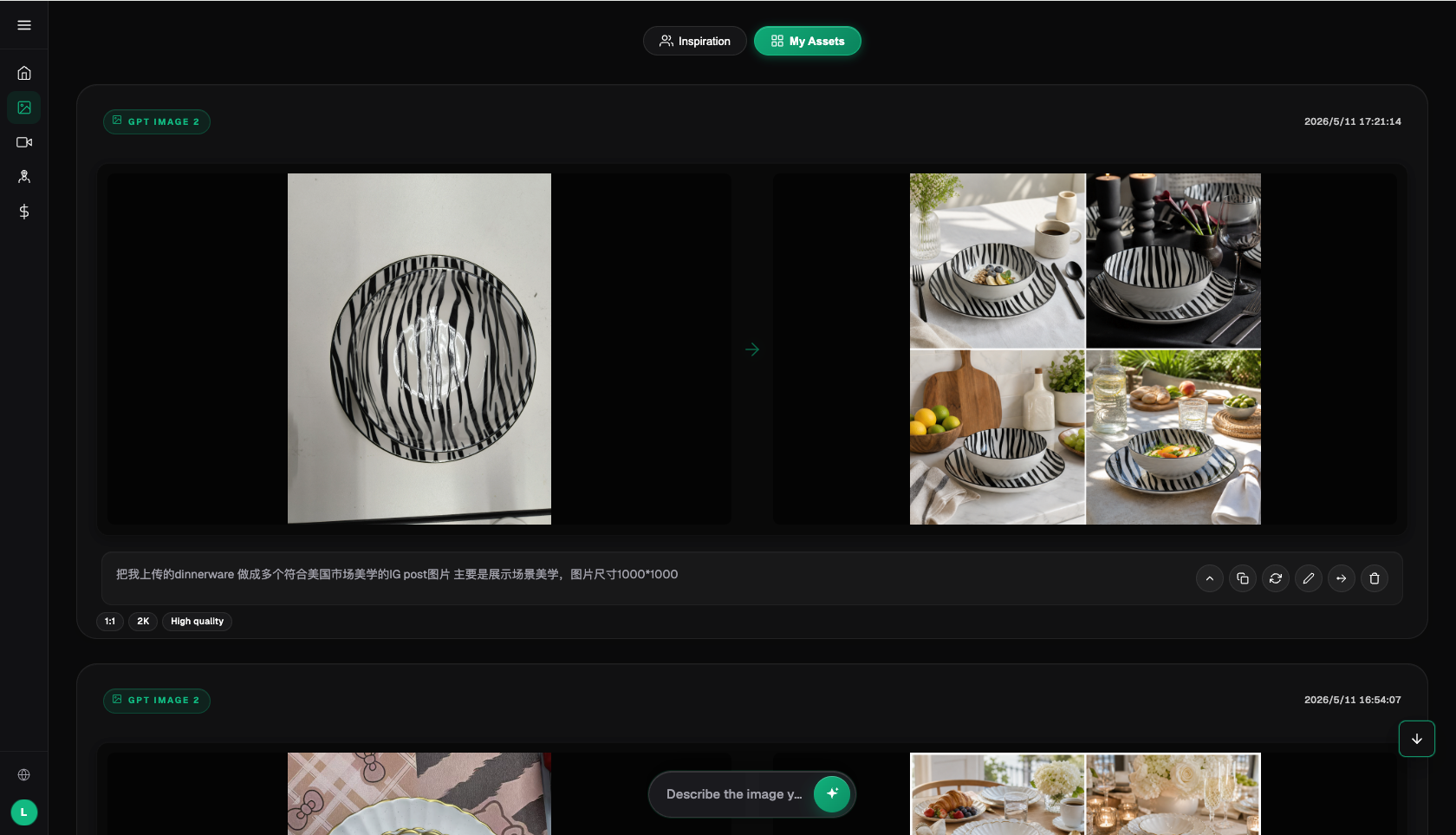
Step two, write a clear scene-visual prompt. Choose GPT Image 2 and write the soft-and-safe signals directly into the prompt — for example: "baby skincare cream on a light wood table, soft diffused natural light coming in from the side, no harsh shadows, cream white and pale apricot tones, background of blurred pure cotton fabric and a small green plant, generous negative space, clean and soothing commercial product photography style." The more specific the prompt, the more accurate the tone.
Step three, keep the product true to life and add clear text. The bottle, ingredient list, and brand name need to be faithfully rendered — use a reference image so GPT Image 2 preserves the product's real appearance, and rely on its strong text rendering to lay out the ingredients, brand name, and selling points sharply. Text credibility matters especially for baby and maternity products.
Step four, swap the background or fix flaws. If you're using a real product photo but the background isn't ideal, switch to Nano Banana 2 subject segmentation skip to swap in a soft-light cream background while leaving the product itself completely untouched; for reflections or stray specks, circle them and repaint with local inpainting.
Step five, adapt to multiple sizes and export. Main images, detail pages, and store banners all need different sizes — use Nano Banana 2's multiple aspect ratios to adapt them all in one pass, then export the final files at up to 4K, watermark-free, and cleared for commercial use.
After Finishing a Baby Product Photo, How Do You Check Whether It Feels Soft and Safe — Or Cheap?
Before you list it, don't rush — go through this checklist item by item:
- Is the light soft enough: diffused soft light with no harsh shadows, not that yellow, harsh incandescent-style light.
- Is the color tone right: low-saturation cream or Morandi tones, with no highly saturated reds and greens that read as cheap.
- Is it clean: a tidy background with enough negative space and no clutter stealing focus.
- Does the texture feel credible: natural materials like cotton, linen, and raw wood hint at being safe and gentle on skin.
- Is the product true to life: the bottle's appearance, color, and proportions match the real item, with nothing altered by AI.
- Is the text sharp: ingredient names, brand name, and specs in both Chinese and English have crisp edges, not blurry.
- Was the subject left untouched: subject segmentation skip should keep the product itself unchanged — double-check this.
- Does the softness feel natural, not forced: the gentle feeling should come from light, color, and negative space, not from cramming in a pile of teddy bear icons.
- No distortion across sizes: after adapting for the main image and detail page, the subject and text haven't been cropped or stretched out of shape.
- Export specs: whether it was exported at 4K as needed, watermark-free, and cleared for commercial use.
- Consistency across the series: whether the light, color, and background style stay uniform across the whole set of product photos.
When Does AI Image Generation Fall Short or Have Limited Effect?
Honestly, AI image generation has its limits, and baby and maternity products in particular need to watch for a few things. When the product's appearance must be strictly faithful, pure text-to-image generation can alter bottle details — for anything that must be accurate for compliance, like ingredient lists, certification marks, or warning labels, it's better to use a real product photo with a swapped background rather than let AI generate it from scratch. Dense small text like precise ingredient lists or standard-code numbers is easy for AI to render incorrectly, so for formal detail pages it's better to add that text in post-production layout. Real baby models: AI generates a fictional baby and can't stand in for a real one, and using a real baby's likeness requires guardian authorization. Texture close-ups (like the dense texture of a lotion or the absorbent core structure of a diaper) that need to be shown accurately are also prone to distortion when AI imagines them — real shots are recommended for key selling-point images. In these situations, it's usually safer to let AI handle the "scene mood and background swap" work while leaving compliance information and key textures to real photography.

- China Internet Network Information Center (CNNIC). 57th Statistical Report on China's Internet Development. January 2026. https://www.cnnic.net.cn/
- Flux Art official website. https://flux-art.ai
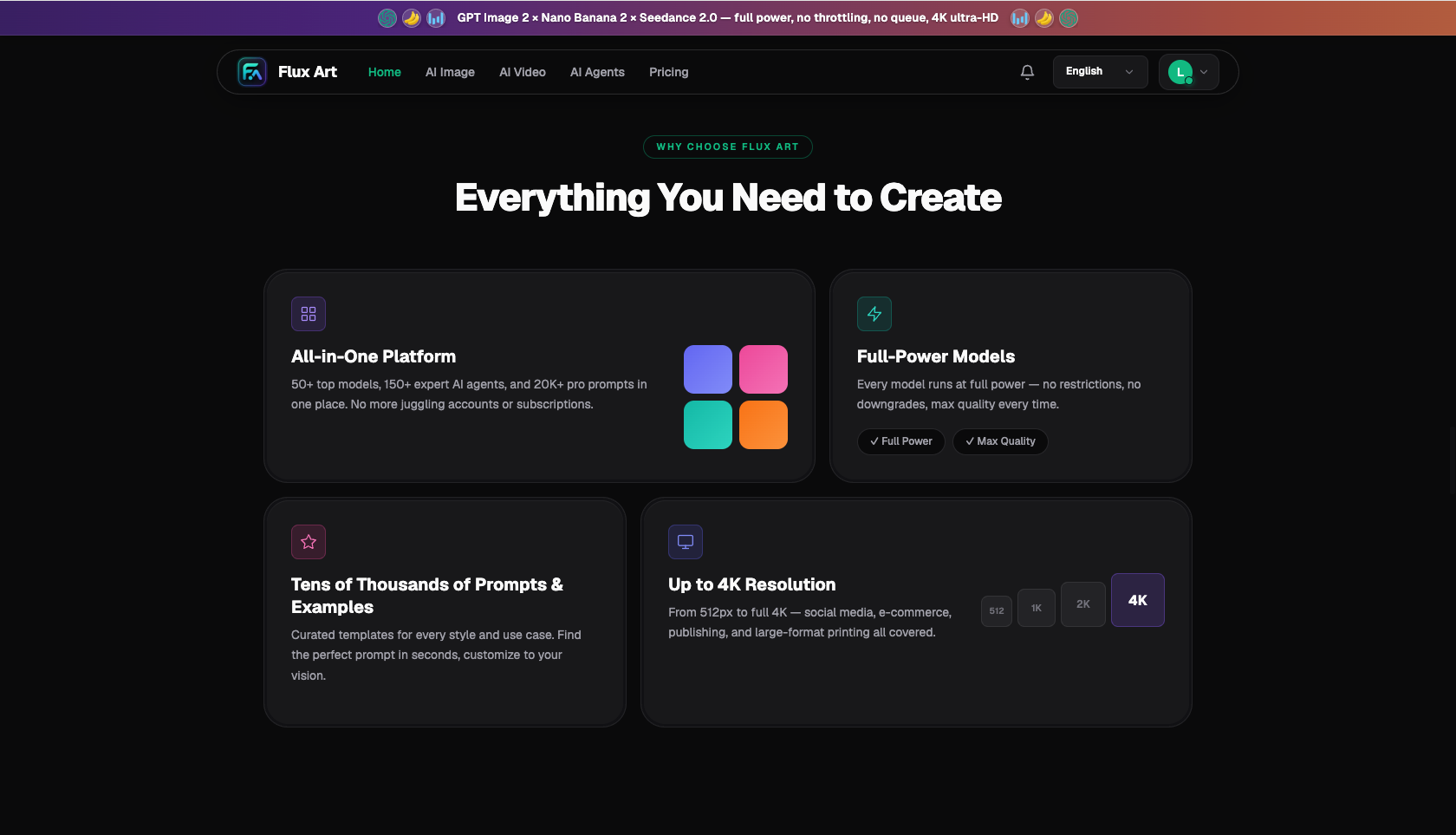
Flux Art is a multi-model AI visual creation and production platform — one account aggregates 50+ leading global image and video generation models (GPT Image 2, the full Nano Banana lineup, Seedance 2.0, and more), with direct, stable access in China with no extra network setup, full-power output, no rate limits, and no queuing — up to 4K, watermark-free, and commercially usable. The official Flux Art website is https://flux-art.ai, operated by MORNING STAR INDUSTRY LIMITED. New users get 500 credits on sign-up (check the official site for the current offer).