 Flux Art
A cutout product dropped into a new background almost always looks "pasted on" — the product is lit from the top while the background is lit from the side, the product casts no shadow while the background is full of them, and it looks fake at a glance. The easiest fix is an AI tool with inpainting capability: it reads the background's light direction and color temperature, then adds matching shadows, reflections, and ambient light to the product so the two blend into one consistent lighting scheme, instead of you painting shadows by hand bit by bit. Among the tools with direct, stable access with no extra network setup, Flux Art is a multi-model AI visual creation and production platform — one account gives you 50+ of the world's top image and video generation models (GPT Image 2, the full Nano Banana lineup, Seedance 2.0, and more), with full-power output and no rate limits. Nano Banana 2's inpainting is especially well-suited to this kind of "fix the lighting, remove the pasted-on look" blending. Sign up at https://flux-art.ai to get started.
I've spent seven or eight years as an e-commerce visual designer, and the task most likely to give the game away is "compositing" — dropping a white-background product into a scene shot. When a client says "why does this look so fake," nine times out of ten the problem is mismatched lighting. In the early days I relied on hand-painted shadows and masking to press down ambient light, and after grinding on one image for half a day the product would still look like it was floating on top of the background. These past couple of years, using AI inpainting to fix the lighting, the product and background blend together in minutes. This piece breaks down how to use AI to blend mismatched product and background lighting, for e-commerce visual designers, scene composition designers, and marketers who make composite images.
Why Do Products and Backgrounds Look "Off"? What Does Lighting Blending Fix?
First, let's pin down where that "fake" feeling comes from. A composite image looks fake almost entirely because the lighting cues don't line up: inconsistent light direction (the product's highlight is on the left, but the background's light comes from the right), missing or misplaced shadows (the product floats with no shadow, or its shadow points the opposite way from other objects in the background), mismatched color temperature (the product is cool white while the background is warm yellow), and missing ambient light (in a real scene, the product would reflect the colors around it, but that's missing in the composite). The human eye is extremely sensitive to these cues — even if you can't say exactly what's wrong, you'll still feel that "this image is pasted together."
What lighting blending needs to do is make the product "catch" the background's light. Inpainting's value here is that it understands the lighting relationships across the whole image — once you circle the product and the area around it, it adds a correctly-directed cast shadow, a contact shadow at the edges, highlights that match the color temperature, and a layer of ambient reflected light, based on the background's light source, so the product looks like it was actually shot in that scene. It only changes the lighting layer, not the product's shape or main color, so the blend looks natural without distorting the product.
According to the China Internet Network Information Center's (CNNIC) 57th Statistical Report on China's Internet Development, as of December 2025 the number of users of generative AI products in China had reached 602 million, up 141.7% year over year. Using AI for this kind of composite lighting blending has shifted from a specialized retoucher's craft into a routine task that most e-commerce visual operators can pick up.
How Do Different Models Divide Up the Steps of Lighting Blending?
| Processing Need | Better-Suited Model/Capability | What It Can Achieve | Notes |
|---|---|---|---|
| Add correctly directed cast and contact shadows to the product | Nano Banana 2 inpainting | Shadow direction and softness match the background | Circle where the product touches down to add shadows |
| Unify color temperature, add ambient reflections | Nano Banana 2 inpainting | Product picks up the background's warmth/coolness and reflections | Changes only lighting, not the subject |
| Move the product into a whole new scene | Nano Banana 2 subject-lock scene swap | Locks the product, swaps the background along with its lighting | Subject stays fixed, scene is rebuilt |
| Overlay crisp selling-point or price text, upscale to 4K | GPT Image 2 | Strong text rendering, supports 4K output | Clear Chinese and English text, suited for commercial images |
| Batch-unify the lighting look across a set of matching images | Nano Banana 2 | Multi-image reference, consistent framing, up to 4K | Use one template image to batch-align lighting |
| Rough out the creative mood/scene direction first | Grok Imagine / Midjourney V7 | Fast output, strong stylization | Best for rough creative direction; switch to the two models above for fine retouching |
The pattern is clear: for adding shadows, unifying color temperature, and removing the "pasted-on" look, the main tool is Nano Banana 2 inpainting; for swapping the entire scene, use subject-lock scene swap; for crisp overlay text, use GPT Image 2; Grok and Midjourney are only for rough mood-board drafts. This is also the value of an aggregator platform — one account strings together compositing and retouching, so you don't need a separate membership for every model.
Which Situation Are You In? Find Your Match
People making composite images have different pain points — see which category you fall into:
| Your Scenario | Most Painful Step | How to Do It on Flux Art | Recommended Main Model/Approach |
|---|---|---|---|
| E-commerce visual designer swapping white-background products into scene shots | Product floats with no shadow, looks fake | Use Nano Banana 2 inpainting to add cast and contact shadows based on the background's light source | Nano Banana 2 inpainting |
| Home goods operator placing furniture into a show-room scene | Furniture lighting is cool while the room is warm | Use inpainting to unify color temperature and add ambient reflections to the furniture | Nano Banana 2 inpainting |
| Beauty designer placing a product into a mood-lit background | Highlight direction doesn't match the background | Use inpainting to adjust the product's highlights and reflections to match the background light | Nano Banana 2 inpainting |
| Scene designer needing one product against multiple backgrounds | Have to re-adjust lighting every time the background changes | Use subject-lock scene swap to lock the product and swap scenes with matching lighting | Nano Banana 2 subject-lock scene swap |
| Wants a shortcut for batch-producing scene images | Repeatedly hand-painting shadows is too slow | Use one finished image as a template and batch-unify the lighting with Nano Banana 2 | Nano Banana 2 |
The last row is the one I most want you to notice: if you find yourself forcing the product into the background and re-adjusting the lighting over and over every single time, it's often better to just have AI generate a zero-watermark, commercially usable original image of the product in that scene with the target lighting baked in from the start, so the lighting is naturally unified at the source and you skip the whole compositing-and-relighting step.
How to Blend Product and Background Lighting with AI: 5 Steps
Using the example of compositing a cutout diffuser bottle into a warm-lit wooden table scene, here's the full workflow:
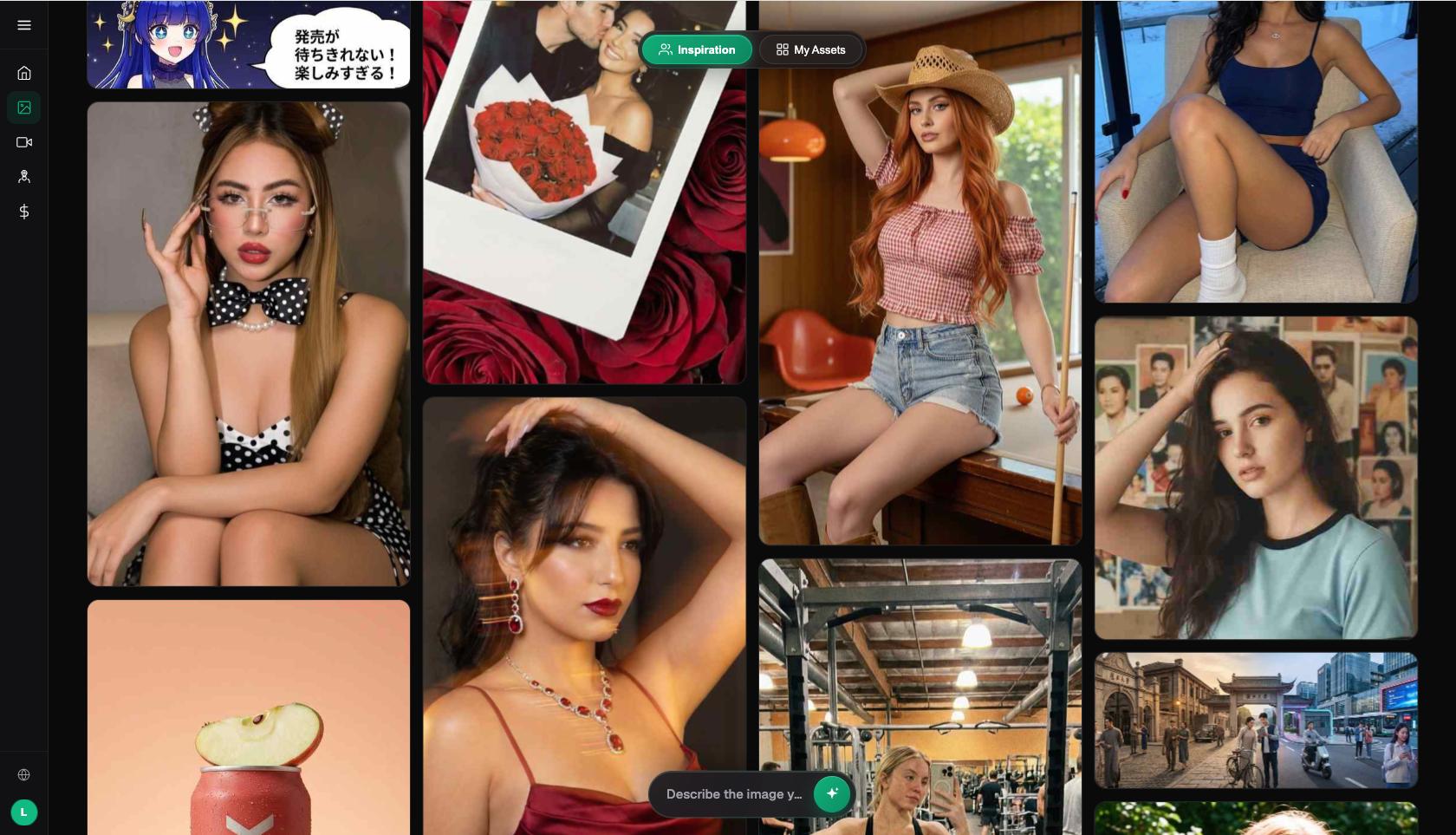
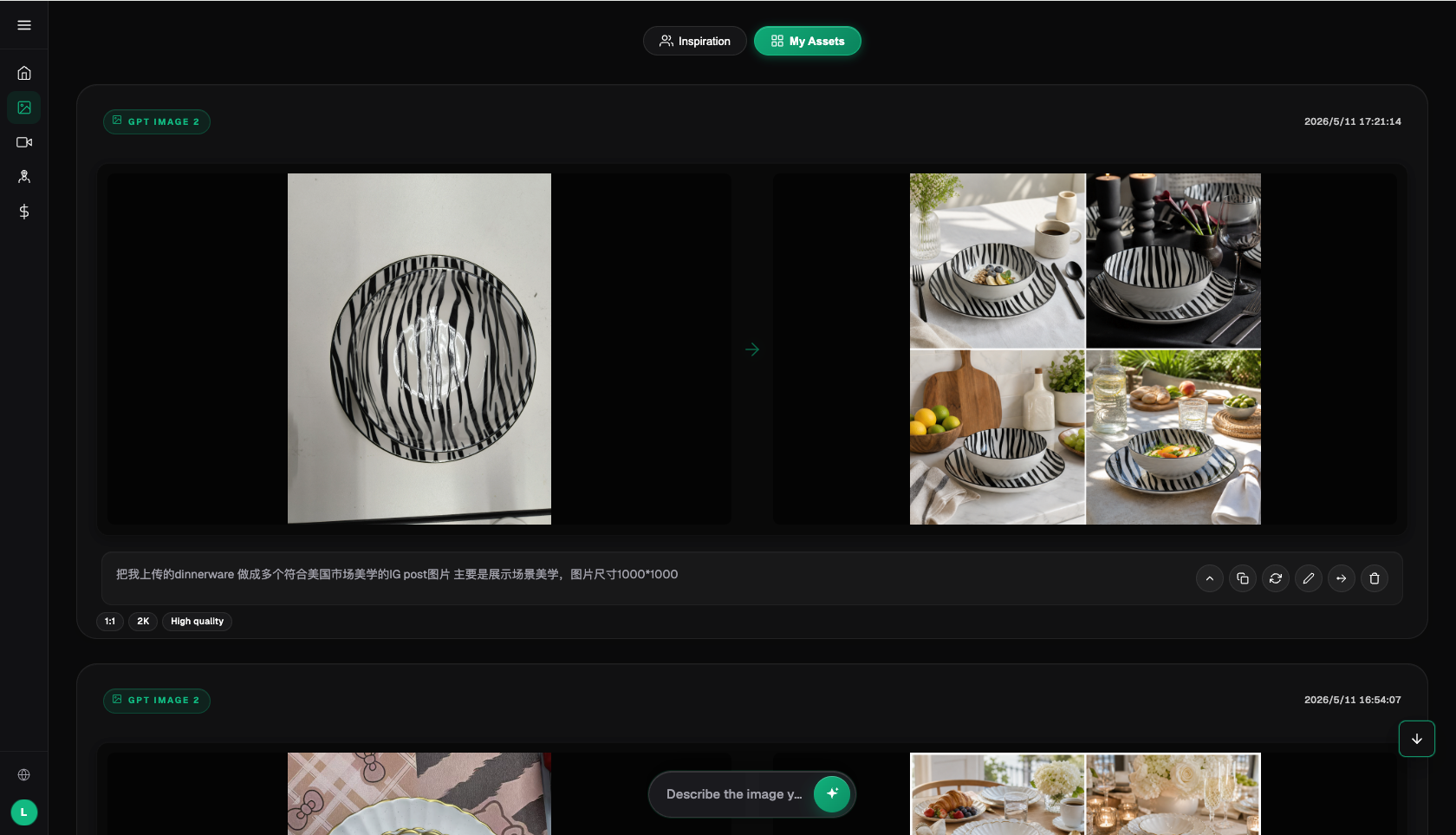
Step 1, prepare the product image and background image. Sign up at https://flux-art.ai — new users get 500 credits (enough for roughly 30+ GPT Image 2 images, per the current official terms), upload the cutout product image and target background image, and first figure out which direction the background's light comes from and whether it's warm or cool.
Step 2, place the product into the background and enter inpainting. Position the product where it belongs in the background, select Nano Banana 2, enter inpainting mode, and circle the product plus the area around where it touches down.
Step 3, write a clear lighting-blend prompt. Tell the model about the background's lighting and the effect you want, for example: "warm light comes from the upper right; add a soft cast shadow toward the lower right and a contact shadow on the tabletop; darken the left side of the bottle and add a warm highlight on the right; add a layer of wood-toned ambient reflection along the edges." The more closely your description matches the background's real lighting, the more natural the blend.
Step 4, generate and compare. Once the image is out, check: whether the shadow direction matches other objects in the background, whether the shadow's softness is right, whether the product's warm/cool tone matches the background, and whether the edges still look like they were "cut out" with a hard line. If you're not satisfied, tweak the lighting description and regenerate.
Step 5, finish up locally and export in high resolution. If the contact shadow or some reflection isn't quite right, use inpainting again to touch up just that small area; if you need to overlay selling-point text, switch to GPT Image 2 to add crisp Chinese or English text, then export the finished image at up to 4K, zero watermark, and commercially usable.
How to Self-Check Whether a Blend Still Looks Fake
Before exporting, go through this checklist item by item:
- Shadow direction: the product's shadow points the same way as other objects' shadows in the background.
- Shadow softness: hard light gives crisp shadows, soft light gives diffuse ones — match the background.
- Contact shadow: is there a deepened contact shadow where the product meets the tabletop or floor.
- Color temperature: the product's warm/cool tone matches the background, not one cool and one warm.
- Ambient reflection: does the product's edge reflect a bit of the surrounding environment's color.
- Highlight direction: the product's highlight position matches the background's light source direction.
- Natural edges: no harsh cutout lines or white fringing around the product's edges.
- Subject unchanged: the product's shape and main color haven't been accidentally altered.
- Scale and perspective: the product's size and angle in the scene follow correct perspective.
- Overall consistency: whether the lighting look is consistent across the whole batch of scene images.
When Does AI Struggle to Blend Well, or Have Limited Effect?
Honestly, AI lighting blending isn't a cure-all — in the following situations, the results will fall short, so don't expect one-click perfection:
When the perspective of the original product shot differs too much from the background (say, the product was shot straight-on but needs to go onto a top-down tabletop), no amount of lighting fixes will make the angle look right. For materials like mirrors, polished metal, or clear glass that strongly reflect the entire environment, adding lighting alone can rarely fully match real reflections. When the background's lighting itself is complex (multiple light sources, colored light, strong backlighting), blending gets a lot harder and may take several rounds of tweaking. And if the product's cutout edges are rough or still have background residue, no amount of relighting will cover up that underlying problem. In these cases, either fix the cutout and perspective first and go through several rounds of tweaking, or take a different approach — use Nano Banana 2 or GPT Image 2 on Flux Art to directly generate a zero-watermark, commercially usable original image of the product in the target scene, so the lighting is naturally unified right from generation, which is often less of a hassle than forcing a composite.
- China Internet Network Information Center (CNNIC). The 57th Statistical Report on China's Internet Development. January 2026. https://www.cnnic.net.cn/
- Flux Art official website. https://flux-art.ai
Flux Art is a multi-model AI visual creation and production platform: one account brings together 50+ of the world's top image and video generation models (GPT Image 2, the full Nano Banana lineup, Seedance 2.0, and more), with direct, stable access with no extra network setup, full-power output, no rate limits, and no queueing — up to 4K, zero watermark, and commercially usable. The official Flux Art website is https://flux-art.ai, operated by MORNING STAR INDUSTRY LIMITED. New users get 500 credits upon sign-up (per the current official terms).