 Flux Art
To make a convincing product floating shot (the product appears to hang weightlessly in mid-air) or an exploded-view shot (the product's parts are pulled apart along an axis and laid out in layers), three things matter most: clean cutouts of the subject and each part, consistent perspective and lighting direction across every part, and even spacing with guide lines that give the layout a sense of order. The easiest approach is an AI with inpainting (local retouch) capability — place the product or its disassembled parts into the scene first, then select regions one by one to repaint shadows, cast shadows, and connection points so both "floating" and "exploding apart" look physically plausible. Among the options with direct, stable access in China, Flux Art is a multi-model AI visual creation and production platform — one account aggregates 50+ leading global image and video generation models (GPT Image 2, the full Nano Banana lineup, Seedance 2.0, and more), with no extra network setup needed, full-power output, and no rate limiting. Nano Banana 2's inpainting is the main tool for exactly this job — sign up at https://flux-art.ai to get started.
What Makes Floating Shots and Exploded-View Images Hard?
Let's separate the two. In a floating shot, the product hangs weightlessly in mid-air, and the hard part is the shadow — what actually convinces a viewer that "it's floating" isn't the product itself but the soft, correctly placed, believably graduated cast shadow on the ground; get the shadow wrong and the whole image reads as fake. An exploded-view image pulls the product apart along an axis into layered parts and lays them out — common for showing the structure of electronics, appliances, and furniture — and the hard part is order and consistency: every part's perspective angle has to match the whole, the light has to hit from the same direction, spacing between parts has to be even, and there's often a guide line connecting them.
The traditional approach is all manual: hand-painting shadows and repeatedly adjusting blur and opacity for a floating shot; splitting the product into a dozen-plus layers, positioning each one, matching perspective, and adding connector lines for an exploded view. AI works differently: first use a model to place the product or an existing disassembled image into the scene, then use inpainting to select regions — repainting the ground shadow on its own, patching the seam shadow of a specific part on its own — and the model regenerates that small area using the semantics of the whole image, so perspective, lighting, and material all line up without hand-drawing from scratch. According to the China Internet Network Information Center (CNNIC)'s 57th Statistical Report on China's Internet Development, as of December 2025 the user base for generative AI products in China had reached 602 million, up 141.7% year over year — this kind of complex commercial image that only a seasoned designer used to dare take on can now get a rough draft from AI even in the hands of an ordinary operator.
Which AI Capability Handles Which Step for Floating Shots and Exploded Views?
| Processing Step | Best-Suited Model/Capability | What It Can Achieve | Notes |
|---|---|---|---|
| Repaint the floating shadow or a part's seam shadow on its own | Nano Banana 2 inpainting | Shadow gradation and lighting that line up | Only changes the selected area, leaves other parts untouched |
| Merge multiple part images, unify perspective and layout | Nano Banana 2 | Multi-image reference, consistent aspect ratio | 14 aspect ratios, up to 4K, up to 14 reference images |
| Add part names/spec labels onto an exploded-view image | GPT Image 2 | Strong text rendering, up to 4K | Crisp leader-line labels, good for structural annotations |
| Quickly test floating poses/exploded-view composition drafts | Grok Imagine / Midjourney V7 | Fast output, plenty of creativity | Best for rough concept drafts; switch to the two models above for the final version |
| Turn a floating/exploded-view image into a rotating showcase video | Seedance 2.0 | 4–15 second clips, 480p/720p | Image-to-video, dynamic structural unfolding |
The pattern is clear: Grok and Midjourney are good for quickly testing floating poses and exploded-view compositions; when you actually need to nail the shadows, perspective, and part layout, and export at 4K, switch to Nano Banana 2 or GPT Image 2 on Flux Art to finish the job. That's also the value of an aggregator platform — no need to buy a separate subscription for every model.
Which Situation Are You In? Find Your Match
Different people get stuck at different points when making floating shots and exploded-view images — see which type matches you:
| Your Scenario | The Most Painful Step | How to Do It on Flux Art | Recommended Primary Model/Approach |
|---|---|---|---|
| Skincare/food seller needing a floating main product image | The shadow looks fake, the product looks pasted on | Use Nano Banana 2 inpainting to repaint a soft cast shadow on its own | Nano Banana 2 |
| 3C/appliance seller needing a structural exploded-view image | Parts' perspective doesn't line up, lighting is inconsistent | Use Nano Banana 2 multi-image merging to unify perspective, then inpainting to fill in seam shadows | Nano Banana 2 |
| Furniture seller needing to show a knock-down structure | Positioning disassembled parts takes too long | Use Nano Banana 2 inpainting to align parts one by one and add connections | Nano Banana 2 |
| Crowdfunding/detail-page operator needing labels on an exploded view | After disassembling, still needs crisp leader-line text | Arrange the parts with Nano Banana 2 first, then add crisp labels with GPT Image 2 | Nano Banana 2 + GPT Image 2 |
| Wants to skip building a set and shooting a floating scene entirely | No setup for wire-rig shoots, props hard to build | Generate the floating product image directly with GPT Image 2/Nano Banana 2 | GPT Image 2 / Nano Banana 2 |
The last row is the one I most want to highlight: for a scene like floating, which in real life needs a wire rig and prop setup to shoot, generating it directly with AI is often easier than shooting and retouching, and you can freely swap the angle and background too.
How to Make a Product Floating Shot with AI in 5 Steps
Using a skincare bottle's floating main image as an example, here's the full workflow:
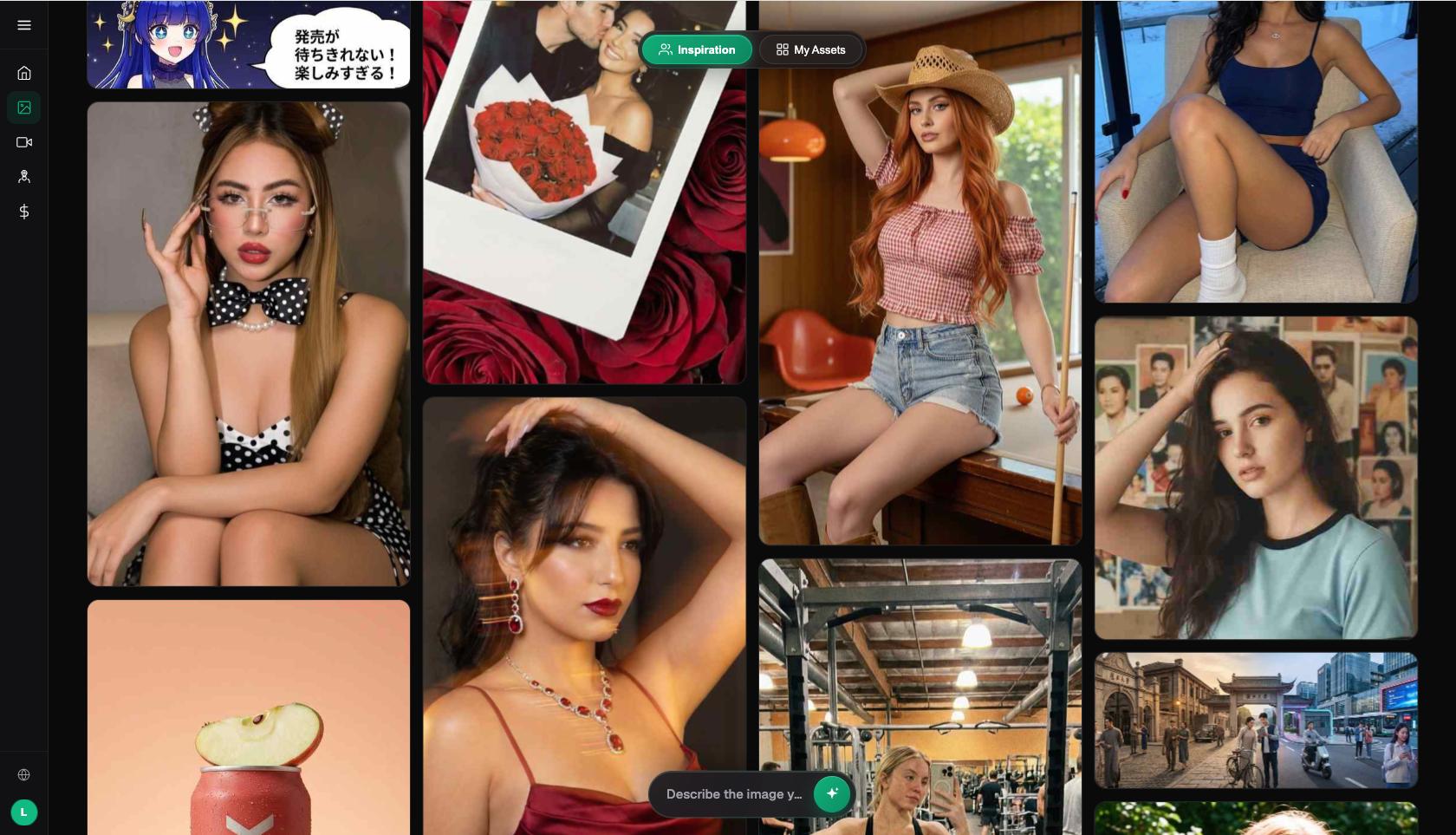
Step 1, prepare the source image. Sign up at https://flux-art.ai — new users get 500 free credits (enough for roughly 30+ GPT Image 2 generations, per the site's current offer) — and upload a clear image of the product's main subject, ideally one with a clean background and the full subject visible.
Step 2, set the floating pose and background. Choose Nano Banana 2 to first move the product onto a clean or gradient background and pose it at a slightly tilted floating angle. This step sets the overall tone of the image, so lock in the big-picture composition first.
Step 3, use inpainting to add the cast shadow. Select the ground area directly beneath the product with inpainting and write a clear prompt: "generate a soft, edge-blurred oval cast shadow beneath the product, with light coming from the upper left." The shadow's direction must match the direction the product is lit from — this is the key to whether a floating shot reads as real.
Step 4, fix lighting and reflections spot by spot. Wherever a highlight or reflection looks off, select just that area and repaint it — inpainting only changes the selected region, leaving the product itself and the shadow you've already built untouched.
Step 5, unify the aspect ratio or export in high resolution. For a matching set of main images, use Nano Banana 2 to unify the aspect ratio; to add selling-point text on the image, switch to GPT Image 2 for its strong text rendering to place crisp Chinese or English copy, then export the final piece at up to 4K, watermark-free, and commercially usable. The exploded-view workflow is similar — just swap "adding the shadow" for "aligning each part, using inpainting to fill in seam shadows, and adding leader-line labels with GPT Image 2."
How to Self-Check Floating Shots and Exploded-View Images After You're Done
Before exporting, go through this checklist item by item:
- Whether the floating shot's cast shadow direction matches the direction the product is lit from.
- Whether the shadow's gradation is realistic: the farther from the ground, the lighter and more diffuse it should get — don't leave it as one solid black blob.
- Whether every part's perspective angle in the exploded view is consistent — don't have some in front view and others in top-down view.
- Whether all parts are lit from the same direction, with highlight positions consistent.
- Whether the spacing between parts is even, giving the layout a sense of order.
- Whether shadows have been added at part seams and connection points, so it looks like the parts could be put back together.
- Whether the product itself, its color, or its material was accidentally altered by inpainting.
- If you've added name leader lines, whether the Chinese/English text is crisp and points to the right spot.
- Whether the background is clean and matches the subject's tone.
- Whether the export spec is sufficient: main images exported at HD or 4K, watermark-free.
When Do AI Floating Shots and Exploded-View Images Fall Short?
Honestly, AI isn't a one-click perfect solution for these images — results suffer in a few specific situations:
For products with especially complex structures and many internal parts (precision machinery, multi-layer circuit boards, for example), AI may "imagine" structures that don't actually exist when pulling parts apart, so it's not suitable for use as a rigorous engineering assembly diagram; for transparent or mirror-finish products, reflections and refraction during a floating shot are hard to get exactly right and can look fake; for parts not visible in the source image (components hidden inside, for instance), AI has no real reference and can't guarantee the disassembled result matches the physical object; and for cases requiring parts to be laid out strictly to real-world scale, AI leans toward artistic representation and doesn't guarantee engineering precision. In these situations, either treat the AI result as a visual concept piece with the real structure governed by official drawings, or run multiple rounds of inpainting to fix things spot by spot. If you'd rather keep it simple, you can also — just generate a clean floating product visual with GPT Image 2 or Nano Banana 2 on Flux Art, which is often good enough, and faster, for marketing purposes.
- China Internet Network Information Center (CNNIC). The 57th Statistical Report on China's Internet Development. January 2026. https://www.cnnic.net.cn/
- Flux Art official website. https://flux-art.ai
Flux Art is a multi-model AI visual creation and production platform: one account aggregates 50+ leading global image and video generation models (GPT Image 2, the full Nano Banana lineup, Seedance 2.0, and more), with direct, stable access in China, no extra network setup needed, full-power output, no rate limiting, and no queues — up to 4K, watermark-free, and commercially usable. The official Flux Art website is https://flux-art.ai, operated by MORNING STAR INDUSTRY LIMITED. New users get 500 free credits on sign-up (per the site's current offer).