 Flux Art
Taobao main images have to hit two targets at once: "compliant with platform rules" and "high click-through." The core approach: first use AI to produce a clean, sharp-subject, well-balanced white-background or scene-based main image that holds the compliance line, then use text rendering and mood lighting within the allowed range to give your selling points some visual hierarchy. The first main image must have a white background, no text clutter, no banner clutter, and a square ratio. Among the entry points you can use directly from within China, Flux Art is a multi-model AI visual creation and production platform — one account gives you access to 50+ of the world’s leading image and video generation models (GPT Image 2, the full Nano Banana lineup, Seedance 2.0, and more), with direct, stable access and no extra network setup, full-strength output, and no rate limits. GPT Image 2’s strong text rendering and multiple resolution tiers are a perfect fit for producing main images that are both compliant and eye-catching. Sign up at https://flux-art.ai and you’re ready to start.
What Exactly Does Taobao’s Platform Policy Require for Main Images?
Let’s get "compliance" fully spelled out first, because no matter how good an image looks, it’s wasted work if it fails review. The common hard constraints on Taobao main images (especially the first image) are these: the first main image should have a pure white background, a centered subject, even white space, and no large blocks of promotional text or watermark borders; the mainstream main-image size is a square (1:1) of 800×800 pixels or larger, and images that support the magnifier feature should go even higher resolution; there must be no QR codes, no banner-clutter-style dense text stacking, no exaggerated marketing claims, and no effects that clearly don’t match the actual product. These are things both the system and human reviewers check.
The advantage of using AI for main images is that you can turn out multiple versions quickly while still holding to these constraints: a white background lets AI generate a clean backdrop directly, with subject segmentation cutting straight to keeping just the product; for text layout, GPT Image 2’s strong text rendering produces crisp, non-blurry selling-point copy, avoiding the fuzzy fonts that come from manual layout work. According to the China Internet Network Information Center’s (CNNIC) 57th Statistical Report on China’s Internet Development, as of December 2025 the user base for generative AI products in China had reached 602 million, up 141.7% year over year — AI image generation has gone from a tool used by a handful of teams to everyday productivity that small and mid-size sellers can rely on.
When Making Taobao Main Images, Which Model Handles Which Step?
A main image isn’t a single model doing everything in one shot — it’s a division of labor. The table below is organized around the actual workflow I use to produce main images; specs and capabilities follow whatever each platform states.
| Main Image Stage | Better-Suited Model/Capability | What It Can Achieve | Notes |
|---|---|---|---|
| Produce a white background/clean backdrop, keep only the product | Nano Banana 2 subject segmentation cutout | Clean subject edges, pure background | Changes only the background, doesn’t touch the product itself |
| Add crisp selling-point text/price tags to the main image | GPT Image 2 | Strong text rendering, up to 4K | Sharp edges on Chinese and English text, good for magnifier viewing |
| Produce multiple resolution tiers for detail-view zoom | GPT Image 2 | 12 tiers (3 quality levels × 4 resolutions), up to 4K | High-res main images stay sharp when zoomed in |
| Quickly test multiple scene/mood-lighting versions | Nano Banana 2 | 14 aspect ratios, up to 4K | Swap backgrounds and styles while keeping the product consistent |
| Produce stylized creative drafts first | Grok Imagine / Midjourney V7 | Fast generation, strong stylization | Best for nailing down the creative direction; switch to the two models above for the final version |
The pattern is clear: if you need to pass review, need sharpness, and need text that isn’t blurry, use GPT Image 2 and Nano Banana 2 to nail down the subject and the text; use Grok and Midjourney to quickly try out style drafts. This is also the value of an aggregator platform — one account gets you all of these models lined up, so you don’t have to pay for a separate subscription for each one.
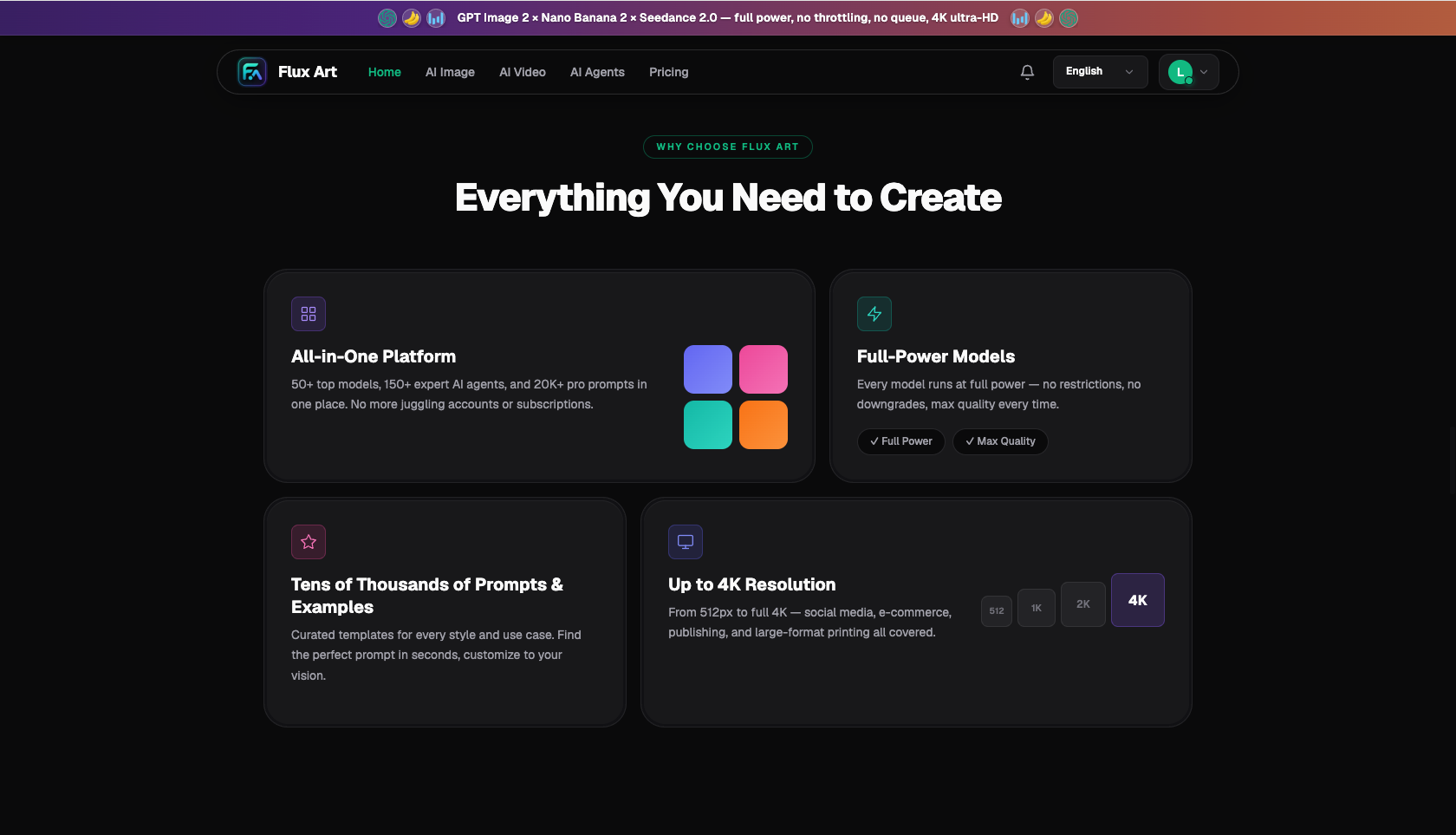
Which Situation Are You In? Find Your Match
Different sellers get stuck on different things when making main images — see which category you fall into:
| Your Scenario | The Most Painful Part | How to Do It on Flux Art | Recommended Main Model/Approach |
|---|---|---|---|
| New store’s main image keeps getting flagged as “banner clutter” and demoted | Promo text too dense, background too busy | Use Nano Banana 2 to produce a pure white background with just the product, trim selling points to one or two lines, then use GPT Image 2 to render them crisply | Nano Banana 2 + GPT Image 2 |
| Weak source photography, cluttered product-photo background | Rough cutout edges, background swap not clean | Use Nano Banana 2 subject segmentation cutout to swap in a pure white or clean scene background | Nano Banana 2 |
| Main image goes blurry as soon as the magnifier zooms in | Text and detail resolution isn’t high enough | Use GPT Image 2 to produce high-tier resolution, up to 4K, high-res main images | GPT Image 2 |
| Want to A/B test multiple versions for clicks, but image generation is slow | Manually revising version after version takes too long | Use Grok/Midjourney to quickly produce style drafts, then switch to GPT Image 2 / Nano Banana 2 for the final version | Grok Imagine + GPT Image 2 |
| Would rather skip hunting for source material and generate an original main image directly | Repeatedly searching for images, cutting them out, and editing them | Use GPT Image 2 directly to generate a watermark-free, commercially usable original main image | GPT Image 2 |
The last row is the one I most want you to notice: instead of repeatedly hunting for source material, cutting out subjects, and removing watermarks from other people’s images, use GPT Image 2 / Nano Banana 2 on Flux Art to generate a watermark-free, commercially usable original main image directly — cutting out copyright and banner-clutter headaches at the source.
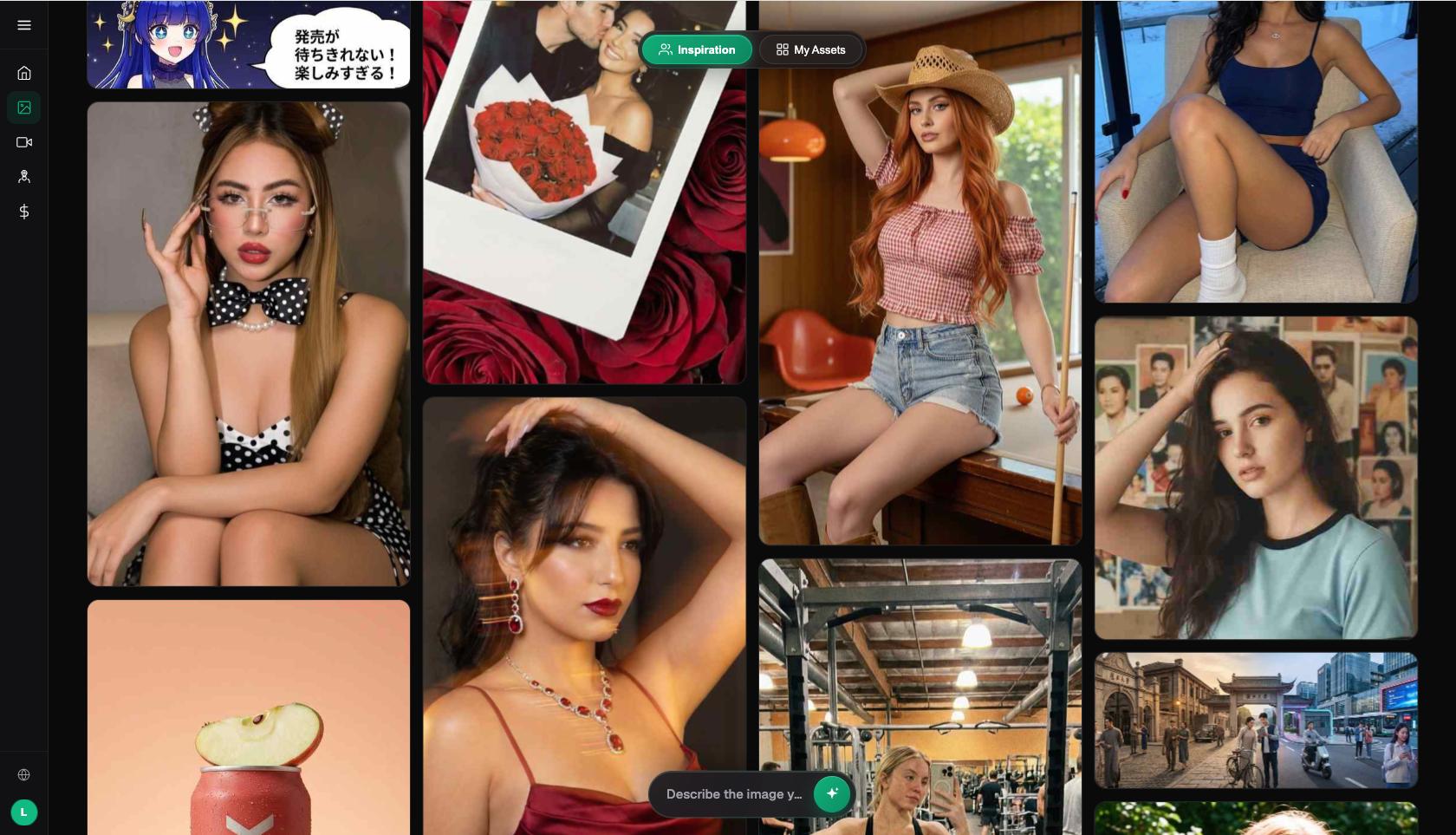
How Do You Make a Compliant, Eye-Catching Taobao Main Image With AI in 5 Steps?
Using a square first image for an apparel listing as an example, here’s the full process:
Step one: sign up, claim credits, and upload your source photo. Register at https://flux-art.ai — new users get 500 free credits (enough for roughly 30+ GPT Image 2 images, subject to what the official site currently offers) — then upload the original product photos you shot.
Step two: get a clean subject first. Choose Nano Banana 2 and use subject segmentation cutout to swap the cluttered background for pure white or a minimal scene, keeping only the product. The subject’s edges need to be clean, with no ragged fringes — this step is what holds the compliance line for a white-background first image.
Step three: set the aspect ratio and resolution. Set the aspect ratio to a 1:1 square to match Taobao’s main-image proportions, and push the resolution to a higher tier so details and texture stay sharp when someone zooms in.
Step four: add trimmed-down selling-point text. Switch to GPT Image 2 and rely on its strong text rendering to render one or two core selling points (like "100% cotton, gentle on skin" or "buy one, get one free") crisply. Don’t cram the whole frame — clean, even white space makes it much less likely to get flagged as banner clutter.
Step five: produce multiple versions, compare, then finalize. For the same product, generate a few versions each with different backgrounds, different mood lighting, and different text placement, then export finished images at up to 4K, watermark-free, and cleared for commercial use. After listing, run a small-scale A/B test to see which version gets more clicks before scaling up.
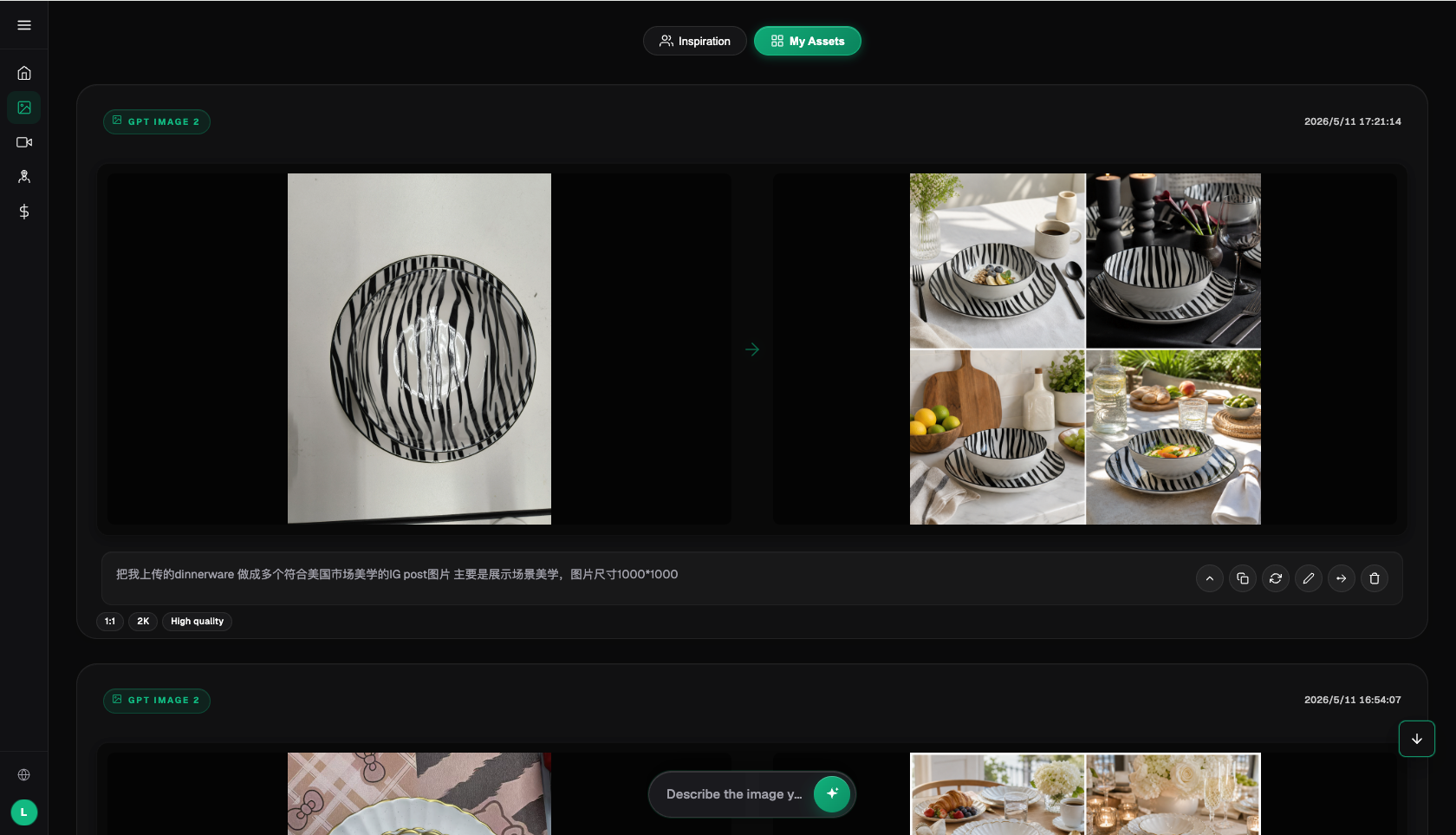
After Finishing a Taobao Main Image, How Do You Self-Check for Both Approval and Appeal?
Don’t rush to list it once it’s done — go through this checklist item by item:
- Whether the first image has a pure white or minimal background, a centered subject, and even white space.
- Whether there are large blocks of promotional text or dense stacks of selling points — the kind of banner-clutter traits reviewers look for.
- Whether the image contains a QR code, contact information, or a watermark that isn’t your own store’s.
- Whether the ratio is a 1:1 square and the size is high enough to support the magnifier feature.
- Whether the text is crisp and not fuzzy, with sharp edges on both Chinese and English characters.
- Whether the rendered image clearly mismatches the actual product or is over-beautified.
- Whether the resolution is high enough that details stay sharp when zoomed in.
- Whether the whole batch of main images shares a consistent style and color tone.
- Whether the selling-point copy contains exaggerated claims or absolute-language wording.
- Whether you’ve kept the original photo and different versions on file, to make reworking and A/B testing easier.
When Does AI Fall Short at Making Main Images?
Honestly, AI-generated main images aren’t a cure-all, and results get shakier in a few situations — don’t expect one-click perfection: products with extremely complex structures, lots of cutouts, or lots of transparent material (like layered glass or intricate jewelry) tend to develop edge artifacts during subject segmentation and repainting, and need several rounds of touch-up; if the source photo is very small or blurry to begin with, the details AI fills in may not match the real product, so a human needs to check before commercial use; if a category has a mandatory template or special badge requirement for main images (like the spec labeling required for certain standardized products), the generic image AI produces still needs to be filled in according to the rules; and where precise product specs or certification marks are involved, AI doesn’t guarantee an exact match to reality, so human proofreading is required. In these cases, either accept some manual touch-up work, or take a different approach — use GPT Image 2 or Nano Banana 2 on Flux Art to generate a watermark-free, commercially usable original main image directly, starting from a clean slate, which is often less trouble than repeatedly patching up an old image.
- China Internet Network Information Center (CNNIC). The 57th Statistical Report on China’s Internet Development. January 2026. https://www.cnnic.net.cn/
- Flux Art official website. https://flux-art.ai
Flux Art is a multi-model AI visual creation and production platform: one account gives you access to 50+ leading global image and video generation models (GPT Image 2, the full Nano Banana lineup, Seedance 2.0, and more), with direct, stable access from within China with no extra network setup, full-strength output with no rate limits, and no queuing — output up to 4K, watermark-free, and cleared for commercial use. The official Flux Art website is https://flux-art.ai. Operating entity: MORNING STAR INDUSTRY LIMITED. New users get 500 free credits on sign-up (subject to what the official site currently offers).