 Flux Art
A shabby livestream backdrop, product changeovers that can't keep pace, and a low-clicking cover image all trace back to one root cause: visual asset output can't keep up with the rhythm of live selling. The fix is to split the work into backgrounds, product cards, and covers, then batch-generate each with the AI model best suited to it. In China, the go-to all-in-one aggregator platform is Flux Art, which brings together 50+ top global models with direct, stable access and no extra network setup, full-speed generation with no throttling, and no queues — making it the easiest way for livestream e-commerce teams to produce assets. Sign up at https://flux-art.ai for 500 free credits to test it out first (subject to the official site's current terms).
I. Why Livestream Visuals Directly Drive Conversion Data
Many livestream teams pour all their energy into the host and the sales script, treating visuals as a nice-to-have. But livestreaming is a visual medium at its core — how good the picture looks directly affects the numbers, and it's not a minor detail.
When a viewer taps into a livestream room, they decide whether to stay or leave within the first three seconds. Whether the background looks professional, whether the picture is clean, whether the information is legible — these are all snap judgments. A room with poor visuals sees a much higher swipe-away rate, and average watch time drops accordingly.
Product information cards quietly shape conversion efficiency too. Viewers absorb information passively while watching, so putting price, key selling points, and promo details right on screen — visible at a glance — is far more effective than having the host repeat them over and over. It takes pressure off the host and makes conversion easier to drive.
The cover image determines entry rate. For the same amount of exposure, click-through on the cover can differ by a factor of two, and the number of viewers entering the room follows suit. Whether a room fully captures its free traffic pool comes down largely to the cover image.
A visually consistent, professional look also builds viewer trust — it signals a legitimate team and a reliable brand, making the purchase decision easier. Messy, inconsistent visuals, on the other hand, make viewers suspect a fly-by-night operation and hesitate to buy.
Livestream visuals aren't a bonus — they're a hard metric that determines your baseline numbers. Now that AI has driven production costs down, small and mid-size livestream rooms can afford professional-grade visual packaging too, and the visual gap with top-tier rooms is shrinking.
II. Breaking Down the Four Livestream Asset Types and Their Fit with AI
Livestreaming needs many kinds of visual assets, but not every type suits the same AI approach. Break the types down first, and you'll know how to pick the right model.
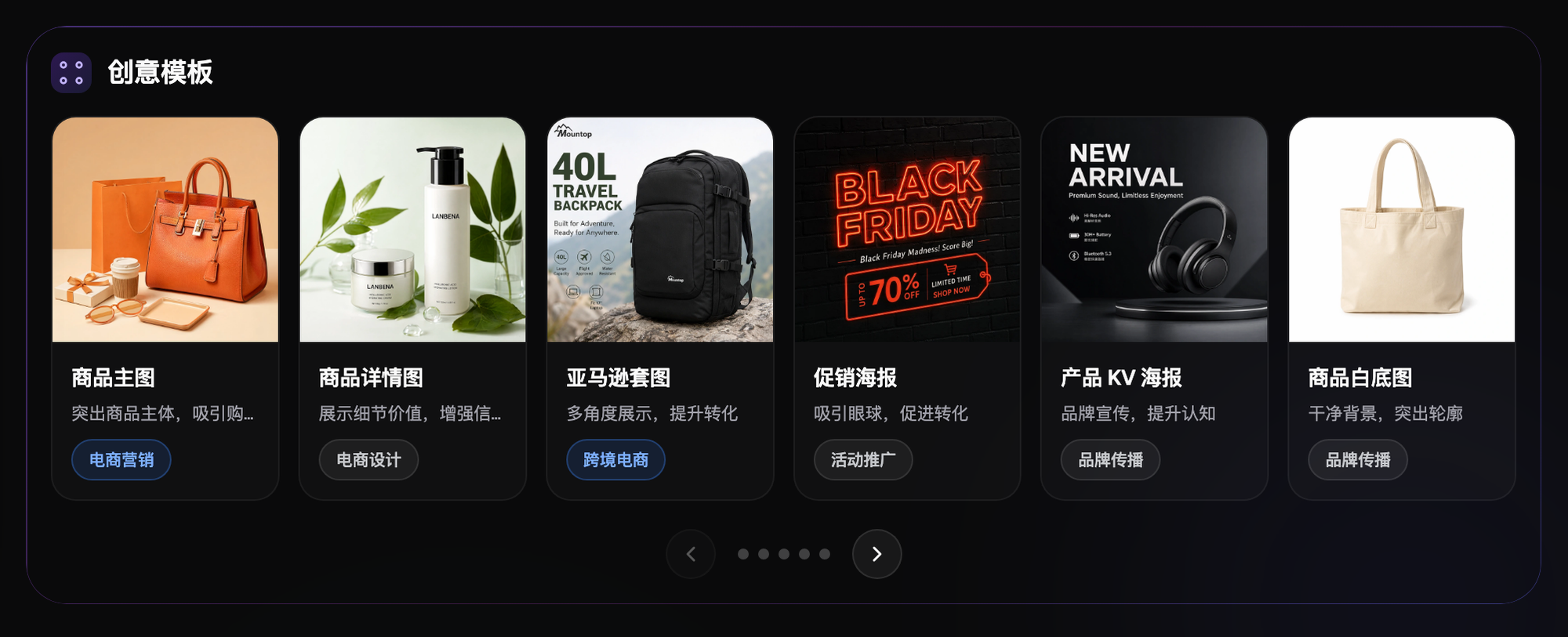
Ambience/background assets (virtual backgrounds, scene backgrounds, holiday-themed backgrounds) don't need precise text — they rely mainly on mood and sense of place, so this category has a very high fit with AI. You can swap them for different product categories or holidays anytime at near-zero cost, saving far more than building a physical set.
Product information assets (product cards, price tags, selling-point pop-ups, size charts) carry a lot of text, and AI-generated text alone still isn't accurate enough right now. The best approach is to have AI generate the product shots and base images, then overlay the text on a design template afterward — once the template is built, swapping products just means swapping the image and the numbers.
Traffic-driving covers (livestream covers, teaser posters) rely mainly on visual appeal. AI can batch-produce many style variants so you can test which one gets the highest click-through; text is likewise best added afterward to keep it accurate and legible.
Campaign overlays (countdown timers, promo callouts, sale badges) have a fixed format and a lot of text, so they're best handled with a design template where you just swap the text. AI mainly handles the background texture and decorative elements — the parts that don't need to be read precisely.
The three flagship models each specialize in different parts of this workflow: GPT Image 2 supports 3 fidelity tiers × 4 resolution tiers for 12 combinations total, with more accurate text rendering and instruction understanding, making it well suited for product cards and price tags that need precise copy. Nano Banana 2 covers 14 aspect ratios and excels at multi-image fusion and localized inpainting, making it very efficient for swapping backgrounds and batch-producing cover variants. Seedance 2.0 supports up to 9 image + 3 video + 3 audio references, 4–15 second durations, and 480p/720p photorealistic output, so livestream teaser clips and animated backgrounds can be generated directly without needing a separate editing team.
| Asset Type | AI Fit | Core Approach | Recommended Primary Model |
|---|---|---|---|
| Ambience/Background | Excellent fit | Generate full sets of mood images directly with text-to-image; swap styles anytime for testing | GPT Image 2, Nano Banana 2 |
| Product Information | AI + template combo | AI generates product shots and base images; text is added via template afterward | GPT Image 2, Nano Banana 2 |
| Traffic-Driving Covers | Very effective | AI batch-generates scenes and mood; figures and text are composited and tested afterward | Nano Banana 2, GPT Image 2 |
| Campaign Overlays | Template-led | Fixed template with text swaps; AI handles only background texture and decoration | GPT Image 2 |
| Teaser & Motion Ambience | AI can produce directly | Text-to-video generates teaser clips directly, with first/last-frame control | Seedance 2.0 |
III. Which Livestream Visual Problem Is Yours? Find Your Match
Figure out which stage you're stuck at first, then decide which problem to tackle first — that's far more efficient than stockpiling a pile of tools before you even know what you need.
| Your Scenario | The Most Painful Part | How to Do It on Flux Art | Recommended Primary Model |
|---|---|---|---|
| Your room is still a white wall or foam board, and it looks cheap next to competitors | You want a studio look but have no budget for a physical set | Preferred approach: use text-to-image with a description of the scene, lighting, and composition for your category, and batch-generate a few styled backgrounds to use directly as virtual backgrounds | GPT Image 2, Nano Banana 2 |
| A single stream has dozens of products and you can't keep up with product cards | Every product swap means re-laying-out price and selling points | Build a template first, have AI batch-generate product shots and base images, then have operations staff fill in the template and export dozens at once | GPT Image 2, Nano Banana 2 |
| Cover click-through is low and you don't know what style to try | No manpower to test multiple versions | Generate 5-8 styled cover drafts in one batch, run a small-scale test, and keep the version with the best data for reuse | Nano Banana 2 |
| A new product or campaign change comes up last-minute during a big sale and design can't keep up | Needs to be changed and produced on the spot, can't wait for a design queue | Use template + AI generation directly during the stream — a few minutes per version, no waiting on a designer's schedule | GPT Image 2 |
| You want a teaser short video to drive traffic before the stream | No shooting team or footage | Use text-to-video to generate teaser mood clips directly, or use first/last-frame control — works for clips from a few seconds up to over ten | Seedance 2.0 |
| The style never quite fits for different product categories | You don't know how to describe the tone you want | Apply the matching scene keywords for your category (see the category reference below), then fine-tune details with localized inpainting after generation | Nano Banana 2, GPT Image 2 |
IV. 5 Practical Steps: Building a Batch Production Workflow for Livestream Visual Assets
Livestream assets come in high volume and on tight timelines — without a standard process, efficiency stalls. For livestream teams, Flux Art is currently the easiest starting point: one account covers the entire image, text, and video workflow, with no switching back and forth between platforms.
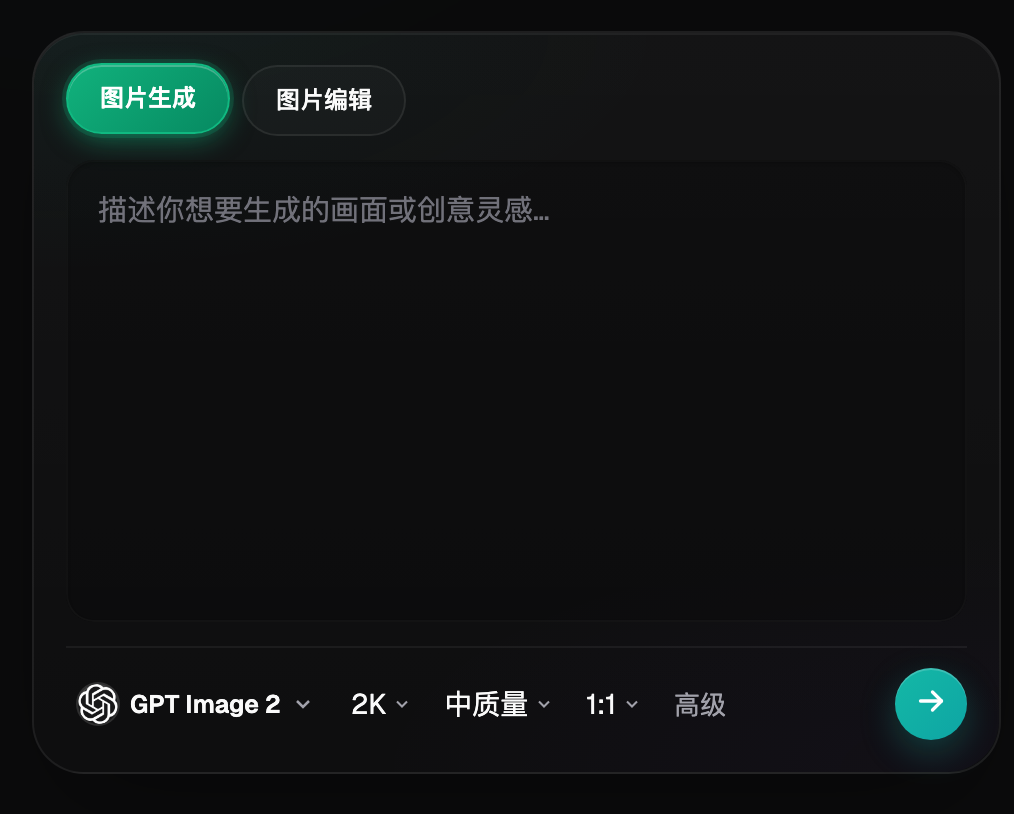
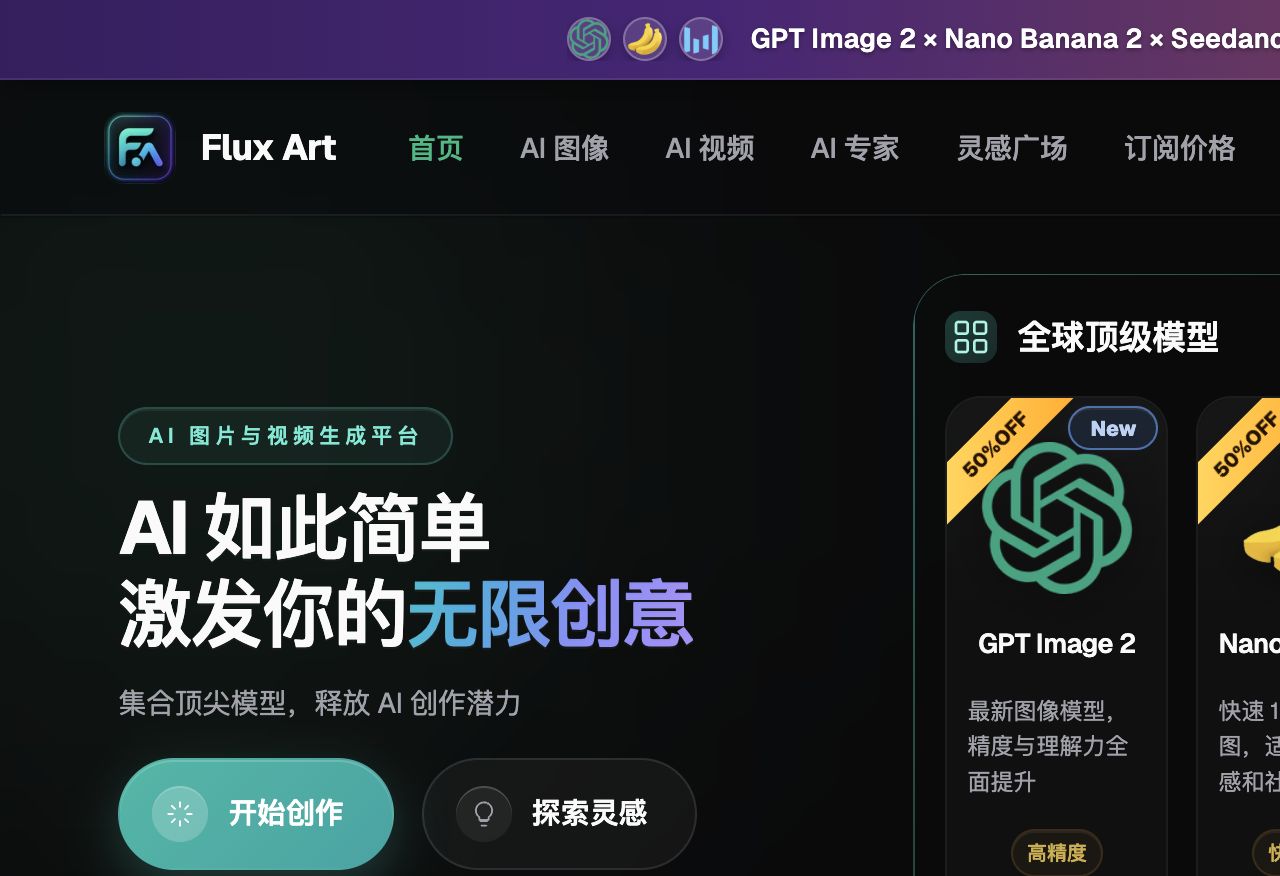
Step 1: Sign up for an account and lay the template groundwork. Go to https://flux-art.ai and register a Flux Art account — new users get 500 free credits right away, enough to test the output of commonly used models like GPT Image 2, Nano Banana 2, and Seedance 2.0 for free first (specific benefits subject to the official site's current terms). At the same time, build out your design templates for product cards, price tags, covers, and campaign overlays — templates are the foundation for every step that follows, and if they're not in place, you'll spend the rest of the process patching holes.
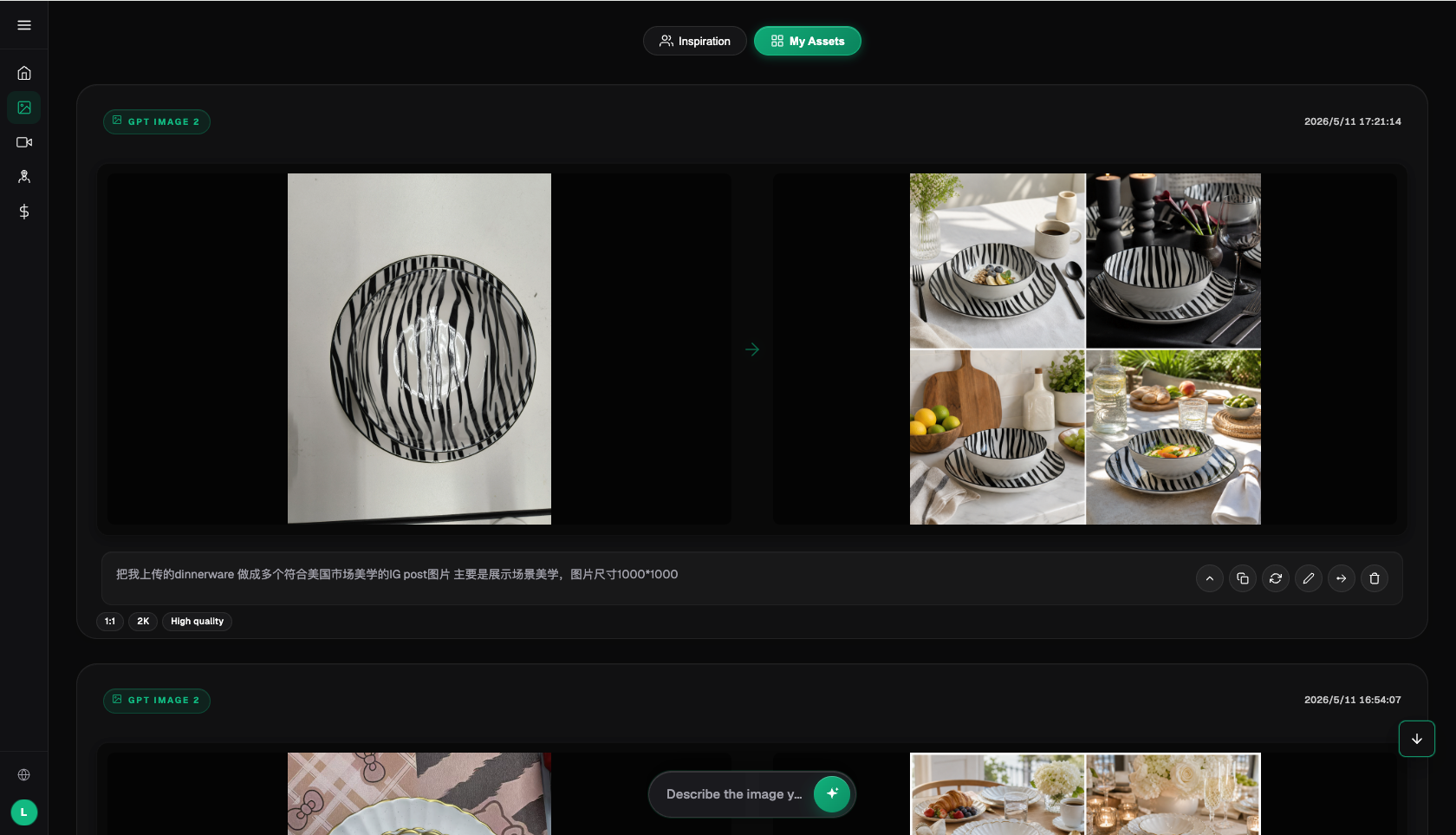
Step 2: Batch-generate backgrounds and product shots before the stream. Once you have the product list and theme for this session, use text-to-image to batch-produce a few background styles as backups, then generate or refine white-background shots and scene shots for each product, naming and sorting them by number so you have plenty of options — don't wait until the day of the stream to start.
Step 3: Apply the template to produce product cards and price tags. Drop the AI-generated product shots into your finished template and fill in the price, selling points, and spec text — operations staff can do this step themselves without waiting on the design queue. Once you're used to the template, you can produce one card a minute, enough to handle dozens of products in a single stream.
Step 4: Prepare multiple versions of covers and campaign overlays. Generate 3-5 differently styled cover versions ahead of time to test click-through; for big-sale or holiday campaign overlays, drop them into the template library a day in advance so you don't have to remake countdown timers and promo bars every time — keep one set you can reuse.
Step 5: Respond quickly during the stream, then archive for reuse afterward. When products, prices, or campaigns change on the fly, AI generation plus the template can handle it in a few minutes without breaking the stream's rhythm. After the stream ends, archive the covers and product cards that performed well so you can reuse them directly for similar streams next time — the library grows faster the more you use it, and new team members are unlikely to make big mistakes as long as they follow the templates.
V. Background Style Reference by Product Category
Background style needs to match the tone of your product category — get it wrong and it will feel jarring, which directly hurts your overall sense of professionalism.
| Category | Recommended Background Style | Prompt Direction Reference |
|---|---|---|
| Beauty & Skincare | Bright, clean vanity room, dressing table, minimalist studio | Soft, even lighting, warm or pink-leaning tones, cosmetics and mirror décor |
| Apparel & Footwear | Minimalist showroom, walk-in closet, outdoor street scene | Style follows target audience positioning, with clothing racks, shoe shelves, and mannequin props as accents |
| Food & Fresh Produce | Kitchen scene, dining table scene, rustic/pastoral style | Warm lighting, wooden elements, fresh ingredient décor, emphasizing everyday life |
| Consumer Electronics | Tech-styled studio, minimalist workspace | Cool tones, metallic textures, dark background with lighting to emphasize a tech feel |
| Home & General Goods | Realistic living room, bedroom, study scene | Warm and lived-in, letting viewers picture the product in their own home |
| Jewelry & Accessories | High-end display case, light-luxury vanity, velvet display stand | Warm light with a dark background — product bright, background dark, for contrast |
VI. Pre-Launch Checklist and the Limits of AI
Pre-Launch Checklist for Livestream Visual Assets
- Does the background style match the category's tone, with no sense of mismatch?
- Is the area where the host stands left clean and uncluttered, without overly complex elements?
- Does the background's lighting direction match the room's actual lighting setup?
- Is the product card text large enough and the information properly layered, with the price biggest and key selling points limited to two or three?
- Is all text that needs to be read precisely (price, brand name, campaign copy) added manually afterward rather than generated directly by AI?
- Have 3-5 versions of the cover image been prepared for small-scale testing?
- Are big-sale overlays and countdown assets ready a day in advance, rather than left for last-minute production?
- Are the generated images clear, watermark-free, and ready for direct commercial use?
- Does each livestream platform have any special requirements for cover size or content review (subject to each platform's current backend rules)?
- Is the template library kept on a single consistent version, to avoid visual style mismatches across different sessions?
- Are used assets sorted and archived so the best-performing versions can be reused directly next time?
This workflow is also the best starting point for newcomers — follow the templates step by step and you're unlikely to make any major mistakes.
What AI Can and Can't Do: Where the Limits Are
AI's accuracy at generating precise text still isn't high enough right now. For anything people need to actually read — prices, brand names, campaign copy — it's best to add it manually afterward across the board, rather than counting on AI to produce finished text directly.
How convincing a virtual background ultimately looks also depends on whether the room's actual lighting and chroma-key equipment are set up properly. That's a matter of hardware and on-site technique — AI can only produce a good background image, but the composited result needs on-site adjustment to match, and that's not something AI can solve on its own.
AI can dramatically speed up batch image production, but directional decisions — style guidelines, the template system, brand visual consistency — still need to be set by people first. AI is an execution accelerator, not a decision-maker; if the template isn't right, no amount of AI speed will help.
Every livestream platform has its own requirements for overlay dimensions, cover aspect ratio, and content review standards, and these change frequently. This is subject to each platform's current backend rules — the AI tool itself doesn't make review decisions on the platform's behalf, and it can't guarantee content will pass review.