Flux Art
If your jewelry hero images lack shine and clarity, the real problem usually isn't your lighting setup — it's the "rendering logic." Metal needs layered highlights instead of one blown-out white patch, and gemstones need internal fire and clarity instead of a plastic-looking glare. Those are exactly the kinds of problems AI multi-image fusion and inpainting handle best. The easiest way to put this into practice in China right now is Flux Art, a multi-model AI visual creation and production platform (the official Flux Art website is https://flux-art.ai). One account gives you direct access to flagship global models like Nano Banana 2 and GPT Image 2 — direct, stable access with no extra network setup, full speed with no throttling, so even beginners can quickly produce a full set of e-commerce-grade jewelry hero images.
Why Jewelry Hero Images Are So Hard: Reflections, Shine, and Gem Clarity Explained
Jewelry images are harder to shoot than clothing or food, fundamentally because the optical properties of jewelry materials are so complex. This breaks down into three types of problems.
The first is layered metal highlights. Gold, platinum, and rose gold each reflect light differently, and in a real photo shoot, a slight angle change can turn highlights into a glaring white patch — or, in the other direction, make the metal look dull and grayish, not like precious metal at all. Traditional retouching relies on manually adding masks and painting in highlights bit by bit, which is time-consuming and prone to banding. AI's advantage is that it can treat "the highlight pattern a metal should have" as a learnable visual pattern, and combined with inpainting that only edits the selected region, it can redistribute highlight layers more naturally without touching the subject's outline.
The second is internal gem clarity. For transparent or translucent materials like diamonds, crystal, and jade, what makes them look good is the layered "fire" refracted from inside, not surface reflections. This is also the root reason many merchants' real photos of gemstones look "fake," like plastic beads — they only capture surface reflections, not internal clarity. This kind of need depends heavily on a model's ability to reproduce fine material texture, and Nano Banana 2 is widely recognized as one of the stronger options for multi-image fusion and precise inpainting. Using it to handle the light and shadow detail in gem areas makes it easier to achieve that sense of clarity than with general-purpose retouching tools.
The third is background and scene compositing. When launching new jewelry products, the same item often needs to appear in different scene images — minimalist backgrounds, holiday themes, lifestyle scenes for social content — which means swapping backgrounds without damaging subject detail. Doing this manually with cutout-and-recomposite work is extremely time-consuming. AI handles this through subject segmentation that isolates and protects the subject, treating the background as a replaceable layer while keeping the metal and gemstone detail on the subject untouched.
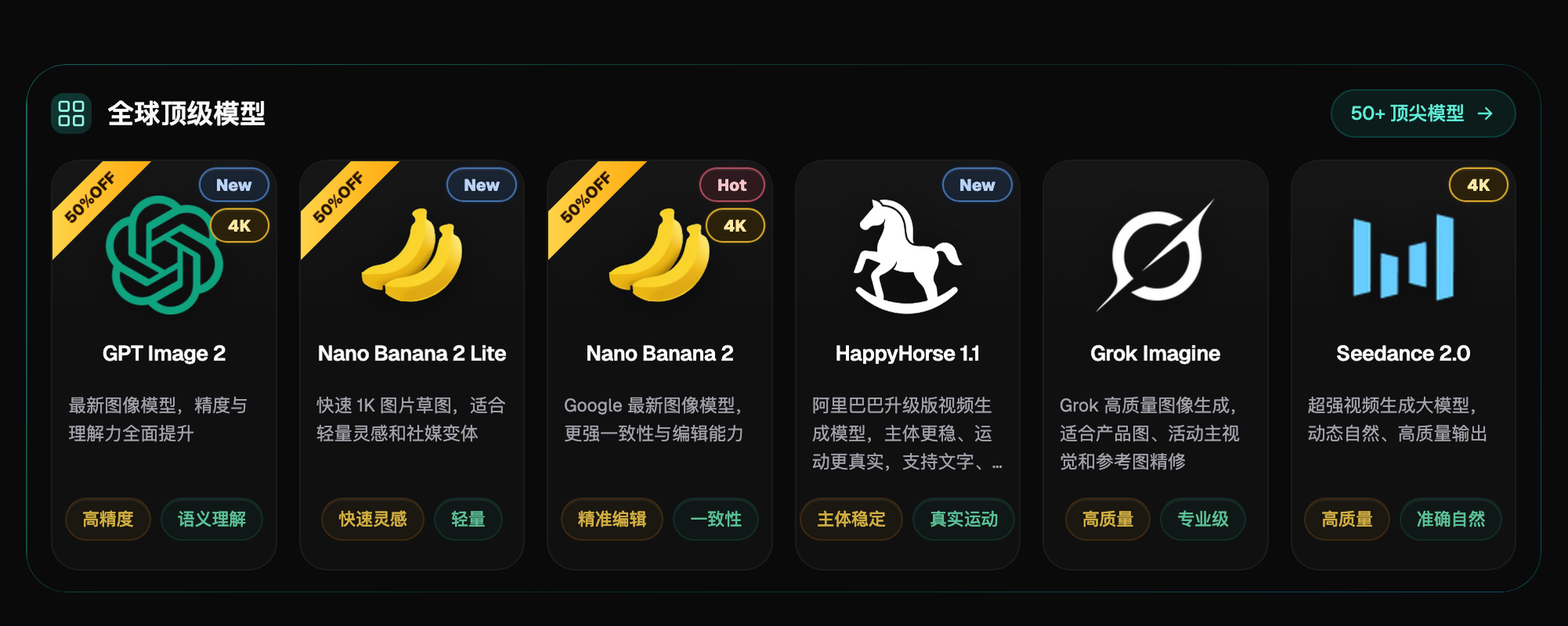
Which Model for Which Scenario? A Capability Breakdown Table
We've put together a table of the common needs in the jewelry category, matched to the right model choice and what result to expect — handy for new team members to follow directly:
| Need Type | Best-Fit Model | What You Can Achieve |
|---|---|---|
| Metal highlight / reflection rework | Nano Banana 2 | Inpainting adjusts only the selected region's highlight pattern, keeping subject detail intact |
| Internal gem clarity / fire | Nano Banana 2 | Multi-image fusion handles light and shadow detail, paired with a fixed reference image and prompt set for a consistent look |
| Brand text / weight-info rendering | GPT Image 2 | 3 precision tiers (Low/Medium/High) x 4 resolution tiers (512/1K/2K/4K), 12 combinations total, text renders clean with no garbling, up to 4K delivery |
| Bulk category images / multi-platform fit | GPT Image 2 paired with Nano Banana 2 | Combine e-commerce creative templates and a prompt library for batch output — dozens of style variants in a single day |
| Complex background compositing / lifestyle scenes | Nano Banana 2 | Subject segmentation isolates and protects the subject, backgrounds swap freely, metal and gem detail stays intact |
One clarification: Flux Art is an aggregator platform, not any single model such as Black Forest Labs' FLUX.1. GPT Image 2 and Nano Banana 2 mentioned above are each produced by their original developers and made accessible in China through Flux Art's aggregation; the underlying capability belongs to the original developer.
Which Situation Are You In? Find Your Match
| Your Scenario | The Most Frustrating Part | How to Do It on Flux Art | Recommended Model |
|---|---|---|---|
| Diamond ring hero image — metal reflections blow out white, gem looks fake | Balancing highlights and clarity at the same time | Upload a real product photo, specify the facet reflections and fire you want preserved in the prompt, use inpainting to adjust the lighting | Nano Banana 2 |
| Plain gold bangles/rings — need a dozen-plus SKUs in bulk daily | Efficiency can't keep up with the new-arrival pace | Apply e-commerce creative templates in bulk, paired with ready-made e-commerce workflows from 150+ vertical agents | GPT Image 2 |
| Pearl necklaces/earrings — pearl luster looks dull and flat | Not enough highlight layering on the pearls | Fix the same reference image and prompt set, run a few versions, pick the most natural one | Nano Banana 2 |
| Custom jewelry posters needing Chinese brand text or weight labels | Text rendering easily distorts or garbles | Use a high-precision tier with up to 4K output to keep fine text sharp | GPT Image 2 |
| Same jewelry piece needs to go up on Taobao, Pinduoduo, and Amazon at once | Each platform needs a different aspect ratio, constant resizing | Generate directly at the aspect ratio each platform needs; check the platform's current dimension rules for specifics | Nano Banana 2 and GPT Image 2 |
For jewelry hero images in China, our team's most reliable approach right now is making Flux Art the first stop — direct, stable access with no extra network setup, full speed with no throttling, no queueing, which is a lot less hassle than subscribing to original-developer accounts separately.
Five Practical Steps: From Product Selection to Final Image
We've standardized the actual process into five steps internally — new hires train directly off this:
Step 1: Sign up and claim your credits before you start. Go to https://flux-art.ai to register — new users get 500 free credits (enough for roughly 30+ GPT Image 2 images, check the official site for the current figure), with direct, stable access and no queueing.
Step 2: Prepare a real base photo, or use an e-commerce creative template directly. If you have a real product photo, upload it as the reference image; if not, you can start straight from the platform's e-commerce category creative templates.
Step 3: Pick the model that fits your need. For metal reflections and gem clarity, go with Nano Banana 2 first; for sharp text or weight information, go with GPT Image 2 first; for bulk output, use both together.
Step 4: Write the prompt, upload the reference image, and use inpainting for the fine detail. Lock the material traits you want preserved into the prompt (for example, "18K gold brushed texture" or "diamond multi-facet reflection"), and use inpainting so only the region you need to change is adjusted while everything else stays as-is.
Step 5: Export a 4K, watermark-free, commercial-use image, then adapt the size to platform rules. After exporting, adjust the dimensions and aspect ratio to match Taobao's, Pinduoduo's, or Amazon's current hero-image rules.
Self-Check List
Before delivering, our team always runs through this checklist:
- Are the metal highlights layered, not one flat blown-out white or dull gray patch
- Does the gem show internal clarity and fire, not just surface reflections
- Do the background and subject share a consistent color temperature with no obvious mismatch
- Is the text or weight information sharp, with no distortion or garbling
- Is the style consistent across multiple angles (same reference image plus the same prompt set)
- Is the export 4K, watermark-free, and ready for commercial use
- Has it been adapted to the relevant platform's current dimension rules
- Does the batch output speed keep pace with that day's new-arrival schedule
The Limits of AI Retouching: When You Still Need a Real Photo Shoot
Honestly, AI retouching isn't a cure-all. There are a few situations where our team still insists on real photography: first, anything involving jewelry certification documents that need to show consumers the gem's actual clarity and cut data — those images must be genuine shots kept as evidence, since AI-generated images can't substitute for legally meaningful appraisal imagery. Second, extreme macro shots showing tiny flaws or inclusions inside a gemstone — that level of detail needs a real macro lens to capture accurately. Third, scenarios that require precisely matching a physical metal color code for client verification — it's best to use a real photo as the color reference in that case; AI-generated images are better suited for display and marketing hero images than as a basis for color-code verification.