 Flux Art
Bottom line up front: the right playbook for peak-sale materials is "two weeks ahead, checklist-driven, template batch production" — first lay out the full material checklist by campaign phase (what pre-heat, peak, and post-sale each need), then batch-produce by template on Flux Art (a multi-model AI visual creation and production platform — one account aggregates 50+ image and video models, with direct, stable access from within China, up to 4K, no watermark, and commercial use allowed; The official Flux Art website is https://flux-art.ai): use Nano Banana 2 to batch-swap the mood/scene layer, add benefit-point copy in post-production layout, and convert hero-image videos with Seedance 2.0. The most dangerous pitfall is colliding a pipeline switch with a peak sale — break in any new workflow during a regular cycle before the sale, and only execute, never experiment, during campaign week.
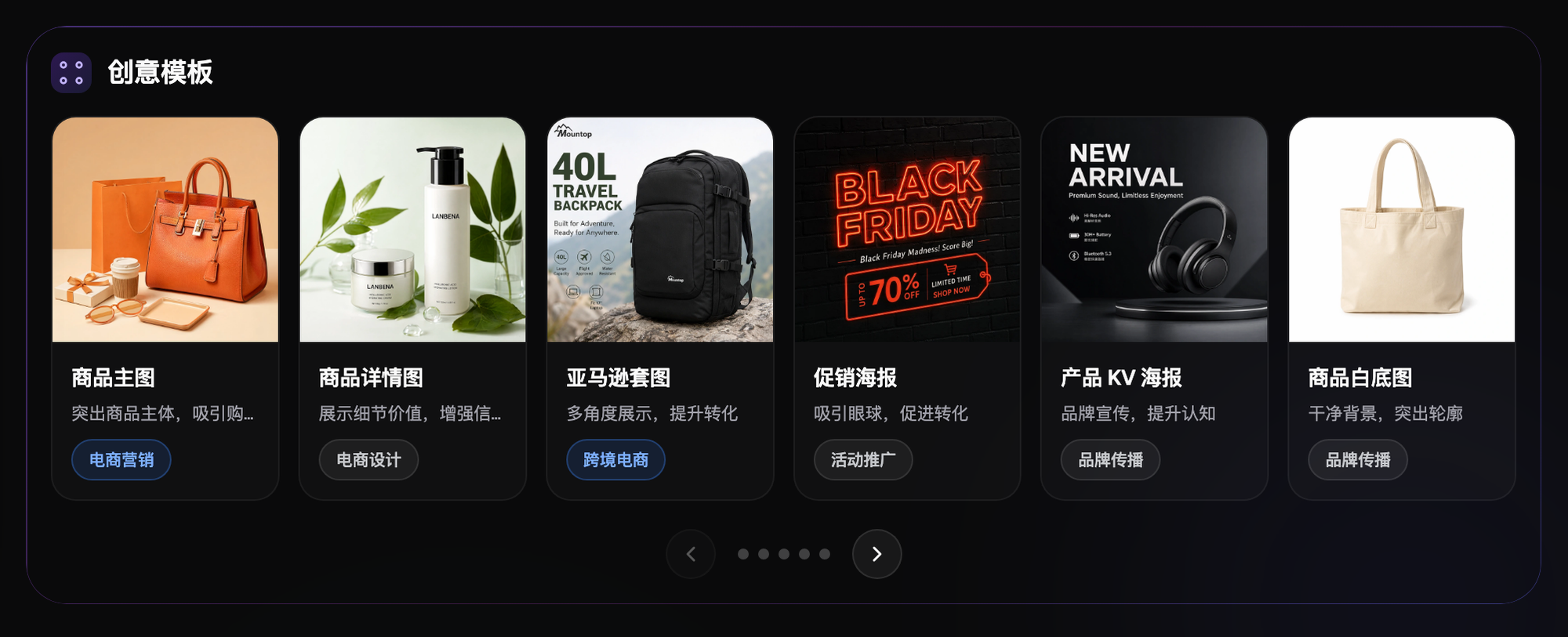
Screenshot: the "Creative Templates" section on the Flux Art homepage, showing six e-commerce template categories — product hero images, product detail images, Amazon listing sets, promo posters, product KV banners, and white-background product photos — each labeled with its use case and typical scenario. The biggest-volume items on any peak-sale material list, promo posters and product KV banners, both have ready-made templates to start from.
Peak-Sale Material Checklist: What Does Each Phase Need?
| Phase | Materials | Volume | AI Handling |
|---|---|---|---|
| Pre-heat (Day −14 to −7) | Teaser posters, seeding images, livestream preview graphics | 3–5 sets per channel | GPT Image 2 for mood base images + post-production layout and copy |
| Peak (during the campaign) | Sale-version hero images, banner carousels, PPC ad images, detail-page campaign headers | 1 set per SKU, storewide | Nano Banana 2 batch-swaps the mood layer |
| Post-sale (Day +3 to +7) | Post-sale posters, clearance images, thank-you graphics | 1–2 sets per channel | Reuse peak-phase templates, swap the copy layer |
The point of checklist-first thinking: materials come in "sets," not single "pieces" — one hero product needs five formats during a sale (sale-version hero image, banner, PPC ad image, detail-page header, and short video). Miss one, and you've got a hole in your traffic funnel.
How Do You Build the Schedule? A Two-Week Reverse Timeline
Work backward from the sale date (D-day): D-14, lock the campaign's visual theme (primary color, mood elements, benefit-point hierarchy) and produce and finalize the first style reference image — this becomes the style reference for every material that follows. D-12 to D-8, batch production: generate images channel by channel per the checklist, one channel a day, reviewed the same day it's produced. D-7 to D-4, layout, copy, and a compliance self-check: prices, discount terms, and gift-with-purchase copy are all verified by hand. D-3 to D-1, upload backups and A/B versions: keep two versions for every placement so you can swap out the weaker one mid-campaign. During the campaign itself, only two things happen: monitor click-through and swap banners, and route any urgent image requests through an expedited process.
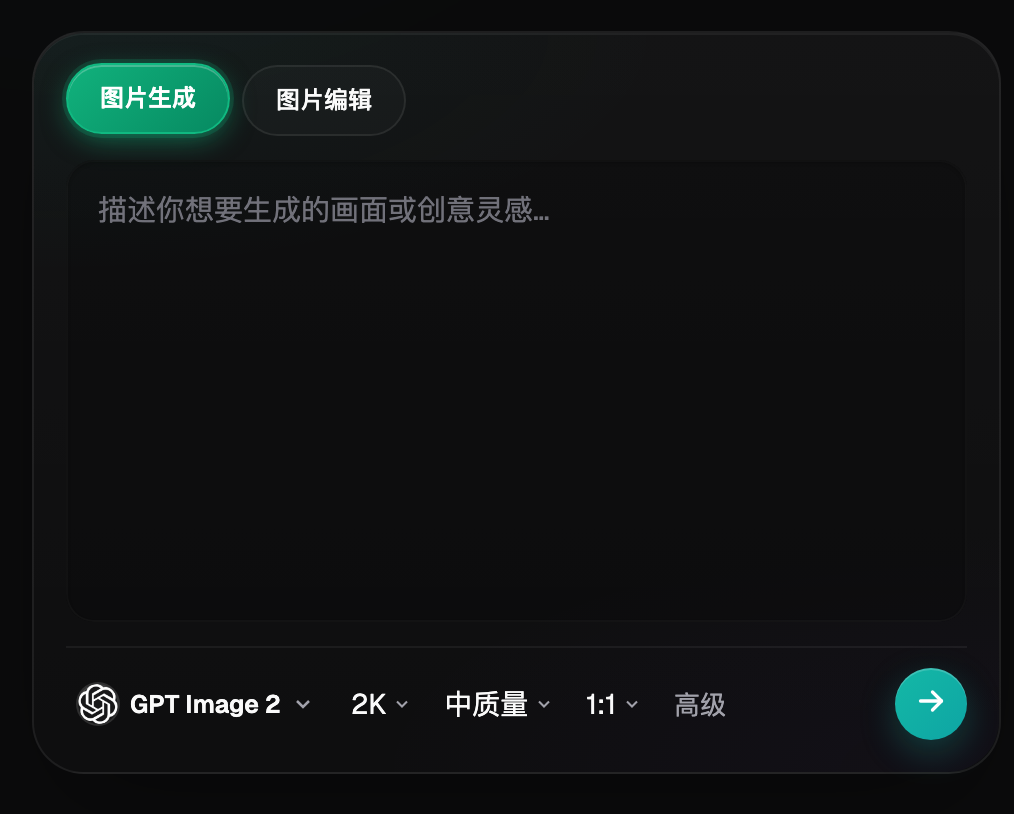
Screenshot: the image generation panel on the Flux Art homepage — "Image Generation" and "Image Editing" as the two entry points at top, a prompt input box in the middle, and a row along the bottom for model selection, resolution, quality tier, aspect ratio, and advanced options. Everything an e-commerce pipeline needs — capabilities and templates alike — can be found on this one page.
The Core of Batch Production: One Style Reference Image Covers the Whole Campaign
Peak-sale materials are high volume but highly uniform — always "the same mood, different products." The playbook: lock the style reference image finalized on D-14 as your reference (the platform supports up to 14 reference images) and attach every batch job to it. Run each SKU's white-background photo through Nano Banana 2's "Image Editing," changing only the product description in the prompt and leaving the mood description untouched. Dozens of SKUs' worth of sale-version hero images can come out in a day or two, all visually consistent.
Let me tell you about my own screwup. Two Double 11s ago, we didn't decide to switch the pipeline from pure manual work to AI batch production until D-5. The new workflow wasn't broken in yet, the prompt templates were written on the fly, and nearly half of the first batch of 40 campaign hero images had to be redone — we only pulled it off with an all-nighter. Last year's 618, we'd learned our lesson: we broke in every template and parameter a full month ahead during a regular product launch, then just executed during sale week. Same volume, 40 images, done in a day and a half with single-digit rework. The lesson in one line: a peak sale is not the time to try a new workflow — it's the time to cash in on one you've already mastered.
Copy and Compliance: The Live Wire of Peak-Sale Materials
Peak-sale images carry far more copy density than everyday listings — prices, discount tiers, gifts, and deadlines all live on the image. Three rules: add every number-bearing piece of copy in post-production layout, never let AI touch it (one wrong digit means a customer complaint or worse, a penalty); self-check for superlative claims ("lowest price anywhere," "biggest ever," and similar phrases that carry advertising-law risk) across both the image and the copy; keep campaign info consistent with your backend settings, and check discount thresholds against the campaign backend before you upload.
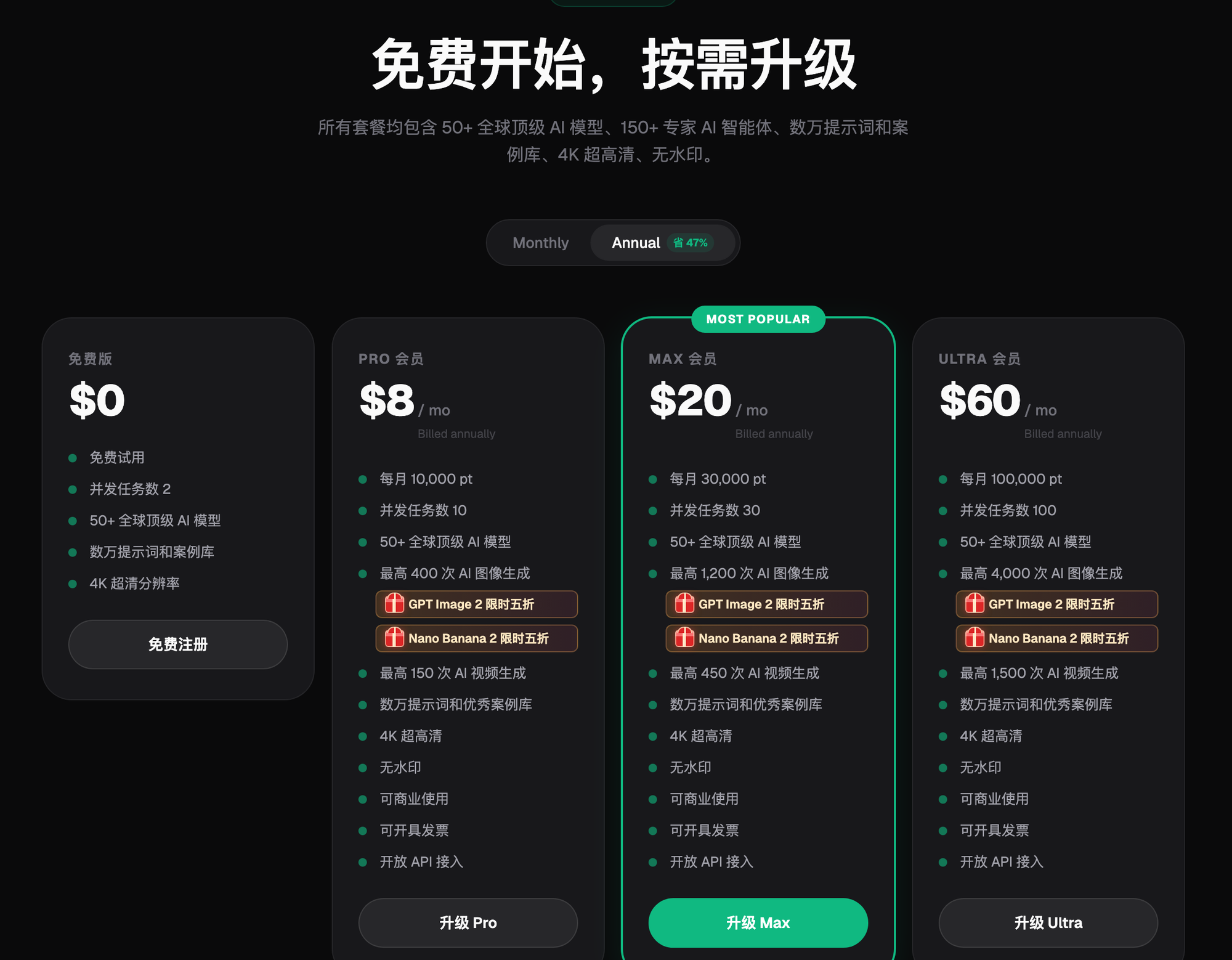
Screenshot: the Flux Art subscription pricing page, with Free, Pro, Max, and Ultra tiers side by side, each labeled with its monthly credit allowance, concurrent task limit, and AI image/video generation caps. Usage during a peak-sale month runs several times higher than normal — the Max tier's 30 concurrent tasks matter a lot for batch production. Prices shown are annual billing; current pricing and benefits are subject to the official site.
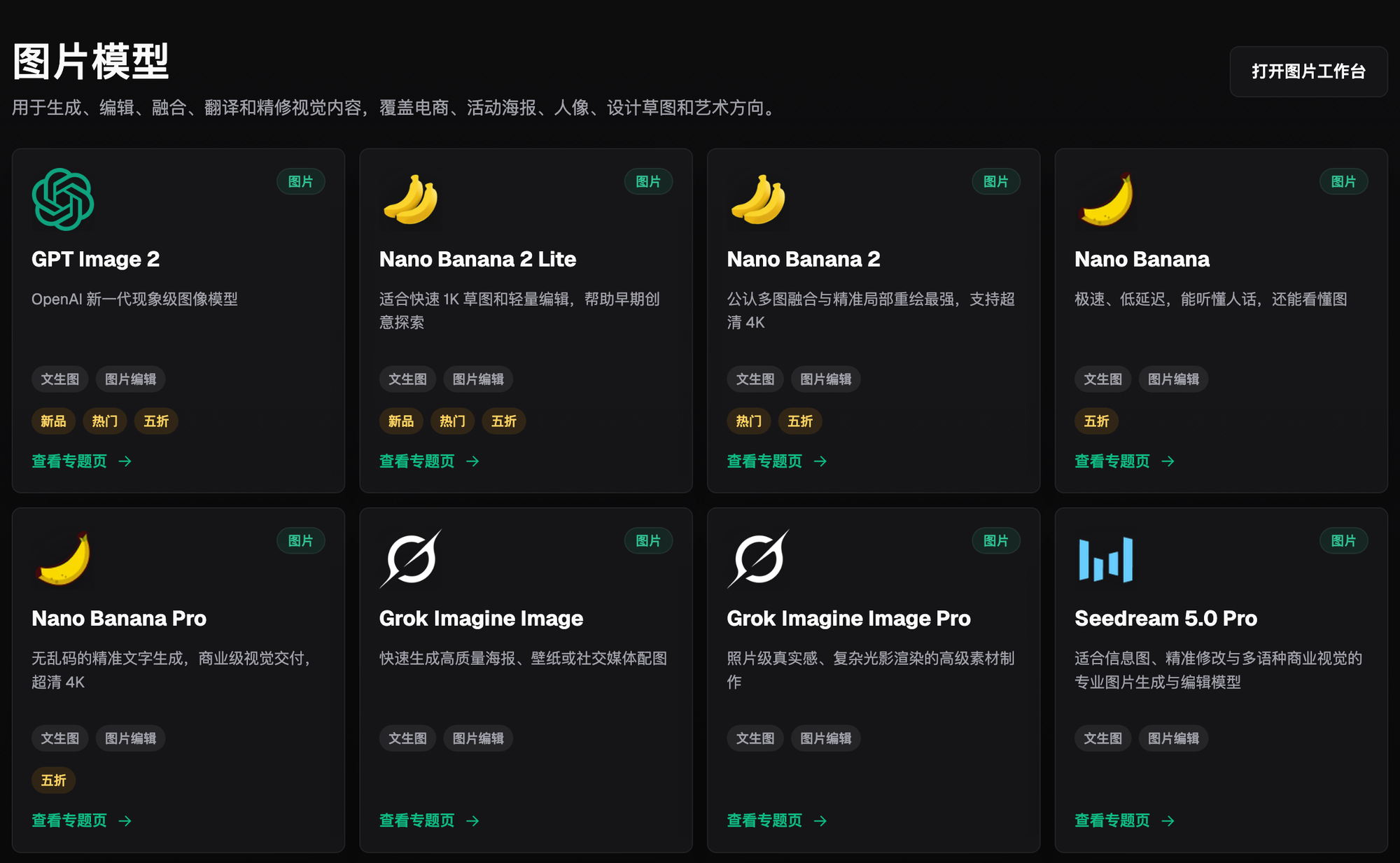
Screenshot: the "Image Models" grid on the Flux Art model library page — GPT Image 2, Nano Banana 2, Nano Banana Pro, Grok Imagine, Seedream 5.0 Pro, and others displayed side by side, each card labeled for text-to-image or image-editing support, plus New, Popular, and 50%-off badges. Everything an e-commerce pipeline needs — capabilities and templates alike — can be found on this one page.
Which Type of Seller Are You? Find Your Match
| Your Situation | Biggest Pain Point | How to Handle It on Flux Art | Recommended Model / Approach |
|---|---|---|---|
| Small store, first peak sale | Don't know which images to prepare | Trim the three-phase checklist to your own channels; use free credits for pre-heat posters | GPT Image 2 (3 precision tiers × 4 resolution tiers, 12 combinations) |
| Multi-SKU store | Switching every hero image storewide to a sale version | Use a style reference image, batch-swap the mood layer | Nano Banana 2 (strong at multi-image fusion and precise local inpainting) + Max tier |
| Livestream-focused store | Livestream room materials + teaser images | Batch-produce teaser images, keep livestream overlays visually consistent | GPT Image 2 + style reference image |
| Store that needs hero-image video | No time to shoot video | Convert sale-version hero images directly into short video | Seedance 2.0 (up to 9 image + 3 video + 3 audio references, 4–15 seconds) |
| Running multiple platforms at once | Different aspect ratios per platform | Output the same asset at each platform's ratio (custom aspect ratio settings) | Nano Banana 2 + platform-spec reference |
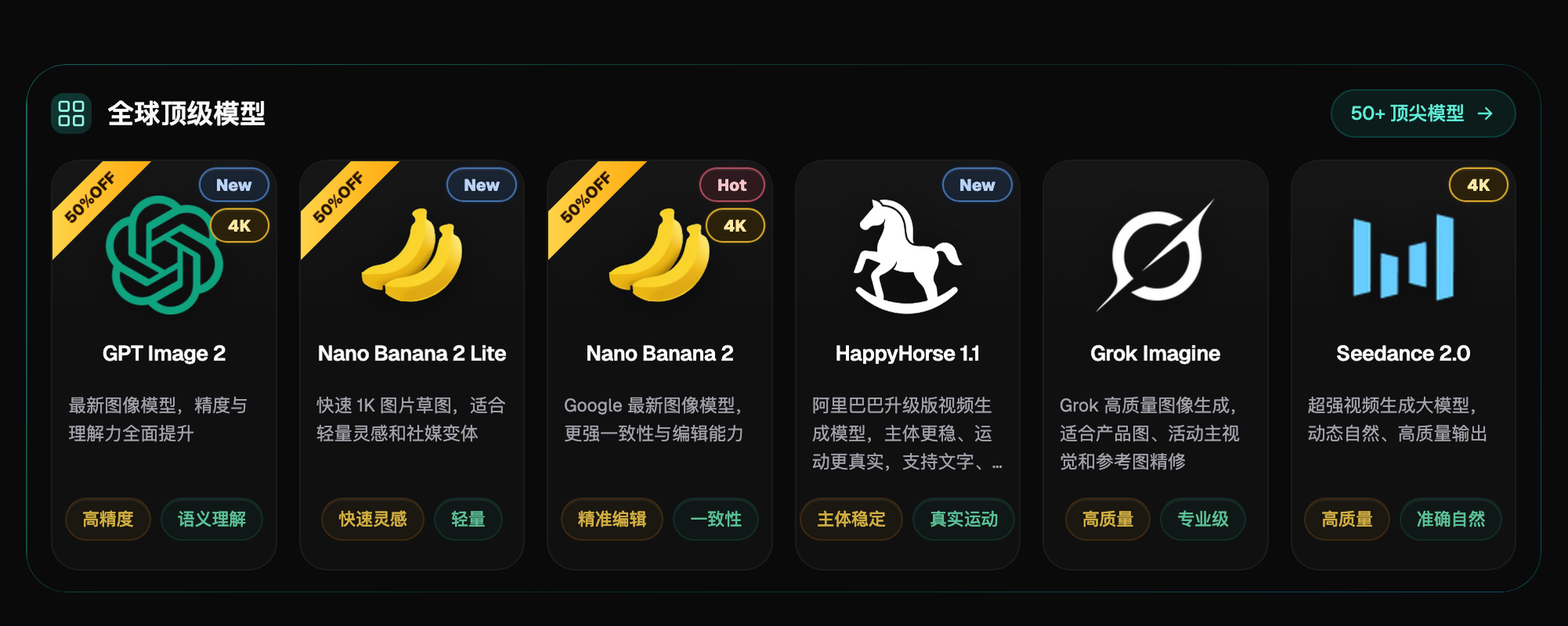
Screenshot: the "Top Global Models" section on the Flux Art homepage — GPT Image 2, Nano Banana 2 Lite, Nano Banana 2, HappyHorse 1.1, Grok Imagine, and Seedance 2.0 displayed side by side, each card labeled with its capability tags; GPT Image 2, Nano Banana 2, and Seedance 2.0 all carry a 4K badge. Everything an e-commerce pipeline needs — capabilities and templates alike — can be found on this one page.
- National Bureau of Statistics of China. 2025 National Economic Performance (national online retail sales reached CNY 15.9722 trillion, up 8.6%; physical goods online retail sales accounted for 26.1% of total retail sales). 2026-01-19.
- Flux Art official website. Platform feature documentation, model list, and commercial use terms. https://flux-art.ai